

The artist behind one of Dallas’ most recognizable public artworks is taking FIFA to court over the destruction of his celebrated whale mural. In a lawsuit filed in federal court in Texas on June 1, environmental artist Wyland alleges that FIFA, related World Cup entities, and the building’s owner and manager caused his “Dallas Whaling Wall” mural – a massive eight-story artwork that had stood in downtown Dallas since 1999 – to be painted over and permanently destroyed to make way for World Cup-related promotional displays.
At the center of the dispute is the Visual Artists Rights Act (“VARA”), a federal law that grants artists certain “moral rights,” including the ability to prevent the intentional destruction of works of “recognized stature.” According to the complaint, filed in the U.S. District Court for the Northern District of Texas on June 1, the 17,000-square-foot mural of life-size humpback whales, dolphins, and other marine life had become a fixture of the Dallas skyline. Wyland alleges that the work was painted over without notice to him or the written consent required under VARA.
Public Art Meets Event Marketing
Central to the dispute are VARA’s protections for works incorporated into buildings. Enacted in 1990, the statute provides artists with limited moral rights, including the ability to prevent the destruction of works of recognized stature. The law also contains specific provisions governing artwork that has been incorporated into buildings, particularly where removal or alteration would destroy, distort, or mutilate the work. Wyland alleges that no waiver or other written instrument permitting the mural’s destruction exists here.
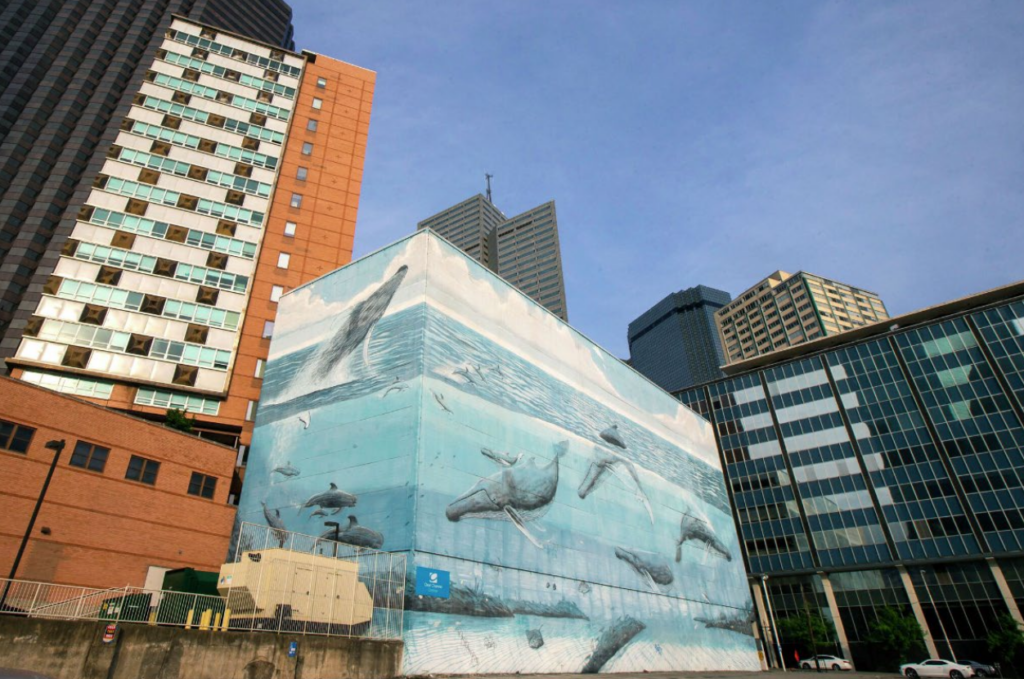
With that in mind, the newly-filed suit brings to mind the high-profile 5Pointz case, in which a federal court in New York awarded millions of dollars to graffiti artists after a developer whitewashed a collection of murals that qualified for VARA protection. The case demonstrated that artists may retain rights under VARA even when their works are painted on privately owned buildings.
Just as the artists in the 5Pointz litigation did, Wyland contends that his mural possesses the “recognized stature” necessary to qualify for protection against destruction under VARA, citing its decades-long presence in the city, its cultural significance, and the public reaction that followed news of its destruction.
The Competition for Urban Visibility
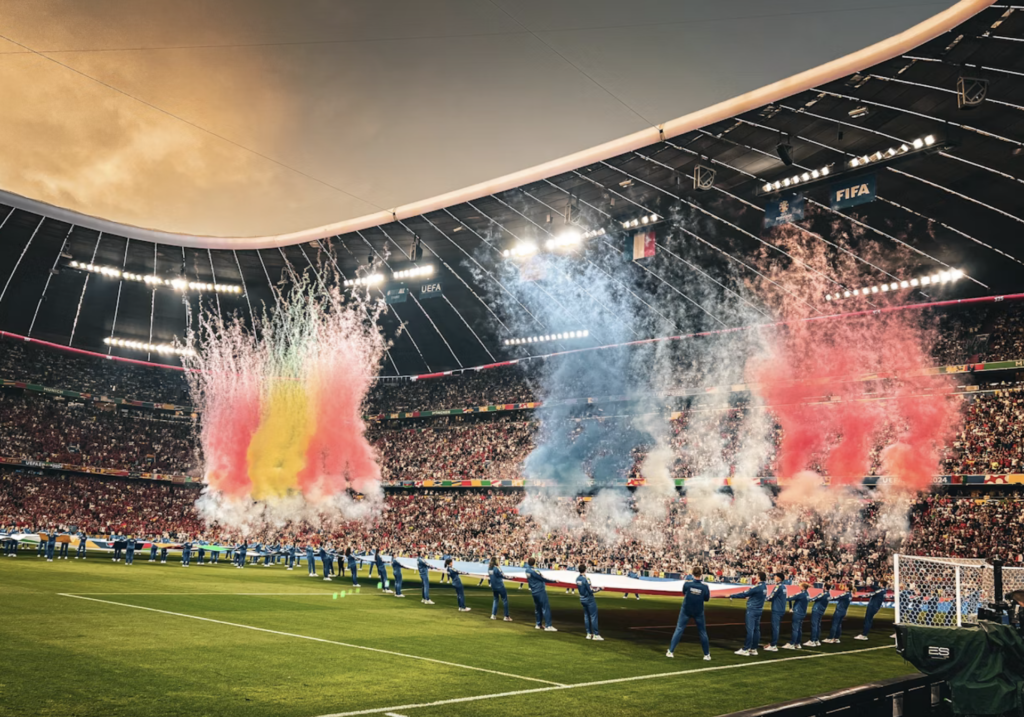
Beyond the fate of a single mural, the case places a global sporting event at the center of a dispute over artists’ moral rights. From the Olympicization of Paris ahead of the 2024 Games to Gucci’s recent takeover of Times Square for its Resort 2027 show, cities themselves – or at least highly visible portions of them – increasingly function as platforms for large-scale brand experiences.
The dispute highlights what can happen when the commercial value of a location collides with the cultural value of the artwork attached to it. According to Wyland, a mural that had become a longstanding feature of the Dallas skyline was painted over to make way for a World Cup-related installation. In doing so, the case raises a question that extends well beyond Dallas: what happens when a work of public art becomes culturally valuable at the same moment that the space it occupies becomes commercially valuable?
Wyland is seeking at least $25 million in damages, as well as attorneys’ fees and other relief.
The case is Wyland v. FIFA, 3:26-cv-01794 (N.D. Tex.).
Share