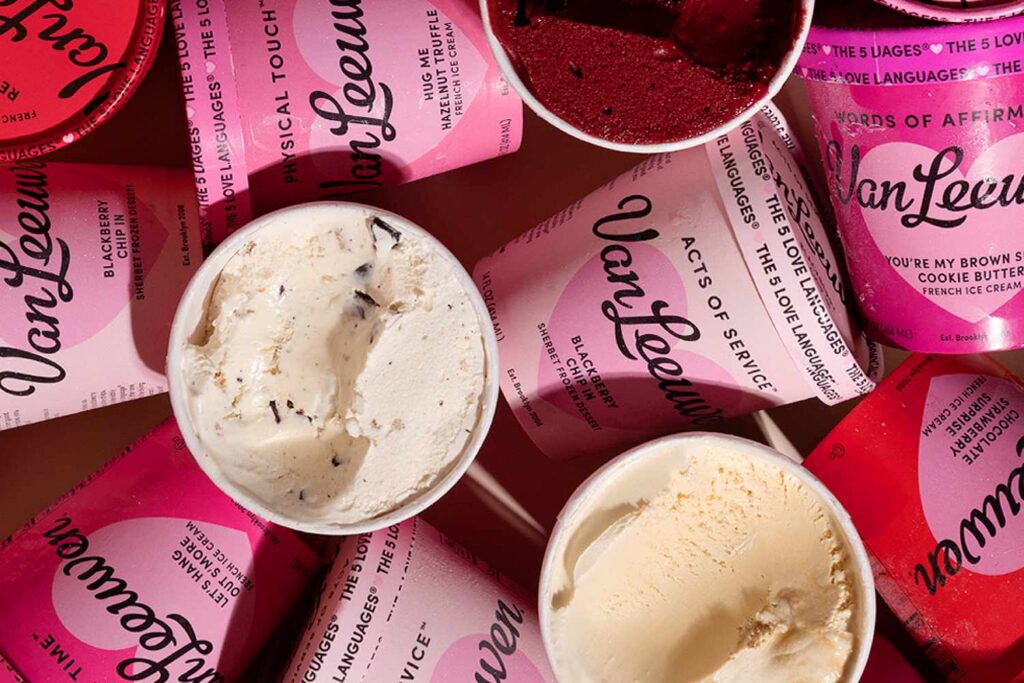


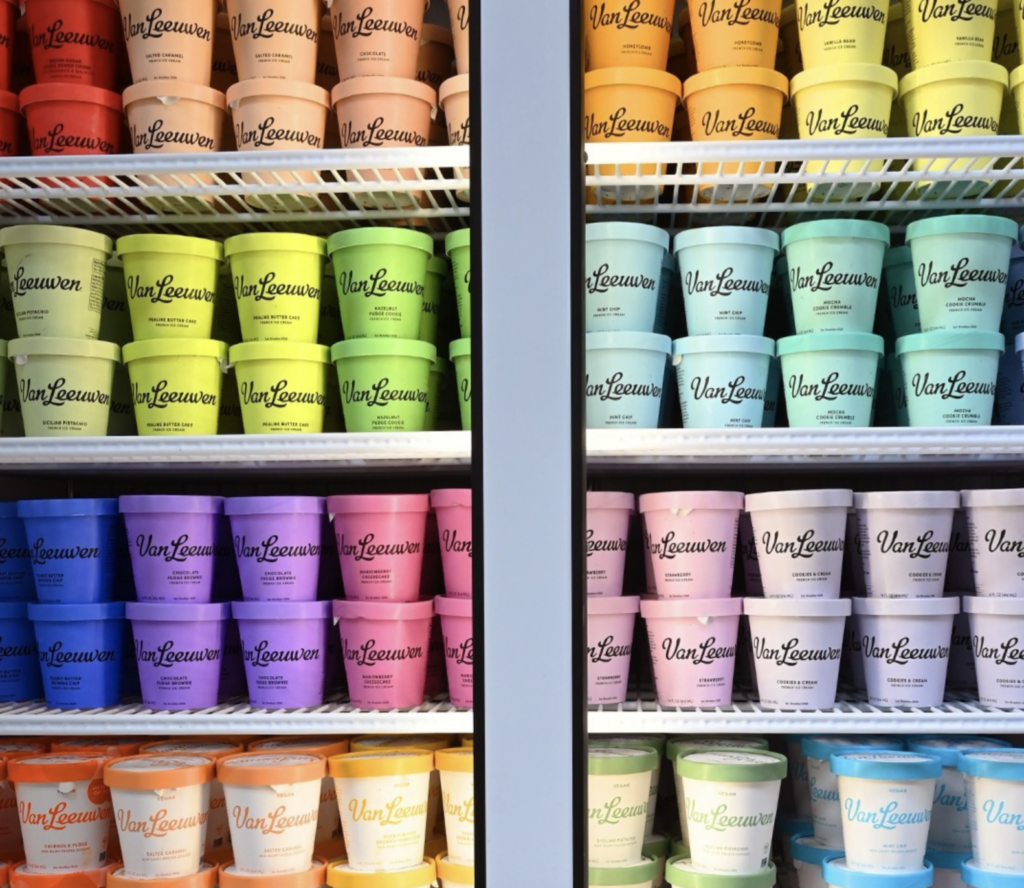
Van Leeuwen Ice Cream has secured a sweeping victory in a trade dress clash with Rebel Creamery. In a newly-issued order, a federal court in New York permanently barred Rebel from selling ice cream in packaging that infringes Van Leeuwen’s distinctive pint design and ordered it to hand over $23.785 million in profits. Beyond the immediate dispute, the decision addresses a critical question for consumer brands: when can a carefully coordinated visual identity qualify for trade dress protection?
The Case in Brief: The case got its start in 2023 when Van Leeuwen filed suit against Rebel, accusing it of copying the distinctive trade dress of its ice cream pints in an effort to capitalize on Van Leeuwen’s reputation and consumer goodwill, thereby infringing its trade dress and engaging in unfair competition.
At the center of the dispute was Van Leeuwen’s claimed trade dress, which it says consists of “monochromatic cardboard packaging and matching lid[s],” “primarily pastel color palettes,” “black script lettering with an oversized first letter,” and an “overall minimalist design.” According to Van Leeuwen, the combination of those elements – not any individual feature in isolation – acts as an indicator of the source of its products.
Rebel argued that claimed elements – such as “primarily pastel” and “minimalist” – were simply too subjective to define enforceable trademark rights.
More Than an Ice Cream Dispute
In a July 16 order following a bench trial, Judge Eric Komitee of the Eastern District of New York held that Rebel infringed Van Leeuwen’s protectable trade dress, finding that its packaging was likely to confuse consumers.
The decision is striking not only because Van Leeuwen prevailed on every major issue, but because it offers a clear examination of how courts are evaluating packaging trade dress. In one of the earliest detailed applications of the Second Circuit’s 2025 Cardinal Motors decision, which emphasized that plaintiffs must precisely define the trade dress they claim, Judge Komitee addressed how specifically claimed trade dress must be articulated and when a combination of otherwise familiar design features can qualify for trademark protection.
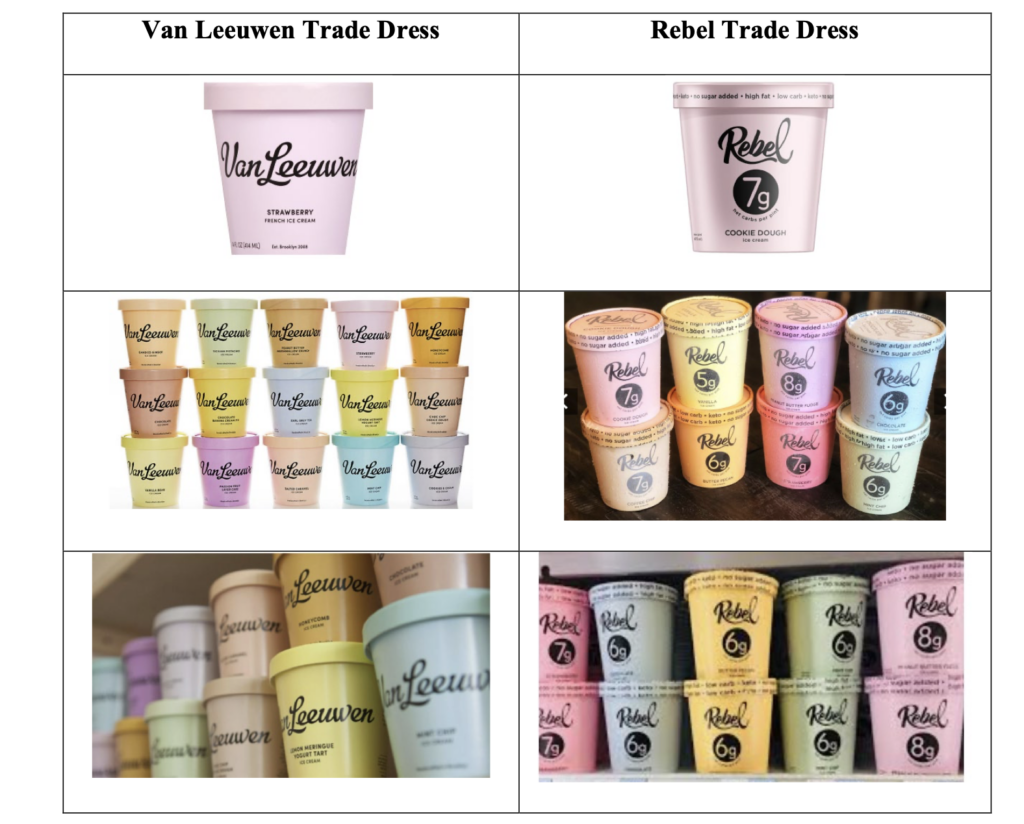
While the court sided with Van Leeuwen, it stopped short of holding that pastel colors or minimalist design are themselves protectable. Instead, Judge Komitee concluded that those features could form part of protectable trade dress because they were anchored to a specific combination of objectively identifiable design features. In other words, broad aesthetic concepts can be used to define trade dress only when tied to concrete visual features.
In Van Leeuwen’s case, “minimalism,” for example, referred to the extensive use of negative space and relatively few visual elements. Viewed alongside the packaging’s color palette, typography, and layout, those features gave competitors a sufficiently clear understanding of the claimed trade dress.
That focus on the overall combination shaped the remainder of the court’s analysis. Rather than evaluating pastel colors, script lettering, or minimalist design in isolation, Judge Komitee focused on the commercial impression created by their combination. Because competitors remained free to use those features in other combinations – and had numerous alternative ways to package premium ice cream, the court concluded that Van Leeuwen’s claimed trade dress was non-functional and inherently distinctive.
The court took the same overall approach to likelihood of confusion, considering the overall commercial impression created by Rebel’s competing packaging rather than isolated similarities. Survey evidence showing a 34.3 percent net confusion rate, together with evidence of actual marketplace confusion, reinforced its conclusion that consumers were likely to believe the two companies’ products originated from the same source.
THE BIGGER PICTURE: As a growing number of brands have adopted – and come to compete through – clean, minimalist visual identities, the question is not whether individual colors, fonts/typography or layouts are protectable. Instead, the question is whether a carefully coordinated visual system can function as trade dress.
The Van Leeuwen decision suggests that courts are willing to recognize trade dress rights in those broader visual systems – provided brands can precisely define the combination of features they claim as distinctive and demonstrate that the overall design functions as a source identifier.
The case is Van Leeuwen Ice Cream LLC v. Rebel Creamery LLC, 1:21-cv-02356 (E.D.N.Y.).
Updated
August 12, 2026
Rebel Creamery filed a notice of appeal as to the judgment.
Share