



On is looking to beat a proposed consumer class action lawsuit accusing it of misleading shoppers through its use of the phrases “Swiss Engineering” and the Swiss cross on its footwear, with the Swiss performance footwear company arguing that the lawsuit improperly conflates where its products are engineered with where they are manufactured.
In a newly-filed motion to dismiss, as first reported by TFL, the Zurich-headquartered sportswear brand characterizes the case as an attempt to “recast a truthful statement about engineering origin as a deceptive claim about the place of manufacture.” On maintains that its branding truthfully communicates where its products are developed – not where the shoes are manufactured – and that consumers cannot disregard the shoes’ express “Made in Vietnam” labels in favor of their own assumptions.
The July 20 filing comes in response to a proposed class action brought by two New York consumers, who allege that On’s branding falsely suggested its footwear was manufactured – or at least substantially produced – in Switzerland. According to the plaintiffs, those representations enabled the company to command higher prices.
Truthful Statements or Consumer Deception?
At the center of the dispute is what consumers reasonably understand the phrase “Swiss Engineering” to mean. On argues that its shoes are, in fact, engineered in Switzerland, with the phrase conveying “design philosophy and engineering standards – not manufacturing origin.” And any ambiguity, it argues, is dispelled by the express “Made in Vietnam” label that appears on its footwear.
On also claims that the plaintiffs’ theory ignores the realities of modern global production. “Consumers understand that modern consumer goods, including athletic footwear, are often designed in accordance with standards set in one location and manufactured in another,” the company asserts. Against that backdrop, it argues that reading “Swiss Engineering” to mean that the shoes’ materials were sourced, processed, and assembled in Switzerland is an “idiosyncratic” interpretation untethered from any representation On actually made.
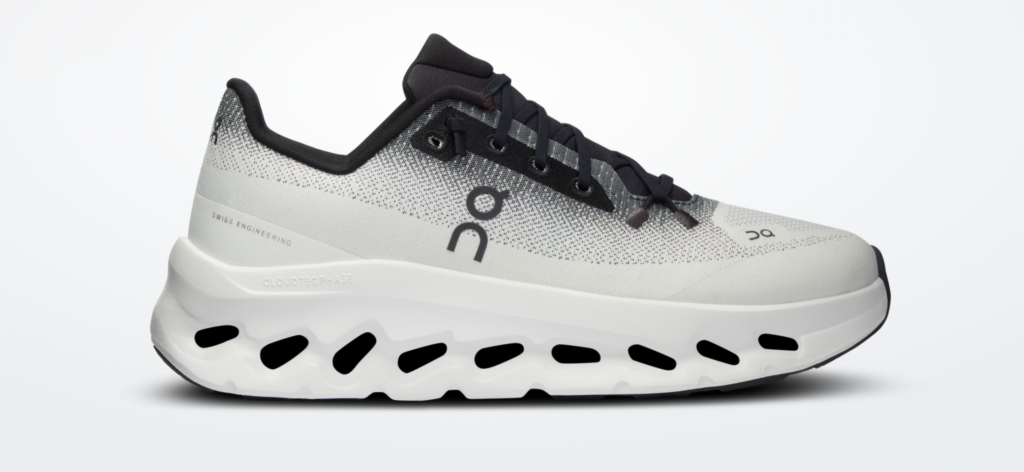
Still yet, On disputes the plaintiffs’ characterization of Swiss law. While the complaint alleges that On cannot legally sell the shoes in Switzerland with their current labeling, On maintains that Swiss regulators have “expressly authorized” its use of the Swiss cross on shoes manufactured abroad but engineered in Switzerland.
Taking Aim at the Price Premium Theory
Beyond whether its branding is misleading, On also attacks the plaintiffs’ theory of economic harm. The lawsuit relies on a familiar “price premium” theory, alleging that shoppers paid more because they believed the shoes were manufactured – or substantially produced – in Switzerland.
On argues that the complaint never alleges the shoes were defective, failed to perform as advertised, or were worth less than what consumers paid. Instead, the company says the plaintiffs’ alleged injury rests on their assertion that they would not have purchased the shoes – or would have paid less for them – had the company understood they were manufactured in Vietnam. According to On, that amounts to subjective disappointment rather than a cognizable economic injury under New York law.
In furtherance of its bid for dismissal, the company also argues that the complaint fails to connect any alleged price premium to the challenged branding and notes that the plaintiffs purchased their shoes from a third-party retailer rather than directly from On.
THE BIGGER PICTURE: Beyond the immediate consumer protection claims, the case marks one of the first U.S. lawsuits to invoke the Swiss Federal Institute of Intellectual Property’s recent guidance on the application of Switzerland’s existing “Swissness” framework. Earlier this year, the IPI clarified that companies may, in certain circumstances, use Swiss-origin symbols on products manufactured abroad, provided that key value-creating activities – such as engineering, design, or product development – occur in Switzerland and the labeling does not imply Swiss manufacture.
On points to that guidance to support its position that its branding is not only accurate but consistent with the interpretation adopted by Switzerland’s IP authority.
While the question before the New York court is whether On’s labeling violates U.S. consumer protection law (not whether it complies with Switzerland’s “Swissness” framework), the dispute illustrates how evolving interpretations of origin-labeling rules are beginning to shape litigation beyond Switzerland. As brands continue to separate design, engineering, and manufacturing across global supply chains, courts may face more disputes over what geographic claims consumers reasonably understand – and what those claims actually communicate.
The case is Roman v. On Inc., 1:25-cv-06991 (E.D.N.Y.).
Share