

Some of the most culturally relevant brands are not fashion labels or beauty startups, but grocery stores. The rise of luxury grocers – marked by $20 celebrity-backed smoothies and TikTok-fueled shopping that turns prepared foods into status symbols – has largely been framed through the lens of experiential retail. Premium grab-and-go offerings and social media visibility have transformed routine errands into a form of social currency. But the most interesting thing about luxury grocery is not what is on the shelves, but what is quietly being built around them.
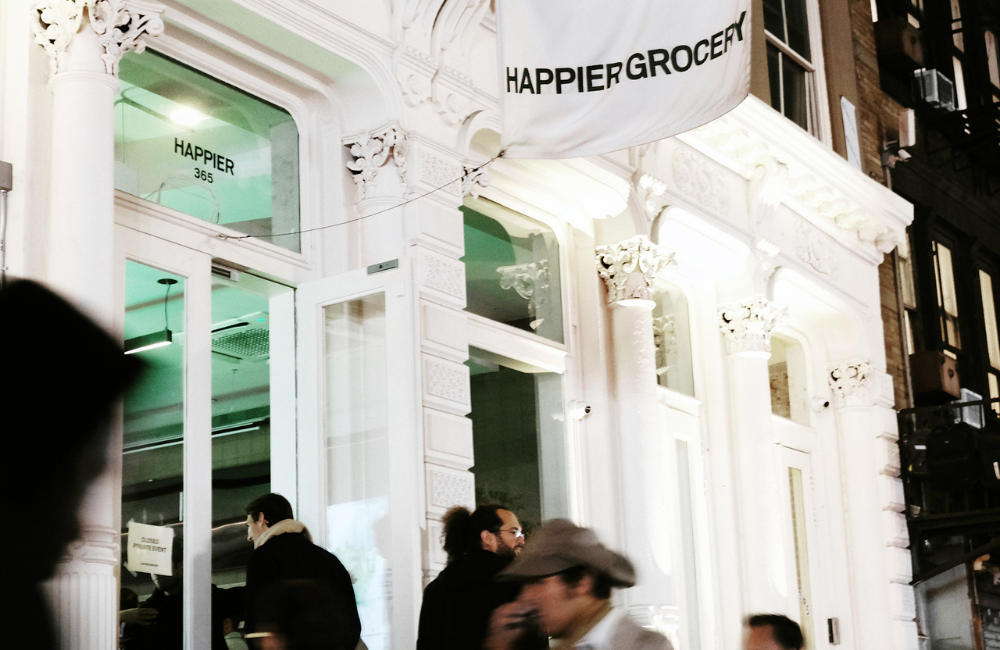
The outsized cultural buzz surrounding these outposts, including Erewhon, New York concepts like Meadow Lane, Happier Grocery, and Rigor Hill, and Los Angeles newcomer Laurel Supply – coupled with queues outside and the rapid adoption of merchandise bearing their names – reveals that these companies are operating as more than neighborhood grocery stores. The breadth of the trademark filings accompanying many of the category’s most talked-about entrants reinforces that perception, pointing to deliberate brand infrastructures that may start with grocery services but encompass much more.
The Brand Infrastructure Behind the Experience
What is less visible to consumers but equally central to how these businesses are being built is the role of intellectual property. Trademark filings, in particular, offer a window into how these upscale grocery concepts are structured – not just what they sell today, but the categories they are positioned to move into over time.
Across these companies, founders have amassed trademark rights that span apparel, prepared and packaged foods, wellness-adjacent offerings, café and hospitality services, and even upstream farm identities. Taken together, those filings suggest that these companies are being set up not as standalone food retailers, but as brands capable of extending across multiple consumer touch points – lifestyle positioning, private-label expansion, experiential retail, etc. – without diluting their core identity.
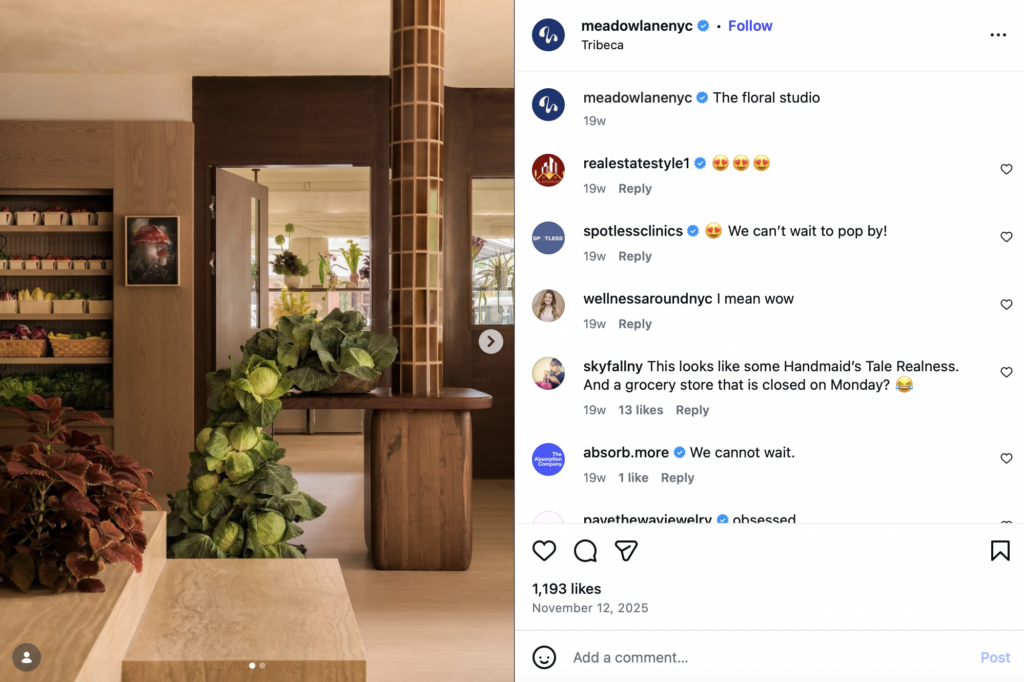
> Sammy Nussdorf-led Meadow Lane’s pending U.S. trademark applications for registration, for instance, cover everything from coffee and café services to cut flowers, apparel, accessories, and fragrance-adjacent products, reinforcing the store’s positioning as a hybrid retail environment where florals, prepared foods, and lifestyle merchandise coexist as part of a single branded experience.
> A mix of registrations and pending applications shows that the Wells and Dawson Stellberger-founded Happier Grocery has taken a similarly holistic approach with marks not only for its core grocery concept but also for sub-brands tied to prepared food formats, wellness retail, and home-adjacent products. HAPPIER SUSHI, HAPPIER PIZZA, and FUTURE BEAUTY BY HAPPIER are among the marks that form a layered strategy that mirrors hospitality group brand-building more than traditional grocery expansion.
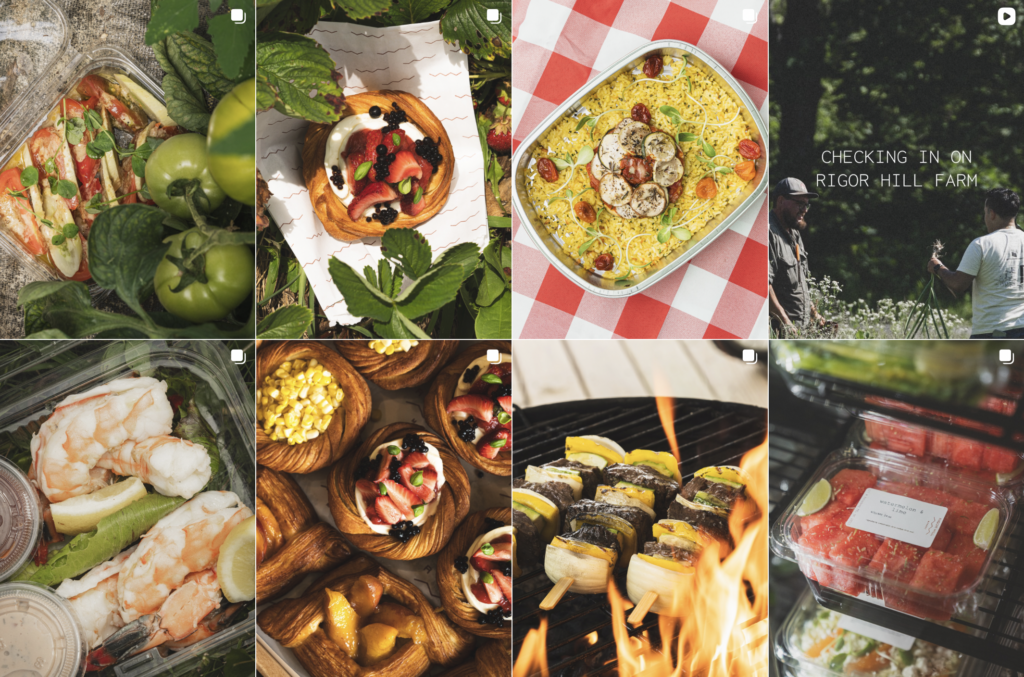
> Meanwhile, Rigor Hill – the New York-based brainchild of Austin Johnson, Ryan Sohn, and Dustin Wilson – has paired protection for its market identity with filings tied to a farm counterpart and abbreviated branding suited for packaging, underscoring an emphasis on provenance storytelling and private-label planning as central components of its value proposition.
Even where trademark applications do not ultimately mature into registrations, they can still offer insight into how founders are thinking about brand architecture.
> Laurel Supply, the recently opened West Hollywood luxury grocer from the team behind Laurel Hardware and Laurel Grill, initially sought protection for multiple naming variations – including LAUREL SUPPLY, LAUREL MARKET & SUPPLY, and LAUREL HARDWARE & SUPPLY – for grocery retail and restaurant services before abandoning the applications after the USPTO refused registration based on an existing LAUREL HARDWARE mark. While the filings never resulted in registrations, they nonetheless reveal an effort to develop a broader, cohesive brand identity rather than simply protect a single store name.
Taken together, these filings point to something more deliberate than a wave of expensive grocery stores. They reflect a cohort of operators building lifestyle businesses with grocery as the entry point – brands designed to extend into merchandise, private-label goods, and wellness offerings alongside prepared foods and pantry staples.
From Necessity to Identity-Driven Consumption
The enduring transformation of grocery from a largely utilitarian retail category into a lifestyle-oriented one is unfolding alongside broader changes in how consumers allocate discretionary spending and construct identity through everyday consumption. For many consumers, especially younger ones, smaller but repeatable indulgences have become a more attainable form of luxury. At the same time, luxury spending has increasingly shifted toward categories tied to wellness and experiences.
The convergence of food, wellness, and social experience has morphed grocery environments into spaces that function as lifestyle destinations rather than purely utilitarian retail – and within that context, the expansive trademark strategies accompanying many of these concepts appear less aspirational than pragmatic.
That approach has a clear precedent. Long before some of New York’s newest concepts began attracting lines and social media attention, Erewhon was quietly developing a trademark portfolio that transformed it from a natural foods retailer into a multi-category lifestyle brand with private-label, merchandising, and experiential extensions. Legacy players like New York’s Butterfield Market, which has operated for more than a century, underscore how long specialty grocery has occupied a place in the broader cultural landscape – even if their growth has historically been driven more by reputation and curation than expansive brand infrastructure.

The newer generation of luxury grocery entrants appears to be adopting a different, infrastructure-first mindset from the outset, building brand ecosystems that extend beyond core retail into adjacent product categories and experiences.
If trademark filings offer a glimpse into how these entities are structured today, they also point to how the category may evolve. As private-label products, merchandise, and wellness adjacencies become more central to revenue and differentiation, the competitive landscape for grocery may begin to resemble that of fashion, beauty, and hospitality – sectors where brand equity, narrative coherence, and category elasticity often matter as much as the core product itself.
Importantly, expansive multi-class trademark portfolios do more than signal ambition; they create the legal infrastructure that allows operators to move into adjacent categories with reduced friction while strengthening their ability to police copycat concepts that replicate not only products, but the experiential environments surrounding them.
THE BOTTOM LINE: The next phase of grocery’s evolution may hinge less on what is stocked on the shelves than on the intellectual property that is quietly shaping what these stores are structurally positioned to become.
Updated
July 21, 2026
This article was initially published on June 8, 2026, and has been updated to include references to Laurel Supply.
Share