

Five Below is pushing back against a dupes-centric lawsuit filed by the company behind the viral Stanley cup brand. In its newly-filed answer and counterclaims, Five Below does not simply deny Pacific Market International (“PMI”)’s trademark and patent infringement claims, it argues that the lawsuit itself is an effort to stretch intellectual property law beyond its intended limits and to suppress lawful competition in a saturated consumer market.
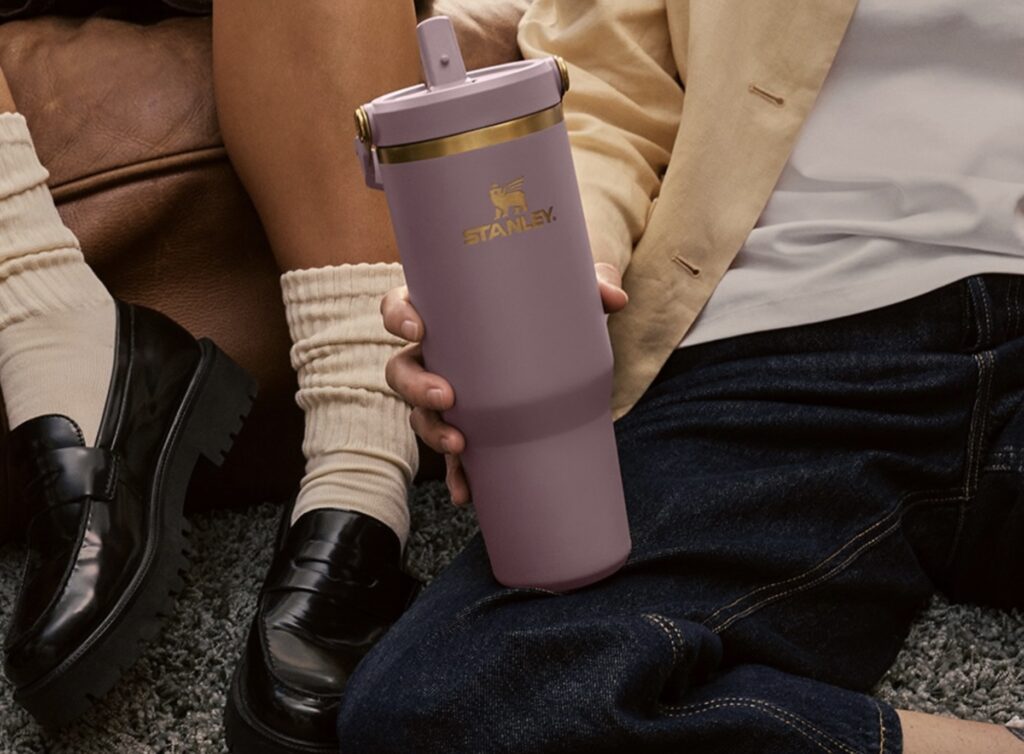
The Background in Brief: PMI filed suit against Five Below in the U.S. District Court for the Northern District of California in November 2025, alleging that the discount retailer’s “dupe” tumblers unlawfully copy the protected designs of its viral Stanley QUENCHER and ICEFLOW products. PMI claims that Five Below’s low-cost drinkware, sold under names such as “Hyperquench,” “Hydraquench,” and “HydraSip,” mimics the distinctive look of its tumblers – including handle shapes, metal banding, lid designs, and color schemes – and trades on the goodwill of the QUENCHER mark.
Challenging PMI’s IP Claims
In the answer and counterclaims that it filed on January 2, Five Below takes aim at the validity of the rights that PMI claims to own in the Stanley cup designs, arguing that they are overbroad, legally flawed, and incapable of supporting the sweeping infringement allegations at issue.
According to Five Below, PMI’s unregistered Quencher trade dress, for instance – which is defined by a “squared-off handle, the metal band between its cup and lid, and the separate strip at the top of its lid” – reflects functional design choices rather than ornamental features. This is reinforced by PMI’s own marketing, it argues, stating that PMI promotes the handle as ergonomic and the lid mechanism as splash-resistant.
Because such features are “clearly functional in nature” and “incredibly common product configurations in the tumbler market,” Five Below argues that PMI cannot plausibly claim they serve as source identifiers or have acquired secondary meaning, particularly where the parties’ products differ in price, branding, and retail channels.
Turning to PMI’s patent claims, Five Below argues that the asserted design patents are invalid because they cover functional, commonplace features in a crowded market, leaving them insufficiently ornamental and lacking in novelty. And even if the patents were valid, Five Below maintains that they are entitled only to narrow protection, such that the material differences in its lid and handle design place its tumblers outside the scope of PMI’s rights.
In its counterclaims, Five Below seeks declaratory relief that PMI’s asserted design patents, trade dress, and trademark rights are invalid, unenforceable, and not infringed by its products, as well as a declaration that it has not engaged in unfair competition or other unlawful conduct. It also requests dismissal of PMI’s claims with prejudice, along with costs and attorneys’ fees.
The “Dupe” Narrative Cuts the Other Way
In what might be the most interesting aspect of Five Below’s filing, it asserts that PMI’s complaint leans heavily on media and social media references characterizing Five Below’s tumblers as “dupes.” The problem, according to Five Below is that this framing undermines – rather than supports – any claim of consumer confusion. The retailer argues that the use of the term “dupe” to describe its offerings “only evidences that there is not genuine consumer confusion about the source of the parties’ products,” and that Five Below’s products are “simply viewed as marketplace alternatives to [PMI’s] products.”
In essence, Five Below argues that “dupe” culture reflects well-established brand awareness and distinction: consumers recognize Stanley as the source of the premium product and Five Below as the source of a lower-priced option. Far from suggesting mistake or deception, Five Below is maintaining that commentary about its products being Stanley “dupes” confirms that consumers are making informed purchasing decisions and are not confused as to source, sponsorship, or affiliation of the products at play. And as a result, Five Below asserts that PMI’s reliance on “dupe” rhetoric actually chips away that the necessary showing of likelihood of confusion under trademark law.
THE BOTTOM LINE: Five Below rejects PMI’s infringement allegations and aims to recast the case as an attempt to overextend intellectual property law to block legitimate competition, arguing that the tumbler features at issue are functional, commonplace, and do not translate to protectable trade dress or broad patent rights.
The case is Pacific Market International, LLC v. Five Below, Inc., 3:25-cv-09604 (N.D. Cal.).
Share