



UPDATED: Jan. 28, 2026
The rising adoption of artificial intelligence (“AI”) across industries (including fashion, retail. luxury, etc.) that has come about in recent years is bringing with it no shortage of lawsuits, as parties look to navigate the budding issues that these relatively new models raise for companies and creators, alike. A growing number of lawsuits focus on generative AI, in particular, which refers to models that use neural networks to identify the patterns and structures within existing data to generate new content.
Lawsuits are being waged against the developers behind some of the biggest generative AI chatbots and text-to-image generators, such as ChatGPT and Stability AI, and in many cases, they center on how the underlying models are trained, the data that is used to do so, and the nature of the user-prompted output (which is allegedly infringing in many cases), among other things.
In light of the onslaught of legal questions that have come about in connection with the rise of AI, we take a high-level look at some of the most striking lawsuits that are playing out in this space and corresponding developments. They are listed by filing date …
A coalition of major music publishers, including Concord, Universal Music Publishing, and ABKCO, filed a copyright infringement lawsuit in the N.D. California against Anthropic PBC and two of its founders, alleging sweeping and willful infringement in connection with the development and operation of the Claude AI models. The suit claims Anthropic unlawfully built its central text dataset and trained its models by torrenting millions of pirated books from notorious “shadow libraries” like LibGen and PiLiMi, which included sheet music and lyrics from thousands of protected works.
Plaintiffs allege that Anthropic’s founders personally authorized and engaged in BitTorrent activity that both downloaded and publicly re-uploaded pirated copies of music books containing their works, thereby violating reproduction and distribution rights at massive scale. The complaint also targets Anthropic’s more recent conduct: allegedly copying over 20,000 copyrighted songs to train new Claude models (including Claude 4.5), which output lyrics in ways that directly compete with legitimate licensing channels. Claims include direct, contributory, and vicarious copyright infringement, and violations of the DMCA for removing copyright management information.
Seeking statutory and actual damages, disgorgement, and sweeping injunctive relief, including deletion of pirated data and model derivatives, the publishers frame this suit as essential to preserving ethical AI development and the economic viability of songwriting itself.
In federal lawsuits filed in the Southern District of New York (the Chicago Tribune filed on December 4 and The New York Times filed on December 5), the two publishers have accused AI startup Perplexity of large-scale copyright infringement and trademark violations arising from its “answer engine” and other generative AI products. Both complaints allege that Perplexity systematically scrapes, copies, stores, and reproduces millions of newspaper articles and other proprietary works to power its generative AI tools, often outputting verbatim or near-verbatim summaries that substitute for visiting the publishers’ websites, thereby diverting traffic, subscriptions, and licensing revenue.
Beyond copyright claims, both publishers assert trademark violations under the Lanham Act, alleging that Perplexity’s GenAI products generate “hallucinated” or misleading content that is falsely attributed to them, or present truncated reproductions alongside their famous marks without disclosing omissions – conduct that purportedly confuses users into believing the outputs are authorized or endorsed by the news organizations. The Times alleges it repeatedly warned Perplexity to stop unauthorized use of its content as early as March 2024, while the Tribune points to similar protests made through MediaNews Group, of which it is a member, which were allegedly met with inaccurate assurances that protected content was not being accessed.
Both plaintiffs seek damages and injunctive relief, positioning their suits as part of a broader industry pushback against AI platforms accused of monetizing journalism without consent or compensation.
Cameo is waging a lawsuit against OpenAI, accusing the AI giant of trademark infringement, dilution, and unfair competition over its use of the name “Cameo” for a generative video feature within its Sora app. Filed in the Northern District of California on October 28, the lawsuit alleges that OpenAI’s “Cameo” service – which allows users to generate AI videos using celebrity likenesses – directly competes with Cameo’s well-known marketplace for personalized celebrity videos.
In the complaint, Cameo alleges that OpenAI’s naming choice has caused consumer confusion, including users mistakenly contacting Cameo’s customer service and tagging its social media accounts when referencing OpenAI’s product. Cameo also claims that this confusion, paired with what Cameo alleges is OpenAI’s association with “AI slop,” risks irreparably harming its brand, which it describes as synonymous with authenticity, humor, and personal connection.
Cameo emphasizes its longstanding trademark rights, including multiple U.S. registrations (some incontestable) covering personalized video services and AI-generated character videos through its “Cameo Kids” platform. It portrays OpenAI’s conduct as a deliberate attempt to “trade on” Cameo’s goodwill and dominate another corner of the internet, invoking a “move fast and break things” approach. Cameo seeks injunctive relief to bar OpenAI from using the term “Cameo,” an accounting of profits, treble and punitive damages, and attorneys’ fees.
> STATUS (Nov. 24, 2025): U.S. District Judge Eumi K. Lee granted a temporary restraining order prohibiting OpenAI from using the word “Cameo” or similar variations for any Sora features after celebrity-video platform Cameo sued for trademark infringement. The order, which expires December 22 ahead of a December 19 hearing on a possible permanent ban, stems from Sora’s discontinued “Cameo” feature, with OpenAI disputing that the term can be exclusively owned.
Reddit has filed suit in the Southern District of New York against Perplexity AI, SerpApi, Oxylabs, and AWMProxy, accusing them of running an “industrial-scale” scheme to circumvent digital protections and illegally harvest Reddit’s copyrighted content. The complaint describes how these companies allegedly bypassed Reddit’s and Google’s anti-scraping measures, using proxy networks and stealth crawlers, to obtain Reddit data through Google search results after Perplexity declined to sign a licensing deal. Reddit likens the operation to that of “North Korean hackers” and says it confirmed the scraping by planting test posts that later appeared in Perplexity’s results.
The lawsuit brings claims under the Digital Millennium Copyright Act for circumvention and trafficking in circumvention technologies, along with unfair competition, unjust enrichment, and civil conspiracy. Reddit seeks injunctive relief, damages, and disgorgement of profits, positioning the case as a major test of data rights and scraping liability in the generative AI era.
A group of independent musicians and songwriters filed a putative class action complaint in the N.D. Illinois against Uncharted Labs, Inc. d/b/a Udio.com, alleging the AI music startup built and operates its service by mass-copying and retaining copyrighted sound recordings and lyrics without permission. The complaint pleads direct, contributory, and vicarious copyright infringement, DMCA claims for anti-circumvention (§1201) and removal/false CMI (§1202), plus Illinois-law claims under BIPA (voiceprints), IRPA (right of publicity), the UDTPA (deceptive trade practices), and unjust enrichment. Plaintiffs say Udio scraped and “stream-ripped” works, stripped metadata, tokenized lyrics (e.g., via web-scale sources), and now floods licensing markets with substitutive AI tracks, harming indie artists who rely on syncs, commissions, streaming, and lyric licensing.
The plaintiffs are seeking class certification, statutory and actual damages, disgorgement, and broad injunctive relief, including deletion of datasets, models/embeddings derived from their works, and bans on further collection or use of biometric data. Framed as distinct from major-label suits, the case spotlights alleged disproportionate harm to independent artists and positions Udio’s “fair use” stance as incompatible with same-market substitution at scale.
Authors E. Molly Tanzer and Jennifer Gilmore have filed suit against Salesforce, alleging in a proposed class action lodged with the Northern District of California (San Francisco Division) that the cloud-based software company copied hundreds of thousands of copyrighted books, via the Books3 corpus embedded in The Pile and RedPajama, to develop its CodeGen (pretrained on The Pile) and later XGen large language models.
The complaint points to early XGen materials and a GitHub exchange indicating use of RedPajama and The Pile, and alleges Salesforce later removed or softened public references, recharacterizing the data as “natural language” from “public” and “legally compliant” sources. It further claims Salesforce commercialized XGen-based models through its Agentforce platform. The suit seeks statutory damages, attorneys’ fees, and destruction or reasonable disposition of copies, on behalf of U.S. rightsholders with registered works allegedly used without permission.
A new complaint filed by Warner Bros. Discovery against Midjourney in the U.S. District Court for the Central District of California accuses the AI company of direct and secondary copyright infringement on a massive scale. Warner Bros. alleges that Midjourney’s image and video generation services were trained on, and continue to produce, unauthorized reproductions and derivative works featuring its most valuable characters, including Superman, Batman, Wonder Woman, Bugs Bunny, Scooby-Doo, Tom & Jerry, and Rick & Morty
X Corp. (formerly Twitter, Inc.) and xAI have waged a sweeping lawsuit against Apple and OpenAI alleging a series of antitrust and unfair competition violations. The lawsuit asserts claims under Sections 1 and 2 of the Sherman Act, including unlawful agreement in restraint of trade, monopolization and attempted monopolization of both the U.S. smartphone and generative AI chatbot markets, and conspiracy to monopolize, alongside state-law claims under the Texas Free Enterprise and Antitrust Act.
In the complaint that it filed with the Northern District of Texas, X alleges that Apple and OpenAI struck an exclusive agreement designed to entrench Apple’s dominance in smartphones and OpenAI’s dominance in generative AI, foreclosing rivals like xAI’s Grok and preventing the rise of “super apps” that could erode Apple’s control. The plaintiffs contend this conduct reduced competition, innovation, and consumer choice, while inflating market power, and seek damages and injunctive relief to dismantle what they describe as an unlawful anticompetitive conspiracy.
Getty Images has filed suit against Stability AI over its allegedly “brazen infringement of Getty Images’ intellectual property on a staggering scale.” According to the complaint that it filed in the Northern District of California, Stability AI “has copied more than 12 million photographs from Getty Images’ collection, along with the associated captions and metadata, as well as numerous other copyrighted photographs from Getty Images’ licensees’ websites, all without permission from or compensation to Getty Images, as part of its efforts to build a competing business. As part of its unlawful scheme, Stability AI has removed or altered Getty Images’ copyright management information, provided false copyright management information, and infringed Getty Images’ famous trademarks.”
With this in mind, Getty sets out claims of copyright infringement, trademark infringement from reproducing or imitating its watermark, and related unfair competition and misappropriation. It seeks damages (actual or statutory), treble damages and attorneys’ fees for willful infringement, injunctions stopping further use, destruction of infringing materials and trained models, and other equitable relief.
> STATUS (Oct. 14, 2025): In the motion to dismiss, Stability AI argues that Getty Images’ complaint should be dismissed because it fails to plausibly allege direct copyright infringement, lacks specificity regarding the allegedly infringed images, and improperly attempts to hold Stability AI liable for third-party use of its open-source model without sufficient factual basis for vicarious or contributory liability. Stability also asserts that Getty’s claims under trademark and unfair competition laws are inadequately pleaded and preempted by federal copyright law.
Disney and Universal have filed a landmark 110-page lawsuit against Midjourney, accusing the AI image generator of “wholesale appropriation of [their] iconic characters” – including Elsa (Frozen), Minions (Despicable Me), and Darth Vader (Star Wars). According to the complaint, Midjourney trained its AI on vast amounts of copyrighted content owned by the studios and continues to generate infringing images even after being served with cease-and-desist notices. The plaintiffs argue that such practices “threaten the value of [their] carefully cultivated intellectual property portfolios” and unlawfully compete with authorized licensing and merchandising efforts, as reported by The Wall Street Journal, The Washington Post, and TIME.
With the foregoing in mind, Disney and Universal set out claims of copyright infringement and unfair competition, and they are seeking statutory damages, injunctive relief to halt the infringing activity, and a jury trial
A group of prominent authors, including Pulitzer Prize-winning historian Kai Bird and essayist Jia Tolentino, has filed suit against Microsoft, alleging that its “Megatron” AI model was trained on a dataset containing nearly 200,000 pirated digital books. According to the plaintiffs, Microsoft “built a commercial product on the backs of uncompensated authors,” effectively enabling the generation of “derivative content that competes directly with the original works.” The authors claim that Microsoft’s use of their works without authorization constitutes “massive, deliberate copyright infringement.”
With the foregoing in mind, the plaintiffs seek statutory damages of up to $150,000 per infringed work and injunctive relief aimed at preventing further use of pirated literary content in Microsoft’s AI training.
The OpenAI authors’ class actions were consolidated into a multidistrict litigation (MDL) on April 3, 2025, when the Judicial Panel on Multidistrict Litigation centralized the various related suits, including Authors Guild v. OpenAI and several others, before Judge Sidney H. Stein in the Southern District of New York. The plaintiffs filed a Consolidated Class Action Complaint on June 13, 2025.
> STATUS (Oct. 27, 2025): Judge Stein denied OpenAI’s motion to dismiss the authors’ consolidated class action alleging that ChatGPT’s outputs infringe their copyrighted works. The court held that the plaintiffs plausibly stated a prima facie claim of direct copyright infringement, finding that the complaint sufficiently alleged both actual copying and substantial similarity between ChatGPT’s outputs and the authors’ works. Judge Stein ruled that the allegedly infringing outputs, such as detailed summaries and derivative outlines of books like A Game of Thrones, were integral to the complaint and could be considered at this stage.
The court emphasized that a reasonable jury could find substantial similarity in plot, setting, and characters, distinguishing the case from prior decisions involving news summaries. The ruling allows the authors’ output-based infringement claim to proceed, while expressly reserving any determination on fair use for later stages of litigation
Dow Jones and the New York Post have filed suit against Perplexity AI, which they claim is engaging in a “brazen scheme to compete for readers while simultaneously freeriding on the valuable content the publishers produce.” Specifically, the Wall Street Journal owner and the New York Post argue that Perplexity “claims to provide its users accurate and up-to-date news and information in a platform that, in [its] own words, allows users to ‘Skip the Links’ to original publishers’ websites,” which the AI platform “attempts to accomplish … by engaging in a massive amount of illegal copying of publishers’ copyrighted works and diverting customers and critical revenues away from those copyright holders.”
With the foregoing in mind, the plaintiffs set out claims of copyright infringement (with regard to the input and output stages), false designation of origin, and trademark dilution.
> STATUS (Aug. 21, 2025): SDNY Judge Katherine Polk Failla denied Perplexity AI’s motion to dismiss, finding sufficient jurisdiction in New York, holding that Perplexity’s alleged copying of news content, reproduction of articles, and misleading attribution to the Wall Street Journal and New York Post plausibly harmed the publishers’ revenues and trademarks.
Google is being sued for trademark infringement for allegedly hijacking a smaller but older company’s name for a rebrand of its Bard chatbot. According to the complaint that it filed with the U.S. District Court for the Northern District of California on September 11, Gemini Data claims that in February 2024, “without any authorization by Gemini Data, Google publicly announced a re-branding of its BARD AI chatbot tool to ‘GEMINI.’” As a sophisticated company, Gemini Data claims that Google “undoubtedly conducted a trademark clearance search prior to publicly re-branding its entire line of AI products, and thus was unequivocally aware of Gemini Data’s registered and exclusive rights to the ‘GEMINI’ brand. Yet, Google “made the calculated decision to bulldoze over Gemini Data’s exclusive rights without hesitation,” it claims.
While Gemini Data says that it “does not hold a monopoly over the development of generative AI tools, it does have exclusive rights to the ‘GEMINI’ brand for AI tools,” noting that it “took all the steps to ensure it created a unique brand to identify its AI tools and to subsequently protect that brand.” That did not stop Google from “unabashedly wield[ing] its power to rob Gemini Data of its cultivated brand … assuming a small company like Gemini Data would not be in a position to challenge a corporate giant wielding overwhelming power.”
With the foregoing in mind, Gemini Data sets out claims of federal and state law trademark infringement, false designation of origin, and unfair competition, and is seeking monetary damages, as well as injunctive relief.
> STATUS (Jul. 1, 2025): A court docket reflects that a settlement conference took place in June 2025, suggesting the parties are exploring a resolution. However, as of July 1, 2025, no settlement or judgment had been announced, and Google continues to use the “Gemini” name internally for its AI projects.
Andrea Bartz, Charles Graeber, and Kirk Wallace Johnson are suing Anthropic for copyright infringement in connection with its generative AI product, Claude. In the complaint that they lodged with the U.S. District Court for the Northern District of California on August 19, the author plaintiffs allege that Anthropic has built “a multibillion-dollar business by stealing hundreds of thousands of copyrighted books.” Rather than “obtaining permission and paying a fair price for the creations it exploits, Anthropic pirated them.” While the Constitution “recognizes the fundamental principle that creators deserve compensation for their work, Anthropic ignored copyright protections,” the plaintiffs argue, claiming that “an essential component of Anthropic’s business model and its flagship ‘Claude’ family of large language models is the largescale theft of copyrighted works.”
Delving into the damage created by Anthropic’s alleged infringement, Bartz, Graeber, and Johnson assert that as AI-powered models “have become more advanced and enabled to train on more and more copyrighted material, they are able to generate more content and more sophisticated content.” The result of this, they maintain, is that it is “easier than ever to generate rip-offs of copyrighted books that compete with the original, or at a minimum dilute the market for the original copyrighted work.” Anthropic’s Claude platform has been used to “generate cheap book content,” according to the plaintiffs, who claim that Claude “could not generate this kind of long-form content if it were not trained on a large quantity of books, books for which Anthropic paid authors nothing.”
In a decision issued on June 23, Judge William Alsup of the U.S. District Court for the Northern District of California sided with Anthropic in part, finding that while the generative AI company’s use of copyrighted books to train its large language models may qualify as fair use, its acquisition and storage of pirated digital copies does not.
> STATUS (Sept. 5, 2025): Anthropic announced in August 2025 that it had reached a settlement in principle to pay at least $1.5 billion to resolve the copyright case brought, with full terms formally filed in court on September 5, 2025. If approved, the payout would mark the largest copyright recovery in history, following a June ruling that Anthropic’s AI training methods were “transformative” fair use but that downloading pirated books was not, and the deal is expected to influence other author-led lawsuits against AI platforms.
The oldest nonprofit newsroom in the country has filed suit against OpenAI and Microsoft, accusing the ChatGPT and Copilot creators of engaging in copyright infringement and violating the Digital Millenium Copyright Act (“DMCA”). In the complaint that it lodged with the U.S. District Court for the Southern District of New York on June 27, the Center for Investigative Reporting, Inc. (“CIR”) alleges that OpenAI and Microsoft (the “defendants”) are offering up AI products that “are built on uncompensated and unauthorized use of the creative works of humans.” Specifically, CIR claims (citing data from “award-winning website Copyleaks”) that “nearly 60% of the responses provided by the defendants’ GPT-3.5 product contained some form of plagiarized content, and over 45% contained text that was identical to pre-existing content.”
According to CIR, the defendants “copied, used, abridged, and displayed [its] valuable content without [its] permission or authorization, and without any compensation to CIR,” thereby, “undermin[ing] and damag[ing] its relationship with potential readers, consumers, and partners, and deprive CIR of subscription, licensing, advertising, and affiliate revenue, as well as donations from readers.”
Setting out claims of direct and contributory copyright infringement CIR argues that the defendants infringed its exclusive rights in its registered works by: “(1) downloading those works from the internet; (2) encoding the Registered Works in computer memory; (3) regurgitating those works verbatim or nearly verbatim in response to prompts by ChatGPT users; (4) producing significant amounts of material from those works in response to prompts by ChatGPT users; and (5) producing significant amounts of material from those works in response to prompts by ChatGPT users.” And in furtherance of its DMCA claims, CIR contends that the defendants “created copies of [its] works of journalism with copyright notice information removed.”
> STATUS: CIR’s lawsuit has been absorbed into a multi-district litigation (MDL) that centralizes numerous generative AI cases in the Southern District of New York. In April 2025, the Judicial Panel on Multidistrict Litigation transferred this case to SDNY before Judge Sidney Stein, joining it with over ten other AI copyright lawsuits. As part of the MDL, CIR’s claims are being coordinated with similar claims by other news organizations.
Voice-over actors Paul Lehrman and Linnea Sage have filed a right of publicity and false advertising lawsuit against LOVO, Inc., a startup in the business of selling “a text-to-speech subscription service that allows its clients – typically companies – to generate voice-over narrations at a fraction of the cost of the traditional model.” According to Lehrman and Sage’s complaint, LOVO enables “subscribing customers to upload a script into its AI-driven software … and generate a professional-quality voice-over based on certain criteria,” and that it “promotes its service using barely-disguised images and names of celebrities and states on its website, ‘Clone any voice.’”
“Implicit in LOVO’s offerings to its customers is that each voice-over actor has agreed to LOVO’s terms and conditions for customers to be able to access that,” Lehrman and Sage assert. The problem with that, they claim, is that they (and other members of the class) “have not agreed to LOVO’s terms,” and that LOVO has “stolen and used” their “voices and/or identities to create millions of voice-over productions without permission or proper compensation, in violation of numerous state right of privacy laws, and the federal Lanham Act.”
> STATUS (Jul. 10, 2025): J. Paul Oetken (S.D.N.Y.) granted in part and denied in part LOVO’s motion to dismiss. The court dismissed most of the federal claims – including the copyright claim (as initially pled) and any trademark-based claims – but crucially allowed the right of publicity claims under New York law to move forward. Judge Oetken found the actors had plausibly alleged that LOVO misappropriated their voices for commercial gain, violating their publicity rights. He also gave the plaintiffs an opportunity to amend their complaint to better articulate a copyright infringement theory for the AI’s training on their voice recordings.
A group of eight news publications have filed a copyright infringement and trademark dilution lawsuit against Microsoft and OpenAI in a New York federal court, alleging that the generative AI pioneer and its partner of “purloining millions of [their] copyrighted articles without permission and without payment to fuel the commercialization of their generative artificial intelligence products, including ChatGPT and Copilot.” The plaintiffs – which include Chicago Tribune Company, Orlando Sentinel Communications Company, and San Jose Mercury-News, among other newspapers – argue that while OpenAI and Microsoft pay for the other elements of their businesses, such as computers, specialized chips, electricity, and programmers and other technical employees, they have opted not to pay for the “high quality content” that they need “to make their GenAI products successful.”
“Despite admitting that they need copyrighted content to produce a commercially viable GenAI product,” the plaintiffs claim that OpenAI and Microsoft “contend that they can fuel the creation and operation of these products with the [plaintiffs]’ content without permission and without paying for the privilege.” But “they are wrong on both counts,” according to the plaintiffs, who set out claims of direct, vicarious, and contributory copyright infringement, violations of the DMCA, common law unfair competition by misappropriation, federal trademark dilution, and dilution and injury to business reputation under New York General Business Law.
> STATUS: This lawsuit has been folded into the SDNY MDL as of April 2025.
A group of visual artists have filed suit against Google LLC and its owner Alphabet Inc. in a federal court in Northern California, alleging that the tech titans made unauthorized use of their copyright-protected artworks to train its AI-powered image generator, Imagen. Neither the plaintiffs nor any of the proposed class members ever authorized Google to use their copyrighted works as training material, according to the complaint, which states that “these copyrighted training images were copied multiple times by Google during the training process for Imagen.” And because Imagen “contains weights that represent a transformation of the protected expression in the training dataset, Imagen is, itself, an infringing derivative work.”
Meanwhile, the plaintiffs – who set out claims of direct copyright infringement against Google and vicarious copyright infringement against Alphabet – further assert that Alphabet, “as the corporate parent of Google, also commercially benefits from these acts of massive copyright infringement.”
> STATUS: In October 2024, the plaintiffs agreed to merge their case with a similar lawsuit by author/photographer Jill Leovy, and the court consolidated the two actions in N.D. California. After consolidation, the combined case (covering both visual artworks and written works used in AI training) continues under one docket.
NVIDIA Corp. has landed on the receiving end of a copyright infringement complaint filed with the N.D. Cal. in March 8, with author-plaintiffs Abdi Nazemian, Brian Keene, and Stewart O’Nan (collectively, the “plaintiffs”) alleging that their copyright-protected books that “were included in the training dataset that NVIDIA has admitted copying to train its NeMo Megatron models.” In their brief complaint, in which they set out a single claim of direct copyright infringement, the plaintiffs assert that NVIDIA “has admitted training its NeMo Megatron models” on a copy of a dataset called, The Pile, and therefore, “necessarily also trained its NeMo Megatron models on a copy of Books3, because Books3 is part of The Pile.”
Since “certain books written by the plaintiffs are part of Books3, including the infringed works and NVIDIA necessarily trained its NeMo Megatron models on one or more copies of the infringed works,” they claim that NVIDIA directly infringing their copyrights.
The latest lawsuit to be failed against OpenAI comes by way of news outlets Raw Story Media, Inc. and AlterNet Media, Inc. (the “plaintiffs”), which accuse the generative AI giant of “repackag[ing]” their “copyrighted journalism work product” by way of the outputs from its popular ChatGPT platform. Setting the stage in their complaint, the plaintiffs claim that “at least some of the time, ChatGPT provides or has provided responses to users that regurgitate verbatim or nearly verbatim copyright-protected works of journalism without providing any author, title, or copyright information contained in those works,” while other times, it “provides or has provided responses to users that mimic significant amounts of material from copyright-protected works of journalism without providing any author, title, or copyright information contained in those works.”
Part of the problem here, according to the plaintiffs, stems from how OpenAI trains the models that power ChatGPT: “When they populated their training sets with works of journalism, [OpenAI] had a choice: they could train ChatGPT using works of journalism with the copyright management information protected by the Digital Millennium Copyright Act (‘DMCA’) intact, or they could strip it away.” OpenAI “chose the latter,” the plaintiffs assert, and “in the process, trained ChatGPT not to acknowledge or respect copyright, not to notify ChatGPT users when the responses they received were protected by journalists’ copyrights, and not to provide attribution when using the works of human journalists.”
As such, when ChatGPT provides outputs in response to user prompts, it “gives the impression that it is an all-knowing, ‘intelligent’ source of the information being provided, when in reality, the responses are frequently based on copyrighted works of journalism that ChatGPT simply mimics,” the plaintiffs maintain.
With the foregoing in mind, the plaintiffs set out a single claim under 17 U.S.C. § 1202(b)(1) of the DMCA, on the basis that OpenAI “created copies of [their] works of journalism with author information removed and included them in training sets used to train ChatGPT.”
> STATUS: This suit has been centralized in the SDNY multi-district litigation. Like other news plaintiffs, Raw Story’s claims are being managed together with those of The New York Times, Daily News, and others.
The Intercept Media similarly waged DMCA claims against OpenAI and Microsoft, accusing the two companies, as well as a number of OpenAI affiliates of violating the DMCA by creating and using copies of its works of journalism “with author information removed and included them in training sets used to train ChatGPT.” Among other things, the Intercept claims in the complaint that it lodged with the U.S. District Court for the Southern District of New York that OpenAI and co. “had reason to know that ChatGPT would be less popular and would generate less revenue if users believed that ChatGPT responses violated third-party copyrights or if users were otherwise concerned about further distributing ChatGPT responses.”
This is at least because the defendants “were aware that they derive revenue from user subscriptions, that at least some likely users of ChatGPT respect the copyrights of others or fear liability for copyright infringement, and that such users would not pay to use a product that might result in copyright liability or did not respect the copyrights of others.”
Like Raw Media and AlterNet Media, the Intercept accuses OpenAI and co. of violating 17 U.S.C. § 1202(b)(1) of the DMCA by “creat[ing] copies of [its] works of journalism with author information removed and included them in training sets used to train ChatGPT.” The Intercept goes further, though, and sets out claims under 17 U.S.C. § 1202(b)(3) on the basis that the defendants “shared copies of [its] works without author, title, copyright, and terms of use information” with each other “in connection with the development of ChatGPT.”
> STATUS: The Intercept’s lawsuit is also part of the MDL in New York.
On the heels of Dudesy, a media company in the business of creating AI-generated works, releasing an hour-long special featuring an AI-generated imitation of George Carlin’s voice on the Dudesy podcast’s YouTube channel on January 9, the late comedian’s estate has lodged right of publicity and copyright infringement claims in a federal court in California. According to the complaint, dated January 25, more than 16 years after Carlin’s death, Dudesy and its founders, comedian Will Sasso and writer Chad Kultgen, “took it upon themselves to ‘resurrect’ Carlin with the aid of AI.”
“Using Carlin’s original copyrighted works,” Dudesy LLC, Sasso, and Kultgen (collectively, “Dudesy” and/or “defendants”) “created a script for a fake George Carlin comedy special and generated a sound-alike of George Carlin to ‘perform’ the generated script,” according to Main Sequence, Ltd., Jerold Hamza as executor for the Estate of George Carlin, and Jerold Hamza in his individual capacity (collectively, “Carlin’s estate” and/or the “plaintiffs”). The plaintiffs assert that “none of the defendants had permission to use Carlin’s likeness for the AI-generated ‘George Carlin Special,’ nor did they have a license to use any of the late comedian’s copyrighted materials.”
Against that background, they set out claims of violation of rights of publicity under California common law and deprivation of rights of publicity under Cal. Civ. Code § 3344.1; they are taking issue with Dudesy’s use of Carlin’s “name, reputation, and likeness,” namely, their use of “generated images of Carlin, Carlin’s voice, and images designed to evoke Carlin’s presence on a stage.” The plaintiffs also set out a claim of federal copyright infringement, arguing that the defendants have “unlawfully used [the] plaintiffs’ copyrighted works for building and training a dataset for purposes of generating an output intended to mimic the plaintiffs’ copyrighted work (i.e., Carlin’s stand-up comedy).”
With the foregoing in mind, the plaintiffs are seeking monetary damages, as well as preliminary and permanent injunctive relief to bar Dudesy and co. “from directly committing, aiding, encouraging, enabling, inducing, causing, materially contributing to, or otherwise facilitating use of George Carlin’s copyrighted works to generate Dudesy Specials and any other contents created or disseminated by Dudesy, LLC relating to those Dudesy Specials.” Additionally, they want the court to order Dudesy to “immediately remove, take down, and destroy any video or audio copies (including partial copies) of the ‘George Carlin Special,’ wherever they may be located.”
> STATUS (Apr. 2, 2024): Main Sequence and Dudesy have settled suit, as indicated by their filing of a joint stipulationwith the court on April 2, 2024 consenting to a judgment and permanent injunction barring Dudesy and co. from “uploading, posting or broadcasting the [‘George Carlin: I’m Glad I’m Dead (2024) – Full Special’] on the Dudesy Podcast, or in any content posted to any website, account or platform (including, without limitation, YouTube and social media websites) controlled by [them].”
The defendants are also barred from “using George Carlin’s image, voice or likeness on the Dudesy Podcast, or in any content posted to any website, account or platform … controlled by [them] without the express written approval of the plaintiffs.”
Journalists Nicholas Basbanes and Nicholas Ngagoyeanes (professionally known as “Nicholas Gage”) have filed a direct, vicarious, and contributory copyright infringement suit against Microsoft Corporation and OpenAI, Inc., along with an array of affiliated OpenAI entities, arguing that the defendants copied their work “to build a massive commercial enterprise that is now valued at billions of dollars.” In particular, the plaintiffs assert that Microsoft and OpenAI, “as sophisticated commercial entities, clearly decided upon a deliberate strategy to steal the plaintiffs’ copyrighted works to power their massive commercial enterprise … [without] paying for the inputs that make their LLMs, and which are thus plainly derivative works [that] result in an even higher profit margin for the defendants.”
Pointing to the AI-focused case waged against Microsoft and OpenAI as impetus for the lawsuit at hand, Basbanes and Ngagoyeanes assert that “shortly after The New York Times filed suit against these same defendants in this court, the defendants publicly acknowledged that copyright owners like the plaintiffs must be compensated for the defendants’ use of their work: ‘We respect the rights of content creators and owners and are committed to working with them to ensure they benefit from AI technology and new revenue models.’”
Against that background, the plaintiffs state that they “seek to represent a class of writers whose copyrighted work has been systematically pilfered by the defendants,” seeking damages for “copyright infringement, the lost opportunity to license their works, and for the destruction of the market the defendants have caused and continue to cause to writers.” The plaintiffs are also seeking a permanent injunction “to prevent these harms from recurring.”
> STATUS: This class action has been transferred to the SDNY MDL along with similar cases.
The New York Times is accusing OpenAI and partner Microsoft of copyright infringement, violations of the Digital Millennium Copyright Act, unfair competition by misappropriation, and trademark dilution in a new lawsuit. According to the complaint that it filed with the U.S. District Court for the Southern District of New York on December 27, the Times alleges that the defendants are on the hook for making “unlawful use of The Times’s work to create artificial intelligence products that compete with it [and that] threatens The Times’s ability to provide [trustworthy information, news analysis, and commentary].” The defendants’ generative AI tools “rely on large-language models that were built by copying and using millions of The Times’s copyrighted news articles, in-depth investigations, opinion pieces, reviews, how-to guides, and more,” the paper claims.
The Times contends that the defendants “insist that their conduct is protected as ‘fair use’ because their unlicensed use of copyrighted content to train GenAI models serves a new ‘transformative’ purpose,” but the paper argues that “there is nothing “transformative” about using The Times’s content without payment to create products that substitute for The Times and steal audiences away from it.” Moreover, it maintains that “because the outputs of the defendants’ GenAI models compete with and closely mimic the inputs used to train them, copying Times works for that purpose is not fair use.”
In addition to its copyright-centric claims, the Times sets out a trademark dilution cause of action, asserting that the defendants “have, in connection with the commerce of producing GenAI to users for profit throughout the United States, including in New York, engaged in the unauthorized use of The Times’s trademarks in outputs generated by [their] GPT-based products.” In particular, it alleges that the defendants’ “unauthorized use of The Times’s marks on lower quality and inaccurate writing dilutes the quality of The Times’s trademarks by tarnishment in violation of 15 U.S.C § 1125(c).” On this front, the New York Times claims that “at the same time as the defendants’ models are copying, reproducing, and paraphrasing [its] content without consent or compensation, they are also causing The Times commercial and competitive injury by misattributing content to The Times that it did not publish,” thereby, giving rise to “misinformation.”
While The Times “has attempted to reach a negotiated agreement with the defendants … to permit the use of its content in new digital products,” it claims that “the negotiations have not led to a resolution.”
> STATUS (Apr. 3, 2024): The NYT’s lawsuit was consolidated on April 3, 2025, into the MDL in the SDNY.
Reporter Julian Sancton has filed suit against OpenAI and Microsoft, alleging that the tech titans “have built a business valued into the tens of billions of dollars by taking the combined works of humanity without permission.” In the complaint that he lodged with U.S. District Court for the Southern District of New York on November 21, Sancton claims that “rather than pay for intellectual property,” the defendants “pretend as if the laws protecting copyright do not exist.” Among such IP? Sancton’s book, Madhouse at the End of the Earth, along with “thousands, maybe more, [of other] copyrighted works – including nonfiction books,” which the defendants allegedly used to train their AI models.
The problem, per Sanction is that “the U.S. Constitution protects the fundamental principle that creators” – including “nonfiction authors, [who] often spend years conceiving, researching, and writing their creations” – “deserve compensation for their works.”
The bottom line in the complaint, in which Sancton sets out claims of direct and contributory copyright infringement, is that “the basis of the OpenAI platform is nothing less than the rampant theft of copyrighted works.”
> STATUS: Sancton’s case was amended in Dec. 2023 to add multiple co-plaintiffs and is now referred to as Alter, et al. v. OpenAI. This expanded authors’ lawsuit is one of the cases now centralized in the SDNY MDL (listed as case No. 1:23-cv-10211).
A pool of music publishers have lodged a complaint against AI startup Anthropic PBC for allegedly engaging in “systematic and widespread infringement of their copyrighted song lyrics.” According to the complaint, which was filed with the U.S. District court for the Middle District of Tennessee, “In the process of building and operating AI models, Anthropic unlawfully copies and disseminates vast amounts of copyrighted works – including the lyrics to myriad musical compositions owned or controlled by the publisher plaintiffs.” The plaintiffs – which range from Concord Music Group to Universal Music – assert that they “embrace innovation and recognize the great promise of AI when used ethically and responsibly, but Anthropic violates these principles on a systematic and widespread basis.”
In particular, Universal and co. claim that Anthropic builds its AI models by using “lyrics to innumerable musical compositions for which [they] own or control the copyrights, among countless other copyrighted works harvested from the internet.” Such copyrighted material is “not free for the taking simply because it can be found on the internet,” the plaintiffs assert, alleging that Anthropic “has neither sought nor secured the publishers’ permission to use their valuable copyrighted works in this way.” Among the copyright protected song lyrics, according to the plaintiffs, are those from artists like the Rolling Stones, Garth Brooks, Katy Perry, Gloria Gaynor, which Anthropic’s model allegedly infringed by way of “identical or substantially and strikingly similar to Publishers’ copyrighted lyrics for each of the compositions
In furtherance of its direct copyright infringement, vicarious copyright infringement, and contributory copyright infringement claims, and their DMCA claims for removal of copyright management information, and their demands for relief, the plaintiffs argue that Anthropic “must abide by well-established copyright laws, just as countless other technology companies regularly do.”
The case, initially filed in Tennessee, was transferred to N.D. California in 2024. In March 2025, Judge Eumi K. Lee rejected the publishers’ bid for a preliminary injunction that sought to bar Anthropic from using any of their song lyrics in AI training. The court found the requested injunction overly broad (covering potentially hundreds of thousands of songs) and found no irreparable harm, since the evidence of lost licensing or market damage was speculative.
Additionally, in a parallel March 25, 2025 order, Judge Lee granted Anthropic’s motion to dismiss the claims of vicarious and contributory copyright infringement and the DMCA claims, on the grounds that the complaint did not show any specific instances of users prompting Claude to output lyrics or any intentional removal of copyright info. The direct copyright infringement claim (for using lyrics to train Claude) was not dismissed and remains in play.
> STATUS (Oct. 6, 2025): In an order on Oct. 6, 2025, N.D. Cal. Judge Eumi K. Lee denied Anthropic’s motion to dismiss the music publishers’ first amended complaint. The court held the publishers plausibly alleged: (i) contributory infringement based on Anthropic’s knowledge of specific lyric outputs via its “guardrails”; (ii) vicarious infringement given Anthropic’s right/ability to supervise and a direct financial interest tied to lyric requests/outputs; and (iii) DMCA §1202(b) “double-scienter,” pointing to Anthropic’s intentional CMI stripping during dataset curation (e.g., choosing “Newspaper” over “jusText”) and awareness that LLMs can memorize/regurgitate text.
The Authors Guild and more than a dozens authors, including John Grishman and George R.R. Martin, are suing an array of OpenAI entities for for allegedly engaging in “a systematic course of mass-scale copyright infringement that violates the rights of all working fiction writers and their copyright holders equally, and threatens them with similar, if not identical, harm.” In the complaint that they filed with the U.S. District Court for the Southern District of New York on September 19, the plaintiffs, who are authors of “a broad array of works of fiction,” claim that they are “seeking redress for [OpenAI’s] flagrant and harmful infringements of [their] registered copyrights” by way of its “wholesale” copying of such works without permission or consideration.
Specifically, the plaintiffs claim that by way of datasets that include the texts of their books, OpenAI “fed [their] copyrighted works into its ‘large language models,’ [which are] algorithms designed to output human-seeming text responses to users’ prompts and queries,” and which are “at the heart of [its] massive commercial enterprise.” Because OpenAI’s models “can spit out derivative works: material that is based on, mimics, summarizes, or paraphrases the plaintiffs’ works, and harms the market for them,” it is endangering “fiction writers’ ability to make a living, in that the [models] allow anyone to generate – automatically and freely (or very cheaply) – texts that they would otherwise pay writers to create.”
With the foregoing in mind, the plaintiffs set out claims of direct copyright infringement, vicarious copyright infringement, and contributory copyright infringement.
> STATUS: Initially filed in SDNY, this case has become one of the central pieces of the MDL in April 2025. All pretrial activity is now part of In re OpenAI Copyright Litigation under Judge Stein.
Prior to MDL transfer, on Feb. 12, 2024, N.D. Cal. Judge Araceli Martínez-Olguín dismissed several claims in the authors’ complaints (like vicarious infringement, DMCA 1202 claims, unjust enrichment, etc.) while allowing the direct copyright infringement claims to proceed. She also formally consolidated those cases (Tremblay, Silverman, Chabon) at that time. Those California rulings effectively trimmed the legal theories down to core copyright issues plus an unfair competition claim.
Authors Michael Chabon, David Henry Hwang, Matthew Klam, Rachel Louise Snyder, and Ayelet Waldman are suing OpenAI on behalf of themselves and a class of fellow “authors holding copyrights in their published works arising from OpenAI’s clear infringement of their intellectual property.” In their September 8 complaint, which was filed with a federal court in Northern California, Chabon and co. claim that OpenAI incorporated their “copyrighted works in datasets used to train its GPT models powering its ChatGPT product.” Part of the issue, according to the plaintiffs, is that “when ChatGPT is prompted, it generates not only summaries, but in-depth analyses of the themes present in [their] copyrighted works, which is only possible if the underlying GPT model was trained using [their] works.”
The plaintiffs claim that they “did not consent to the use of their copyrighted works as training material for GPT models or for use with ChatGPT,” and that by way of their operation of ChatGPT, OpenAI “benefit[s] commercially and profit handsomely from [its] unauthorized and illegal use of the plaintiffs’ copyrighted works.”
> STATUS: The lawsuit was consolidated with similar author suits in November 2023, forming In re OpenAI ChatGPT Litig. under Judge Martínez-Olguín. In early 2024, the court dismissed many peripheral claims (vicarious liability, DMCA, etc.) in the consolidated case – leaving mainly the direct copyright infringement claim intact, as noted above. In April 2025, Chabon’s case was swept into the MDL in SDNY.
As of mid-2025, the authors (including Chabon) have survived the first motions to dismiss on their core claims.
Google is being sued over their alleged practice of “stealing” web-scraped data and “vast troves of private user data from [its] own products” in order to build commercial artificial intelligence (“AI”) products like its Bard chatbot. In the complaint that they filed with a California federal court on Tuesday, J.L., C.B., K.S., P.M., N.G., R.F., J.D., and G.R., who have opted to file anonymously, claim that “for years, Google harvested [our personal and professional information, our creative and copywritten works, our photographs, and even our emails] in secret, without notice or consent from anyone,” thereby, engaging in unfair competition, negligence, invasion of privacy, and copyright infringement, among other causes of action.
> STATUS: N.D. Cal. Judge Araceli Martinez-Olguín dismissed the plaintiffs’ amended complaint, citing “concerns expressed” by fellow N.D. Cal. Judge Vince Girdhari Chhabria, who dismissed the complaint in a similar scraping case in May 2024. According to Judge Martinez-Olguín’s June 6 order, “In light of the concerns expressed by Judge Chhabria in his order dismissing the complaint in the matter of Cousart v. OpenAI LP, and given the overlap in the plaintiffs named, the involved plaintiffs’ counsel, and the claims asserted in this case and Cousart, Google’s motion to dismiss Plaintiffs’ amended complaint is granted” – albeit without prejudice. The plaintiffs may file another amended complaint within 21 days of the court’s order.
As of late 2024, this lawsuit was closed (the dismissal was effectively final when no further complaint was filed).
Mirroring the complaint that authors Paul Tremblay and Mona Awad filed against OpenAI on June 28, Sarah Silverman (yes, that Sarah Silverman), Christopher Golden, and Richard Kadrey (“Plaintiffs”) accuse the ChatGPT developer of direct and vicarious copyright infringement, violations of section 1202(b) of the Digital Millennium Copyright Act, unjust enrichment, violations of the California and common law unfair competition laws, and negligence in a new lawsuit. The basis of the lawsuit: “Plaintiffs and Class members are authors of books. Plaintiffs and Class members have registered copyrights in the books they published. Plaintiffs and Class members did not consent to the use of their copyrighted books as training material for ChatGPT. Nonetheless, their copyrighted materials were ingested and used to train ChatGPT.”
> STATUS: Following a conference with N.D. Cal. Judge Araceli Martinez-Olguin (and a subsequently-issued pretrial order), this case has been consolidated with Tremblay v. OpenAI, Inc. to form In Re OpenAI ChatGPT Litigation. On Feb. 12, 2024, Judge Martínez-Olguín dismissed most non-copyright claims in the consolidated action – including the plaintiffs’ vicarious infringement claim, DMCA 1202 claim, and state-law claims – but left their direct copyright infringement allegations standing. The authors were allowed to amend some claims, though notably the heart of the case (unauthorized use of books in training) survived the motion to dismiss.
On April 3, 2025, the case became part of the MDL in New York.
The same trio of plaintiffs as above – Sarah Silverman, Christopher Golden, and Richard Kadrey – filed lodged a separate but very similar complaint against Meta Platforms in federal court in Northern California on July 7, accusing the Facebook and Instagram-owner of running afoul of copyright law by way of LLaMA, a set of large language models that it created and maintains. According to the plaintiffs’ suit, “many of [their] copyrighted books” were included in dataset assembled by a research organization called EleutherAI, which was “copied and ingested as part of training LLaMA.”
> STATUS: On June 25, 2025, U.S. District Judge Vince Chhabria granted Meta summary judgment in a lawsuit brought by authors Richard Kadrey, Sarah Silverman, and another plaintiff, who claimed Meta used pirated copies of their books to train its LLaMA language model. While Meta had not moved to dismiss the core infringement claim earlier, the court ultimately accepted Meta’s fair use defense, finding that LLaMA’s use of the books was highly transformative, with outputs that neither reproduced meaningful portions nor were substantially similar to the original works.
The authors failed to demonstrate market harm or provide evidence that AI-generated content would undermine demand for their books, and the judge rejected their bid to establish a new licensing market for AI training data by default.
Although Chhabria criticized Meta’s reliance on “shadow library” piracy, he emphasized that the plaintiffs “made the wrong arguments.” Meta’s victory resolves the primary copyright claims, leaving only narrow, unresolved issues and a slim chance of revival on appeal.
A couple of authors are the latest to file suit against ChatGPT developer OpenAI. According to the complaint that they filed with a federal court in Northern California on June 28, Paul Tremblay and Mona Awad assert that in furtherance of the training of the large language model that powers the generative AI chatbot that is ChatGPT, OpenAI has made use of large amounts of data, including the text of books that they have authored without their authorization, thereby, engaging in direct copyright infringement, violations of the Digital Millennium Copyright Act, and unfair competition.
Among other things, the plaintiffs allege that OpenAI “knowingly designed ChatGPT to output portions or summaries of [their] copyrighted works without attribution,” and the company “unfairly profit[s] from and take[s] credit for developing a commercial product based on unattributed reproductions of those stolen writing and ideas.”
> STATUS: The case was merged with Silverman’s case in N.D. California in 2023 and became part of In re OpenAI ChatGPT Litigation. In Feb. 2024, the court allowed the core copyright claims to move forward but dismissed a slew of side claims. Now, Tremblay/Awad are among the plaintiffs in the MDL in SDNY.
More than a dozen underage individuals have filed suit against OpenAI and its partner/investor Microsoft in connection with the development and marketing of generative AI products, which allegedly involves the scraping of “vast” amounts of personal data. According to the June 28 complaint, OpenAI and the other defendants have “stolen private information, including personally identifiable information, from hundreds of millions of internet users, including children of all ages, without their informed consent or knowledge” in furtherance of their creation and operation of the ChatGPT, Dall-E, and Vall-E programs. And they “continue to unlawfully collect and feed additional personal data from millions of unsuspecting consumers worldwide, far in excess of any reasonably authorized use, in order to continue developing and training the products.”
The plaintiffs accuse OpenAI of violating: The Electronic Communications Privacy Act; The Computer Fraud and Abuse Act; California’s Invasion of Privacy Act and Unfair Competition law; Illinois’s Biometric Information Privacy Act, Consumer Fraud and Deceptive Business Practices Act, and Consumer Fraud and Deceptive Business Practices Act; and New York General Business Law s. 349, which prohibits deceptive acts and practices unlawful. Beyond that, the plaintiffs also set out negligence, invasion of privacy, intrusion upon seclusion, larceny/receipt of stolen property, conversion, unjust enrichment, and failure to warn causes of action.
> STATUS: On Sept. 15, 2023, the unnamed plaintiffs moved to voluntarily dismiss their case against OpenAI and Microsoft without prejudice, which suggests that the parties reached an agreement out of court.
And in yet another suit being waged against OpenAI, Plaintiff Mark Walters asserts that the company behind ChatGPT is on the hook for libel as a result of misinformation that it provided to a journalist in connection with his reporting on a federal civil rights lawsuit filed against Washington Attorney General Bob Ferguson and members of his staff. In particular, Walters claims that ChatGPT’s case summary (and journalist Fred Riehl’s article) stated that the lawsuit was filed against him for fraud and embezzlement. The problem with that, according to Walters’s lawsuit, is that he is “neither a plaintiff nor a defendant in the lawsuit,” and in fact, “every statement of fact” in the ChatGPT summary that pertains to him is false.
> STATUS: On May 19, 2025, a Georgia state court granted summary judgment in favor of OpenAI, dismissing radio host Mark Walters’ defamation lawsuit over a false claim generated by ChatGPT that accused him of embezzlement. After an initial denial of OpenAI’s motion to dismiss in January 2024, discovery proceeded, but the court ultimately ruled that Walters’ claim failed as a matter of law. The judge found that ChatGPT’s output, given its known limitations and disclaimers, was not reasonably understood as a factual assertion; that Walters presented no evidence of negligence, as OpenAI had implemented strong safeguards and warnings; and that Walters, deemed a limited-purpose public figure, failed to show actual malice.
Walters received no damages or retraction, and the ruling, one of the first of its kind, signals that AI-generated falsehoods may not readily give rise to defamation liability when users are aware of the technology’s fallibility.
“Deep fake” app Reface is at the center of a proposed class action complaint, with TV personality Kyland Young accusing the company of running afoul of California’s right of publicity law by enabling users to swap faces with famous figures – albeit without receiving authorization from those well-known individuals to use their likenesses. According to the complaint that he filed in a California federal court in April, Young asserts that Reface developer NeoCortext, Inc. has “commercially exploit[ed] his and thousands of other actors, musicians, athletes, celebrities, and other well-known individuals’ names, voices, photographs, or likenesses to sell paid subscriptions to its smartphone application, Reface, without their permission.”
NeoCortext has since argued that Young’s case should be tossed out on the basis that the reality TV personality not only fails to adequately plead a right of publicity claim, but even if he could, that claim is preempted by the Copyright Act and barred by the First Amendment.
> STATUS: On December 5, 2024, the Ninth Circuit affirmed the denial of NeoCortext’s anti-SLAPP motion in a class action brought by reality TV personality Kyland Young, allowing his right-of-publicity claims against the makers of the Reface app to proceed. Young alleges that Reface, which swaps users’ faces into movie and TV clips, knowingly used his likeness without consent, and the court found his allegations sufficient to show a likelihood of success. The panel ruled that his claims are not preempted by copyright law because they involve misappropriation of identity rather than copying creative works, and it rejected NeoCortext’s argument that the face-swaps were so transformative as to be protected under the First Amendment, holding that this issue could not be resolved as a matter of law.
Prisma Labs – the company behind AI image-generating app, Lensa A.I. – was named in a proposed class action lawsuit in February, with the plaintiffs arguing that despite “collecting, possessing, storing, using, and profiting from” Lensa users’ biometric identifiers namely, scans of their “facial geometry,” in connection with its creation of custom avatars, Prisma has failed to properly alert users about the biometric data its collects and how it will be stored/destroyed, as required by the Illinois data privacy law.
> STATUS: On Aug. 8, 2023, an N.D. Cal. judge sided with Prisma Labs, granting its motion to compel arbitration in the proposed class action, despite the plaintiffs’ arguments that the arbitration provision in Lena’s terms is unconscionable and that “because some provisions in the arbitration agreement arguably fall below JAMS’ Consumer Arbitration Minimum Standards, the arbitration provision is illusory.”
In the wake of Getty announcing that it had “commenced legal proceedings” in the High Court of Justice in London against Stability AI, Getty Images (US), Inc. filed a stateside lawsuit, accusing Stability AI of “brazen infringement of [its] intellectual property on a staggering scale.” Specifically, the photo agency argues that Stability AI has copied millions of photographs from its collection “without permission from or compensation to Getty Images, as part of its efforts to build a competing business.”
In addition to setting out a copyright infringement cause of action and alleging that Stability AI has provided false copyright management information and/or removed or altered copyright management information, Getty accuses Stability AI of trademark infringement and dilution on the basis that “the Stable Diffusion model frequently generates output bearing a modified version of the Getty Images watermark.” This creates “confusion as to the source of the images and falsely implying an association with Getty Images,” per Getty. And beyond that, Getty asserts that “while some of the output generated through the use of Stable Diffusion is aesthetically pleasing, other output is of much lower quality and at times ranges from the bizarre to the grotesque,” giving rise to dilution.
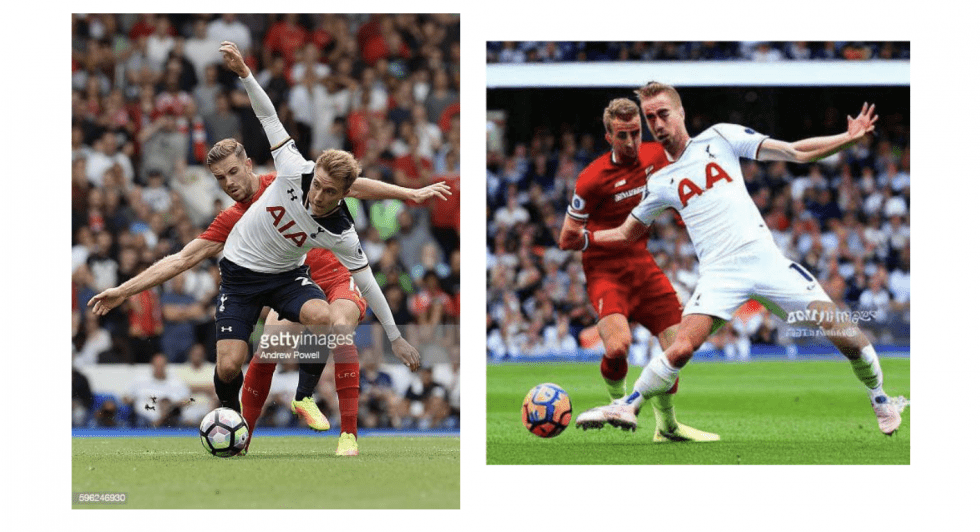
In a motion to dismiss in May 2023, Stability AI, Inc. argued that Getty has not even attempted to make a case for jurisdiction under Delaware’s long-arm statute, as it “does not allege that any of the purportedly infringing acts regarding training Stable Diffusion occurred within Delaware.” Instead (and “although the amended complaint is vague in this regard”), Stability AI claims that Getty “appears to allege that the training took place in England and Germany,” pointing to the following language from the plaintiff’s amended complaint, “Stable Diffusion was trained . . . from Datasets prepared by non-party LAION, a German entity…”. Getty also does not allege that Stability AI Ltd. “contracted to supply services or things in Delaware,” per Stability AI.
> STATUS: In addition to filing a new suit against Stability AI on Aug. 14, 2025 in the N.D. Cal. (see above), Getty alerted the court that it was voluntarily dismissing this case without prejudice. “Defendants have not filed any answer or motion for summary judgment,” Getty told the court. “In order to proceed with its claims against Defendants without further delay, Getty Images intends to file a Complaint in the U.S. District Court for the Northern District of California, where Defendants contend this dispute should be resolved.”
Stability AI was named in a copyright infringement, unfair competition, and right-of-publicity lawsuit in January 2023, along with fellow defendants DeviantArt and Midjourney. In furtherance of the lawsuit, a trio of artists is accusing Stability AI and co. of engaging in “blatant and enormous infringement” by using their artworks – without authorization – to enable AI-image generators, including Stable Diffusion, to create what are being characterized as “new” images but what are really “infringing derivative works.”
The defendants have pushed back against the suit, with Stability AI arguing this spring that while Stable Diffusion was “trained on billions of images that were publicly available on the Internet … training a model does not mean copying or memorizing images for later distribution. Indeed, Stable Diffusion does not ‘store’ any images.” Meanwhile, in a filing of its own in April, text-to-image generator DeviantArt urged the court to toss out the claims against it and to strike the right-of-publicity claims lodged against it, as they “largely concern the potential for DreamUp to create art,” which falls neatly within the bounds of free speech. As such, the Los Angeles-based online art (and AI) platform says that the plaintiffs’ claims should be barred by California’s anti-SLAPP statute.
> STATUS: In October 2023, Judge William Orrick dismissed most claims, including DMCA, vicarious infringement, and right-of-publicity claims, but allowed a direct copyright infringement claim against Stability AI to move forward. After the artists filed an amended complaint, Orrick’s August 2024 ruling upheld key claims: direct infringement under both a “model” and “distribution” theory, and an inducement (contributory) infringement claim against Stability and Runway. A false endorsement claim against Midjourney also survived, while all DMCA claims were dismissed with prejudice.
Getty Images filed suit in the High Court of Justice in London against Stability AI, claiming that Stability AI infringed intellectual property rights, including copyright in content owned or represented by Getty Images. In a statement, Getty Images revealed that it is its “position that Stability AI unlawfully copied and processed millions of images protected by copyright and the associated metadata owned or represented by Getty Images absent a license to benefit Stability AI’s commercial interests and to the detriment of the content creators.”
In June 2025, Getty Images’ UK lawsuit against Stability AI reached trial, but Getty dramatically dropped its primary copyright claims, alleging unlawful training on millions of Getty photos and infringing outputs with watermark artifacts, on June 25 due to insufficient evidence linking Stability’s UK activities to these acts and proving substantial copying. The case continued on narrower grounds: a secondary infringement theory under UK law, where Getty argues that the Stable Diffusion model itself is an “infringing article” whose importation or distribution in the UK violates Getty’s rights, and a trademark claim alleging that distorted Getty watermarks in AI-generated outputs dilute its brand and cause confusion.
> STATUS (Nov. 4, 2025): Getty Images suffered a major setback, with London’s High Court dismissing most of its copyright claims. The stock photo giant had accused the maker of Stable Diffusion of unlawfully using its catalog to train the AI image generator and of reproducing copyrighted works. In a decision on Nov. 4, the court found only limited trademark infringement, tied to Getty’s watermarks appearing in some AI-generated images, and rejected the broader copyright claim. Getty has, nonetheless, hailed the ruling as affirming that AI models can infringe intellectual property and signaled its intent to pursue similar arguments in its ongoing U.S. case.
Microsoft, GitHub, and OpenAI landed on the receiving end of an interesting lawsuit, with a couple of plaintiffs accusing them of running afoul of the Digital Millennium Copyright Act (“DMCA”), and also engaging in breach of contract, tortious interference, fraud, false designation, unjust enrichment, and unfair competition in connection with Copilot, a subscription-based AI tool co-developed by GitHub and OpenAI. At the heart of the plaintiffs’ suit: Their claim that the defendants used their copyright-protected source code as training data for Copilot, which enables software developers to easily generate code by “turning natural language prompts into coding suggestions across dozens of languages.”
According to the plaintiffs, open-source code repository GitHub, OpenAI (which created the GPT-3 language model used to create Copilot), GitHub owner and OpenAI investor Microsoft (the “defendants”) used data that they sourced from publicly accessible repositories on GitHub to train Copilot. The plaintiffs assert that they “posted such code or other works under certain open-source licenses on GitHub,” and that all of those licenses require attribution of the author’s name and copyright. The problem, they claim, is that in using their code, the defendants stripped the “attribution, copyright notice, and license terms from their code in violation of the licenses and the plaintiffs’ and the class’s rights.”
> STATUS: As of July 2025, Doe v. GitHub, Microsoft & OpenAI (Copilot) is paused in district court while the Ninth Circuit reviews a certified appeal on a key DMCA §1202(b) question: whether Copilot must output identical code for a removal-of-information violation to occur. This interlocutory appeal, certified in September 2024, will determine if non-identical but substantially similar code without attribution can trigger DMCA liability. Meanwhile, the district court has dismissed other claims, including unjust enrichment, negligence, and DMCA claims tied to non-identical output, as preempted or insufficient.
In an early generative AI-centric case, Thomson Reuters alleges that ROSS copied the entirety of its Westlaw database (after having been denied a license) to use as training data for its competing generative AI-powered legal research platform. Reuters’ complaint survived a motion to dismiss in 2021. Fast forward to the summary judgement phase, and ROSS has argued, in part, that its unauthorized copying/use of the Westlaw database amounts to fair use.
Specifically, ROSS claims that it took only “unprotected ideas and facts about the text” in order to train its model; that its “purpose” in doing so was to “write entirely original and new code” for its generative AI-powered search tool; and that there is no market for the allegedly infringed Westlaw content consisting of headnotes and key numbers.
> STATUS: As of May 2025, the case was isheaded to the Third Circuit after a key February 11, 2025 ruling in which Judge Stephanos Bibas granted partial summary judgment to Thomson Reuters, holding that ROSS directly infringed copyrights in over 2,200 Westlaw headnotes and rejecting its fair-use defense. Judge Bibas certified two central questions for appellate review: whether Westlaw’s headnotes are sufficiently original to merit copyright protection and whether ROSS’s use of them for its AI legal research tool constitutes non-transformative, market-substituting use.