

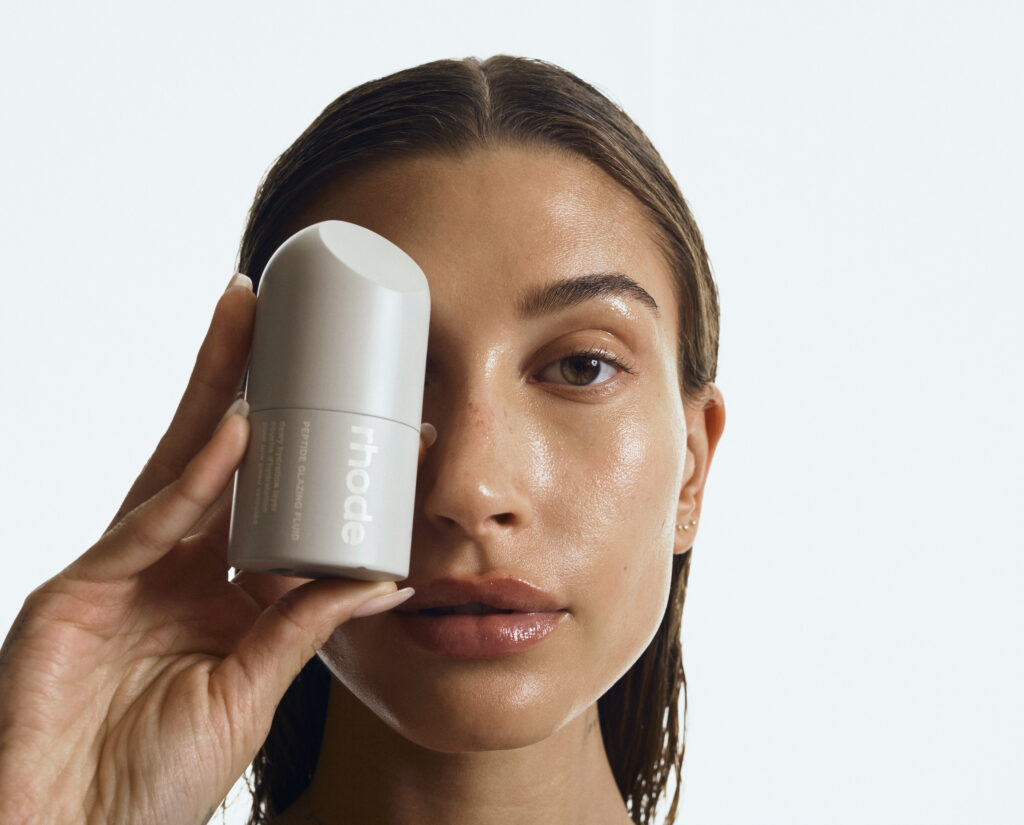
When e.l.f. closed a nearly $1 billion deal to acquire rhode, the skincare brand founded by Hailey Bieber, on August 5, it marked one of the fastest, most remarkable success stories in the beauty industry’s recent history. The deal saw Oakland, California-headquartered e.l.f. Beauty pony up $600 million in cash, $200 million in e.l.f. stock, and up to $200 million in performance-based earnouts. For a three-year-old brand with just a few SKUs and relatively limited retail presence, the valuation stunned even seasoned industry observers.
“Seeing a brand this young and this lean command a ten-figure price tag is almost unprecedented,” said Melissa Cheng, a consumer beauty analyst at Lux Insight Partners. “This kind of valuation for a minimalist brand with limited SKU diversity would’ve been unthinkable five years ago,” Javier Morales, a partner at Catalyst Consumer Capital, echoed.
But for those who have tracked the rise of creator-led brands, rhode’s billion-dollar exit was less shocking than it might appear. The deal is part of a larger wave of high-profile acquisitions where “cultural capital” – built through creators and digital communities – has translated into enterprise value, according to CreatorIQ chief marketing officer, Brit Starr.
Over the past five years, Puig has acquired Charlotte Tilbury for $1.5 billion (2020) and Byredo for €1 billion (2022), Unilever picked up Paula’s Choice for $2.2 billion (2021) and K18 Hair for an estimated $700 million (2023), and Estée Lauder closed out its full takeover of Deciem in 2024 for roughly $860 million. Outside of the beauty realm, PepsiCo’s $1.95 billion acquisition of Poppi in 2025 underscored the same phenomenon: brands that master digital culture and creator-driven momentum are commanding eye-popping valuations.
From Viral Hype to Financial Substance
You do not need to look much further than rhode’s ads to see Hailey Bieber front and center. The model and creative director is undoubtedly the face of the brand – but she is also more than that. In other words, Bieber did not just endorse rhode – she helped build it. Her hands-on approach to product design, brand storytelling, and content creation positioned rhode as a true founder-led brand.
With more than 55 million Instagram followers and 15 million on TikTok, Bieber leveraged her social presence to embed rhode into the cultural moment. Her trademark “clean girl” aesthetic – dewy skin, neutral tones, minimalist routines – aligned seamlessly with rhode’s visual identity and product focus.
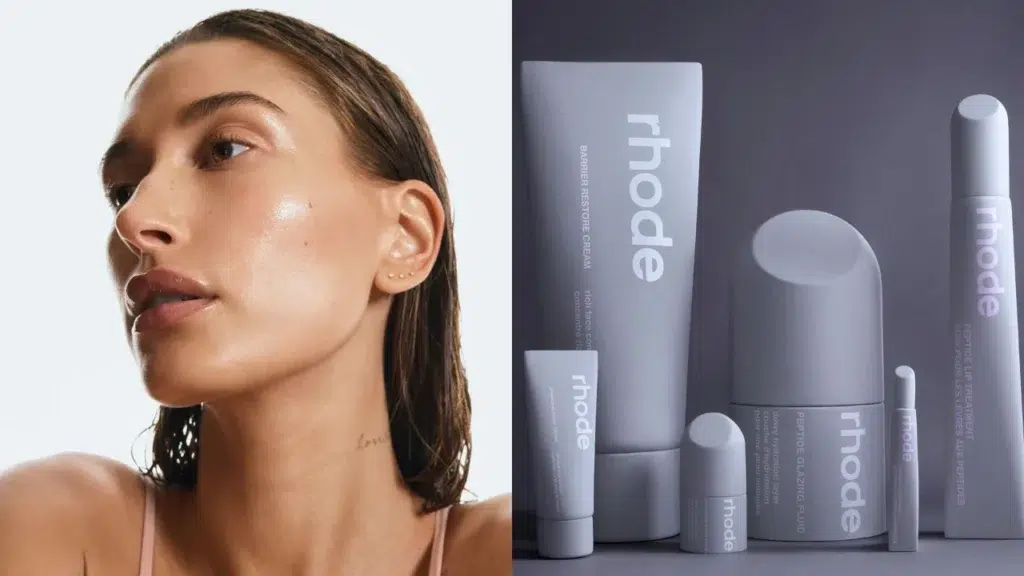
Unlike many traditional celebrity-fronted ventures, rhode launched with a restrained, intentional assortment: a serum, a moisturizer, and the now-iconic Peptide Lip Treatment. This tight lineup, optimized for TikTok virality with names like “glazing fluid,” created instant cult appeal. The phrase “glazed donut skin” – coined and popularized by Bieber herself – became part of the skincare lexicon.
In a nutshell, rhode is “emblematic” of a new crop of celebrity-backed consumer brands that are “lean, intentional, and culturally fluent,” disrupting traditional megabrands, the Financial Times reported in May.
Under the hood, rhode’s unit economics are unusually tight: product cost of goods near 19 percent of sales, delivery expenses around 15 percent, marketing at roughly 11 percent, and G&A about 17 percent, yielding EBITDA on the order of the mid-30s. While exact EBITDA figures have not been disclosed publicly, industry analysts estimate rhode operates at or above 40 percent EBITDA margins, which is striking for such a young company. Even setting the higher estimates aside, a ~34 percent EBITDA profile places rhode well above typical DTC margins (often 10–15 percent) and ahead of many established beauty portfolios (commonly 20–25 percent).
That cost structure is the story: a hero SKU engineered for efficient manufacturing (fans point to the “glazing” line) carries a healthy markup, more akin to a scaled beauty incumbent than a fledgling DTC label. Many indie peers sit closer to 25–30 percent COGS; rhode’s ~19 percent signals disciplined formulation, packaging, and sourcing from day one. Delivery at ~15 percent is likewise controlled for a DTC-heavy mix – no growth-at-all-costs shipping burn.
Marketing is where rhode rewrote the playbook. With roughly 11 percent of revenue spent on marketing – versus the 30–50 percent many DTC brands pour into paid social – the founder’s cultural reach substitutes for ad spend. Pre-deal, marketing efficiency (MER) reportedly hovered near 9x: every dollar out brought roughly nine dollars back. In other words, Hailey is the demand engine.
If there is a soft spot, it’s G&A around 17 percent – elevated for a young brand. That likely reflects early investment in senior talent and infrastructure that e.l.f. can now centralize. The integration upside is straightforward: push fixed overhead into a larger platform and let margins expand.
At the same time, rhode’s earned media value (“EMV”) has skyrocketed. In 2024, alone, it produced an estimated $248 million in EMV, according to Tribe Dynamics, outpacing legacy competitors like Summer Fridays and Glow Recipe. This aligns with a broader trend: the most successful creator-led brands, from Paula’s Choice to K18 Hair, have seen EMV growth of over 100 percent leading up to their acquisitions, proving that strong digital communities are a direct driver of enterprise value.
One more notable dimension: Disclosure. e.l.f. shared unusually granular P&L detail for an acquired brand – a rarity in beauty M&A.
Market Shifts, Strategic Timing & the Perfect Buyer
Rhode’s rise is particularly striking when viewed against broader market shifts. Direct-to-consumer models – once the hallmark of indie beauty – have begun to show cracks, with sales in the U.S. and U.K. slipping year-over-year. At the same time, established multi-brand retailers like Sephora remain strong, driving steady global growth and offering acquired independents access to new regions and demographics.
Consumer behavior has also changed. Under economic pressure, shoppers are increasingly prioritizing efficacy over hype. Dermatologist-backed, results-driven formulations are overtaking marketing-led promises, while the draw of celebrity or influencer founders has lost some of its sway. A recent study found that only 13 percent of consumers now view a public-facing founder as a key factor in purchasing decisions – a significant shift from the past decade’s influencer-fueled boom.
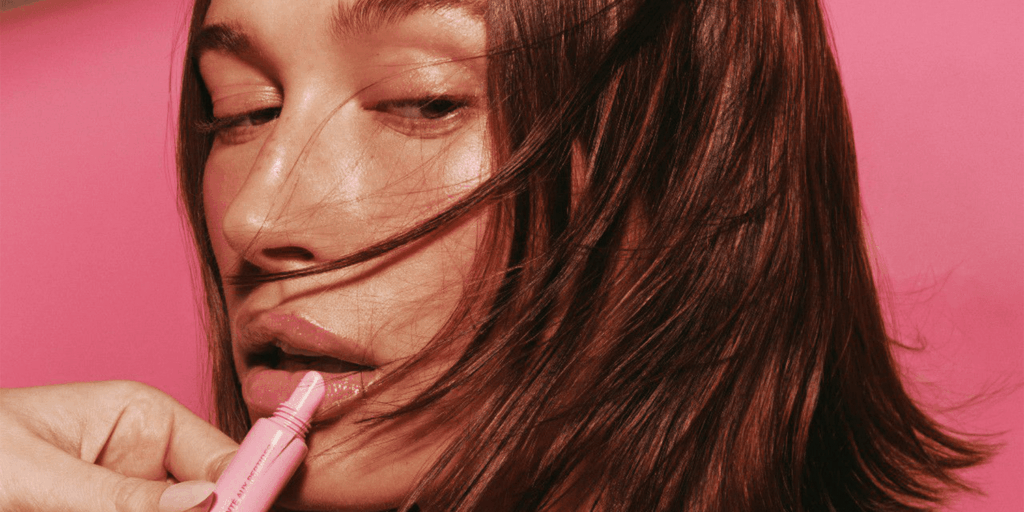
Against this backdrop, rhode’s valuation reflects not only its cultural cachet but also e.l.f.’s bet that the brand can scale beyond Bieber’s persona. As independent labels are absorbed into corporate portfolios, they gain the capital and operational infrastructure to accelerate innovation, expand product pipelines, and secure prime distribution. This makes them formidable competitors in both prestige and mass beauty – but also raises the risk that a once tightly curated identity could dilute under corporate stewardship.
Rhode’s valuation is also a function of timing and cultural relevance. As the beauty market began to cool after its pandemic-fueled boom, many prestige skincare brands struggled to maintain momentum. Rhode, however, grew rapidly by focusing on Gen Z values: authenticity, sustainability, aesthetic branding, and results. “The rhode deal is a bold move for e.l.f. into premium beauty at a time when the prestige side of the industry has lost some momentum,” eMarketer’s Sky Canaves told Reuters. “Rhode has bucked this trend, with a strong Gen Z following and buzz around product launches.”
E.l.f., known for its digital-first strategies and value pricing, saw an opportunity in Bieber’s brand, which has shown a “level of disruption [that] definitely caught our attention,” CEO Tarang Amin said. The acquisition also gives e.l.f. a gateway into Sephora – a first for the company – adding a strategic retail dimension to the deal.
The Valuation Question: Hype, or Hard Numbers?
Some analysts have questioned whether a celebrity-led brand with such a small catalog could command almost a $1 billion valuation, but investors are not as skeptical. Following the acquisition announcement, NYSE-traded e.l.f.’s stock surged nearly 24 percent, reflecting confidence in rhode’s growth trajectory and synergy potential.
In truth, rhode’s success reflects broader trends shaping modern beauty: early investment in creators, recognition of creators as cultural architects, and a commitment to authentic, scalable content. While only 15 percent of rhode’s EMV in 2024 came from posts that mentioned Bieber by name, the brand’s wider creator community – micro-influencers, skincare enthusiasts, and everyday users – has kept its momentum rolling.
For the next wave of celebrity brands, rhode’s rubric is clear: founder involvement that is real, products that earn repeat purchase, operational discipline, capital-efficient growth, and a P&L that can withstand daylight.
Share