

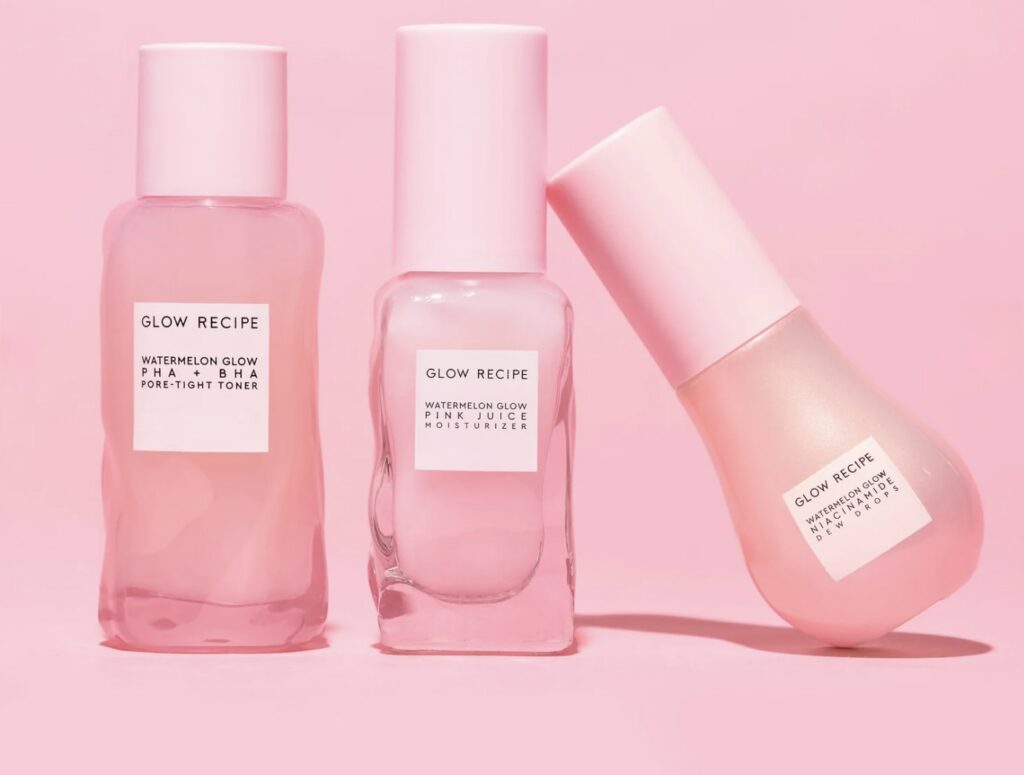
The legal battle over beauty dupes is steadily moving beyond the products themselves. Glow Recipe’s newly-filed consolidated complaint against MCoBeauty and Target reflects that shift, framing the alleged copying of its Watermelon Glow Niacinamide Dew Drops packaging and sale of “dupes” as one component of a broader effort to capitalize on the goodwill and recognition associated with its hot-selling product.
In an amended complaint filed on June 5 in federal court in New York, Aramara Beauty, which does business as Glow Recipe, expands its claims against MCoBeauty and adds Target as a defendant. In addition to setting out claims of trademark and trade dress infringement, the New York-headquartered company advances an unfair competition theory that treats the alleged copying of Dew Drops as part of a broader effort to capitalize on the goodwill associated with the product. Glow Recipe alleges that MCoBeauty and Target used a combination of product imagery, dupe-focused marketing, search advertising, social media content, retailer product listings, and search optimization practices to “call to mind in consumers Glow Recipe” and “usurp Glow Recipe’s goodwill and reputation.”
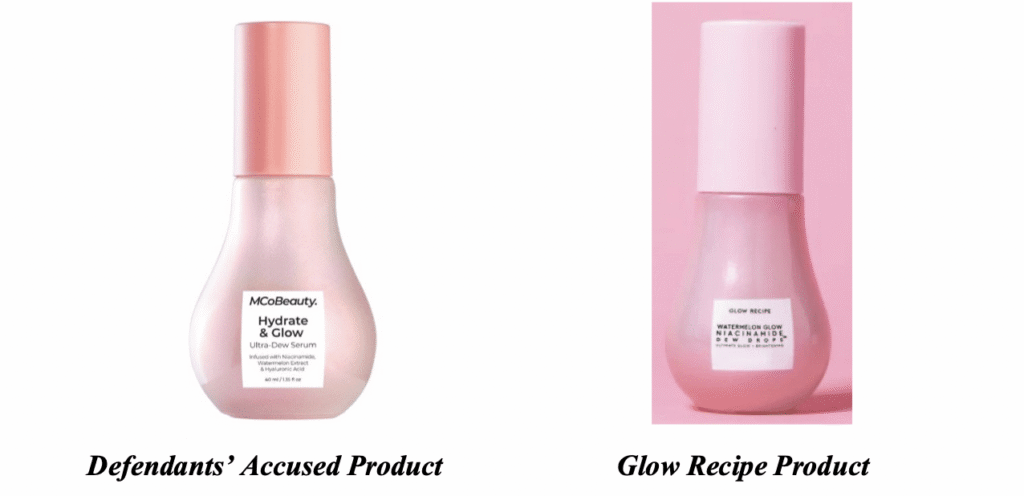
Glow Recipe frames at least some of that alleged conduct through the lens of initial-interest confusion, a theory concerned with the diversion of consumer attention before a purchase is made. Among other things, the company alleges that MCoBeauty purchased “GLOW RECIPE” and related search terms in online advertising and used them “to intercept that consumer interest and redirect it” to Ultra-Dew Serum. Glow Recipe further alleges that some consumers “mistakenly perceiv[ed]” the allegedly infringing packaging as originating from Glow Recipe before ultimately encountering MCoBeauty’s competing product.
Confusion, Recognition, and the Dupe Economy
Yet Glow Recipe’s theory is not limited to confusion. The complaint repeatedly points to consumer comments identifying Ultra-Dew Serum as a Dew Drops copy, underscoring a recurring tension in dupe litigation. Trademark law traditionally focuses on whether consumers are confused about source, but many dupe products derive their value from recognition. Their commercial appeal often depends on consumers understanding precisely what product is being imitated.
Rather than undermining its claims, Glow Recipe treats evidence that consumers recognized Ultra-Dew Serum as a Dew Drops copy as support for the proposition that consumers already associate Dew Drops’ appearance with Glow Recipe.
Bringing Retailers Into the Equation
Glow Recipe extends that reasoning to Target. The company alleges that the retailer not only displayed images of the allegedly infringing packaging on product listings but also used terms such as “Glow Recipe” and “Dew Drops” in metadata and other search-optimization tools. According to the complaint, those efforts likewise sought to “call to mind in consumers Glow Recipe” and capitalize on the goodwill associated with Dew Drops.
By adding Target to the case, Glow Recipe effectively extends its theory beyond the manufacturer and into the product-discovery process itself. The complaint reflects the increasingly influential role retailers play in how consumers encounter products online. Through search optimization, product-listing content, and other digital merchandising functions, retailers help shape not only what consumers buy, but also how they discover and compare competing products in the first place.
THE BIGGER PICTURE: Courts have not always been receptive to expansive initial-interest confusion theories, particularly in online environments where consumers routinely encounter comparative advertising, search results, and branded content before making purchasing decisions. Even still, the complaint reflects a broader shift in how brands are approaching dupe-related disputes. Rather than focusing exclusively on allegedly infringing products and/or product packaging, companies are increasingly taking issue with the marketing, advertising, search, and merchandising practices that help consumers discover them.
Glow Recipe’s claims seek to place some of those activities within the scope of trademark and unfair competition scrutiny. In doing so, the company is effectively arguing that the commercial success of an alleged dupe may stem not only from the product itself, but also from the digital infrastructure that helps consumers find it.
The filing ultimately raises a question that is becoming increasingly common in dupe litigation: If the commercial success of a dupe depends not only on the product itself but also on the mechanisms that help consumers find it, should those activities be analyzed separately or as part of a single competitive strategy? Glow Recipe’s complaint adopts the latter view.
The case is Aramara Beauty v. MCO Beauty PTY Limited, 1:25-cv-04808 (SDNY).
Updated
June 22, 2026
The parties notified the court in a filing on June 22 that they have reached a confidential settlement in a dispute the defendants characterized as stemming from a single, since-removed product image.
Share