


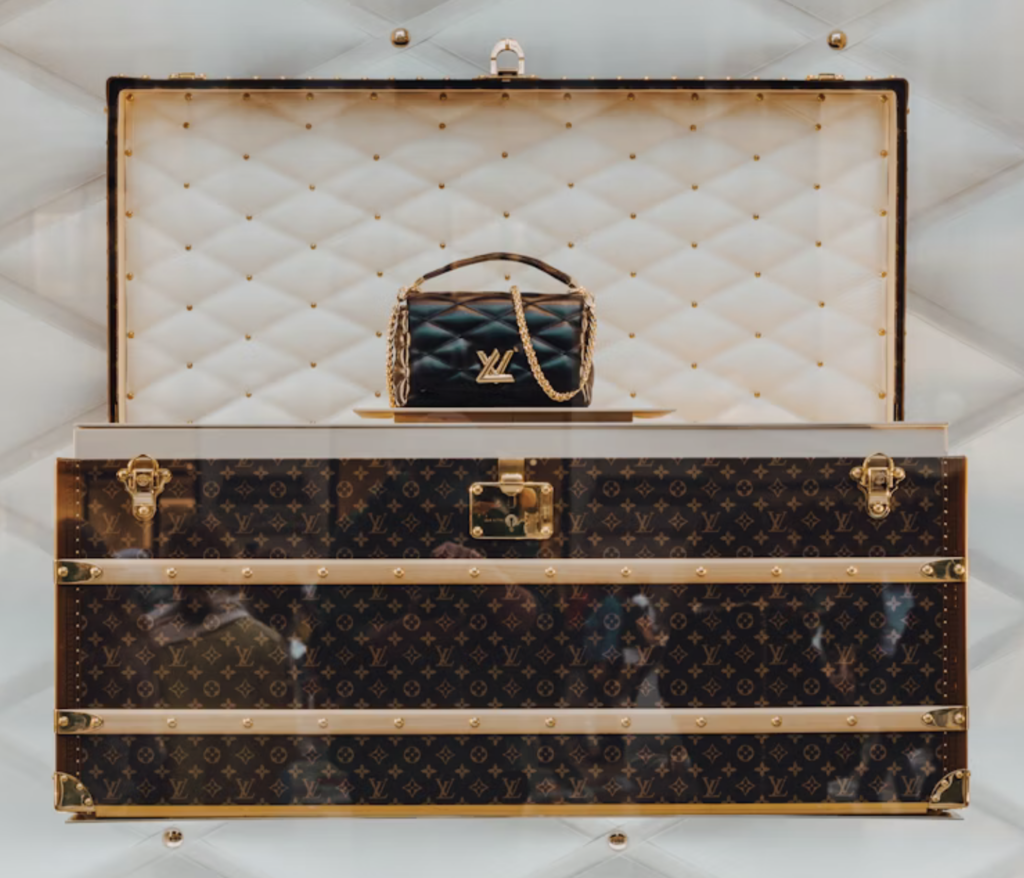
The issue of upcycling landed before the Supreme Court of Korea, which has held for the first time that the alteration of branded luxury goods may not constitute actionable trademark “use.” In a newly issued decision in a case that pits Louis Vuitton against a handbag upcycler and alteration service provider, the court held that luxury goods modified by third-party service providers at the request of their owners for personal use do not amount to trademark infringement. At the same time, the court made clear that producing and selling modified goods in a commercial capacity can cross the line.
The ruling, issued by the court’s second division, overturns a lower court decision that sided with Louis Vuitton in its trademark infringement suit against the alteration provider. The Supreme Court remanded the case to the Intellectual Property High Court for further proceedings, signaling a more nuanced approach to third-party modification of luxury goods.
The Background in Brief: Between 2017 and 2021, Lee Kyung-han accepted customer orders, disassembled used Louis Vuitton bags, and transformed their materials into new bags and wallets for a fee. In 2022, Louis Vuitton filed suit, arguing that the altered goods – which continued to bear its trademarks – infringed its rights in those marks.
Both the Seoul Central District Court and the Intellectual Property High Court sided with Louis Vuitton. The lower courts focused on whether the reconstructed items constituted “new” goods, ultimately holding that they did and that Lee’s activities therefore amounted to trademark use under Korea’s Trademark Act. Lee appealed to the Supreme Court.
Personal Use vs. Trademark “Use”
The Supreme Court took a narrower view of what constitutes trademark “use” in the context of customization. In its February 25 decision, the court distinguished between personal and commercial use. Specifically, it held that when a tailor or service provider modifies a product at the request of its lawful owner and returns the finished item for that owner’s personal use, such conduct does not constitute trademark use, a threshold requirement for a finding of infringement. The mere fact that a fee is charged for labor does not automatically transform the service into statutory “use” of the mark.
In doing so, the court moved away from the lower courts’ emphasis on whether the redesigned goods qualified as “new” products and instead centered the inquiry on whether the defendant engaged in trademark use in a commercial sense.
Not an absolute win for upcyclers and customizers, the court held that there are circumstances in which similar conduct could infringe trademark rights. For instance, customization may cross into infringement where the service provider produces and sells redesigned goods as its own commercial offerings. Additionally, “special circumstances” may give rise to infringement depending on the background and details of the customization request; who made the final decisions regarding the purpose, form, and quantity of the products; the nature of the compensation received; and the source of the materials used,” the court said, placing the burden of proof squarely on the trademark holder.
The court further held that if a luxury goods owner requests customization not for personal use but for resale in the market, and the service provider knew or should have known that such conduct would constitute trademark infringement, the provider may bear joint liability.
A Broader Enforcement Trend
The ruling is the Korean Supreme Court’s first decision directly addressing whether the customization of branded luxury goods constitutes trademark infringement. The court acknowledged that the case is being closely watched in the United States, Europe, and Japan, and noted that its impact could be significant. The decision – which somewhat closely mirrors one from the Swiss Supreme Court in a case involving modified Rolex watches – comes amid an increasingly assertive enforcement environment. Fashion brands, watchmakers, and sportswear companies, alike, have made headlines in cases testing the outer limits of trademark rights and the scope of the first sale doctrine.
At the heart of many of these disputes lies the tension between trademark exhaustion and post-sale modification. The first sale doctrine generally permits the resale of genuine trademark-bearing products without authorization once they have been lawfully placed on the market. However, when a product is materially altered such that it effectively becomes a different commercial offering, courts have often found that exhaustion protections no longer apply.
This case and others like it also highlight a broader policy debate: the clash between circularity and brand control. Upcyclers frequently cite sustainability and waste reduction as motivations for dismantling and repurposing luxury goods. Brands, for their part, argue that even when modifications begin with authentic products, the resulting goods are no longer genuine and may undermine quality assurances, dilute brand image, and erode the goodwill embedded in their often-famous trademarks.
By distinguishing between personal-use modification and commercial resale, the Supreme Court appears to have struck a middle ground. Consumers retain meaningful freedom to alter goods they lawfully own, including high-end products. At the same time, brands maintain a viable pathway to challenge businesses that commercialize modified, trademark-bearing goods in ways that risk confusing consumers or capitalizing on brand equity.
THE BOTTOM LINE: The decision recalibrates the balance between product ownership and brand control, reinforcing that trademark law is not a mechanism for absolute post-sale control – but it also is not powerless against commercialized upcycling. The case will now return to the Intellectual Property High Court for further review.
Share