Nike scored another early win in the fight over its revived “Total 90” branding. On the heels of rejecting Total90’s bid for a TRO late last year and denying a preliminary injunction in an oral order on June 5, the court set out the basis for its refusal to grant the injunction sought by Total90, LLC. In her June 22 order, Judge Wendy B. Vitter of the Eastern District of Louisiana offered a useful look at how little use may be enough to keep a legacy trademark alive despite a registration lapse. That question sits at the center of the dispute.
Total90 claims that Nike abandoned the “Total 90” mark after allowing its U.S. registration to lapse in 2019, leaving room for a new rights holder to step in. Total90 moved to register “Total90” in 2022 and ultimately secured a U.S. registration in September 2024. When Nike reintroduced products bearing the Total 90 mark in March 2025 through a football-focused collection, Total90 sued, alleging trademark infringement and reverse confusion. But at the preliminary injunction stage, the court found that Nike’s evidence of several post-2019 uses of “Total 90,” together with testimony that the brand had remained in use, was enough to undercut Total90’s abandonment theory.
Registration vs. Use
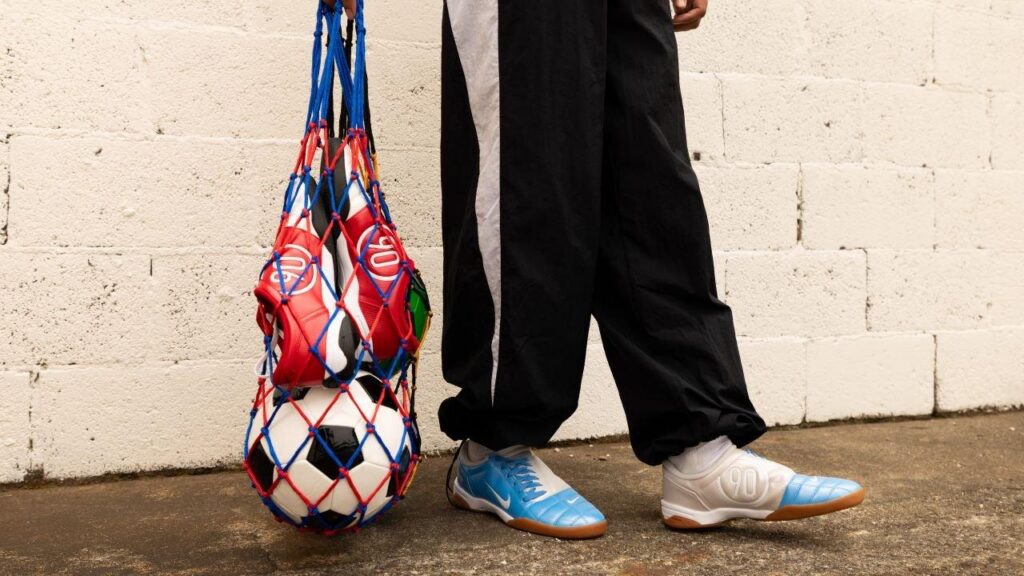
The court was not persuaded – at least for purposes of preliminary relief – that Total90 was likely to prove abandonment. Instead, it focused on whether Nike had actually discontinued use of “Total 90” in a way that would allow priority to pass to a later user. On that front, the court pointed to Nike’s evidence that the mark had not disappeared from commerce altogether after 2019, including Total 90 soccer balls, a Total 90 cleat, and a line of Total 90 clothing, along with testimony that the brand had remained in use and evidence of a Total 90-branded cleat developed in 2023.
That is what makes the ruling notable beyond the immediate dispute. Because trademark rights in the U.S. flow from use rather than registration alone, Nike did not need to show a sweeping revival of the brand to undercut Total90’s abandonment theory at this stage. Instead, the court treated a relatively thin record of continued use as enough to complicate Total90’s effort to establish clean priority and secure emergency relief.
For brands sitting on legacy lines, that is the more interesting takeaway: the amount of marketplace activity needed to keep an old mark alive may be lower than a later filer would hope.
Delay Undercuts the Injunction Bid
The court’s irreparable-harm analysis is equally instructive. Total90 argued that Nike’s renewed Total 90 push, particularly against the backdrop of the World Cup in the U.S., threatened to overwhelm its own efforts to build the brand. But the court found that Total90’s own timeline substantially weakened that claim. According to the order, Total90 contacted Nike about its “Total90” registration in December 2024; Nike’s challenged relaunch followed in March 2025; and yet Total90 did not file suit and seek emergency injunctive relief until November 2025.
The court also pointed to months of communications between the parties, including efforts by Total90 to obtain monetary payment in exchange for abandoning its registration, as undercutting the idea that the dispute presented the kind of immediate, irreparable threat that warrants emergency relief.
THE BIGGER PICTURE: The ruling offers a useful look at the evidentiary dynamics of revival-era trademark fights. As brands continue to mine their archives for heritage lines and nostalgia-era sub-brands, the real vulnerability may be less the lapse itself than the thinness of the record surrounding post-lapse use.
At the same time, for later filers hoping to capitalize on gaps in legacy portfolios, the case is a reminder that securing a registration is only part of the battle. The harder task may be proving that the original owner truly left the mark behind – and that the record of continued use is too insubstantial to keep it alive.
The case is Total90 LLC v. Nike, Inc., 2:25-cv-02325 (E.D. La.).
Updated
August 28, 2026
Nike and Total90 settled their trademark dispute, with the parties jointly asking the court on August 28 to dismiss the case without prejudice. Terms of the settlement were not disclosed.
Share