

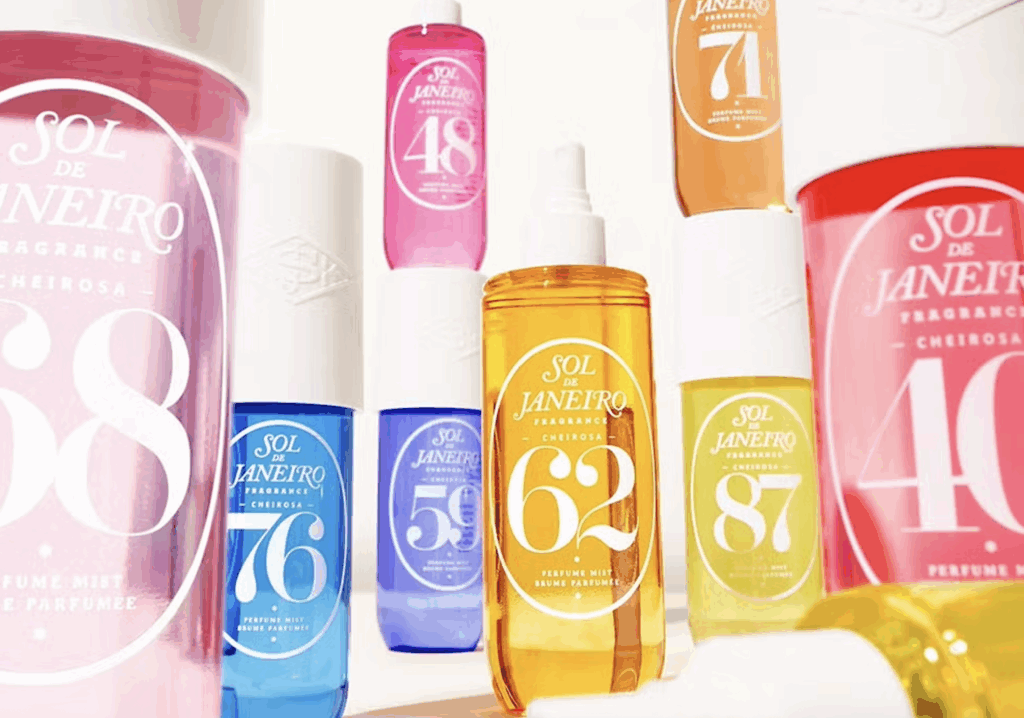
Sol de Janeiro is doubling down in its fight against MCoBeauty, expanding a lawsuit that centers on lookalike fragrances and bold marketing claims. In a newly amended complaint, Sol de Janeiro alleges that the Australian beauty brand has broadened its line of fragrance dupes and intensified its comparative marketing, conduct that Sol de Janeiro says amounts to a coordinated campaign to trade on its branding, reputation, and consumer goodwill.
The Background in Brief: Sol de Janeiro first filed suit against MCoBeauty in the U.S. District Court for the Southern District of New York in November 2024. It accused the beauty company of copying the look and feel of its Cheirosa body mist line – including distinctive packaging, color schemes, and branding elements – and using marketing language that falsely claimed the MCoBeauty products “smell exactly like” Sol de Janeiro’s.
In an answer in June, MCoBeauty lodged a series of affirmative defenses, claiming that Sol de Janeiro is attempting to monopolize functional, non-distinctive features of packaging and marketing, and that comparisons like “smells exactly like” fall within the realm of puffery or fair use – not false advertising.
New “Infringing” Products & Expanded Claims
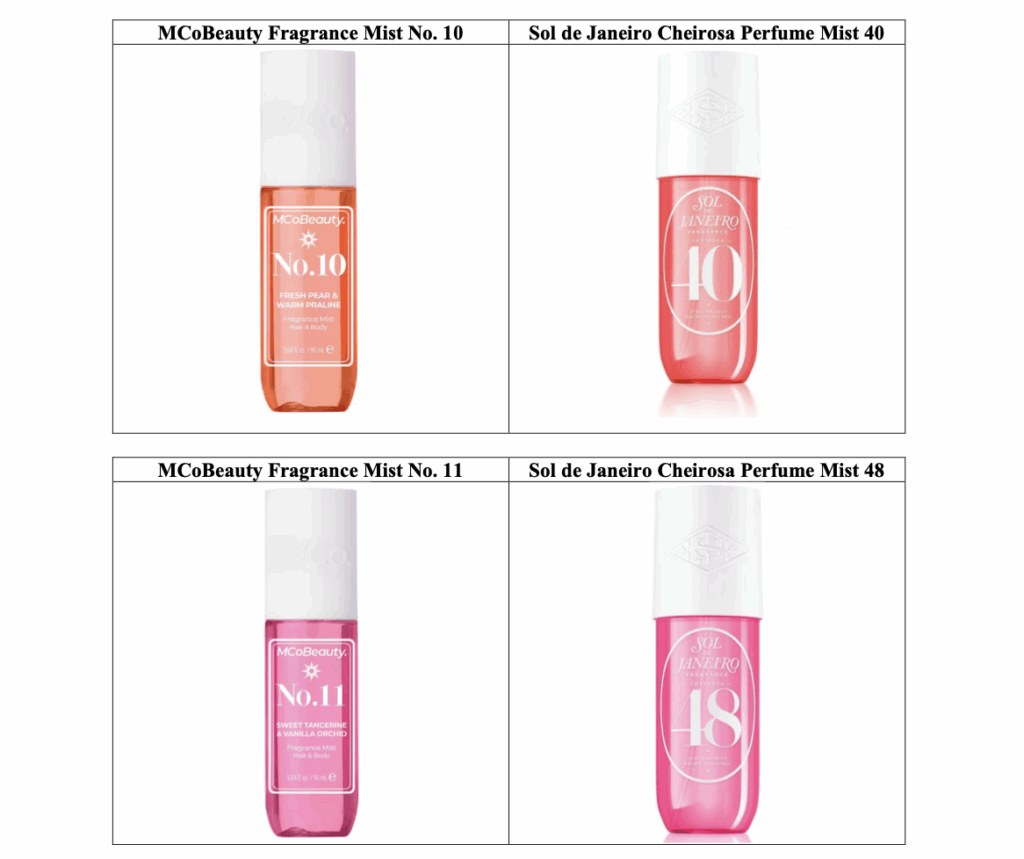
In the amended complaint that it filed on November 25, Sol de Janeiro is aiming to broaden the scope of the case. Where the original complaint targeted MCoBeauty Fragrance Mists No. 1 through 4, the updated filing includes Nos. 0, 5, 6, and 7, as well, bringing the total to eight allegedly infringing products. According to the complaint, “Each of MCoBeauty’s Fragrance Mists is a copy of one of Sol de Janeiro’s body mists and is marketed as a dupe of a Sol de Janeiro scent.”
In furtherance of its trade dress infringement claims, Sol de Janeiro asserts that its trade dress consists of “a transparent bottle, with bold, colorful labeling that is color-coded by scent,” along with “a rounded cap in a metallic or pearlescent finish, and bold, sans serif font prominently displaying the scent number and name.” The brand argues that this combination is distinctive and source-identifying, and claims that MCoBeauty has “deliberately designed … to unfairly infringe and copy the Sol de Janeiro Trade Dress” in a manner that is likely to confuse consumers.
Sol de Janeiro alleges that MCoBeauty’s products not only infringe its trade dress but are being promoted as “deliberate copies of Sol de Janeiro’s body mists” in a way that is “intended to confuse and deceive consumers,” thereby undermining the brand’s goodwill and misleading the public.
In addition to highlighting new “infringing” products, Sol de Janeiro takes issue with MCoBeauty’s marketing of them, adding enhanced evidentiary support for its false advertising claims, including:
> An MCoBeauty promo video on YouTube, in which influencer Lauren Ilardo says, “I found the best Sol de Janeiro dupes on Amazon” and that they “smell exactly like the Sol de Janeiro fragrances.” The video further claims that “some of [the MCoBeauty] scents even hold better than the Sol de Janeiro ones.”
> An influencer post on Instagram that says: “DUPE ALERT! If you love the Sol de Janeiro Body Spray Collection, then you might love these NEW Fragrance Mists from MCoBeauty.’” (Sol de Janeiro notes that MCoBeauty “liked and commented on” the post, thus “endorsing and amplifying” the comparison.)
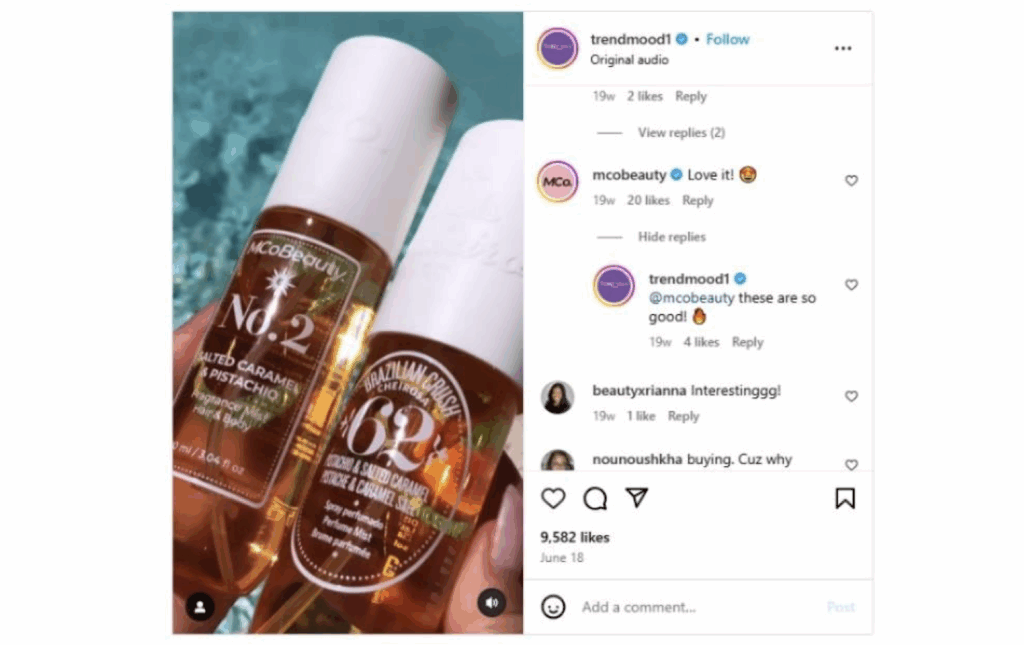
> Customer reviews on MCoBeauty’s website, which “state that the products ‘smell exactly like Sol de Janeiro’ and ‘are dupes for Sol de Janeiro.’” (Sol de Janeiro asserts that these reviews are curated and “selectively published to reinforce the false narrative.” It also emphasizes that MCoBeauty “has a policy of moderating reviews and does not permit unverified or offensive reviews to be published,” suggesting active editorial control over the content shown to consumers.)
Taken together, Sol de Janeiro asserts that these examples form part of a deliberate and deceptive marketing strategy designed to mislead consumers into believing MCoBeauty’s lower-cost mists are equivalent to its own.
FTC Guidelines Come into Play
Also in the amended complaint: a new emphasis on violations of the Federal Trade Commission (“FTC”)’s endorsement guidelines. Sol de Janeiro alleges that MCoBeauty’s use of influencer endorsements and customer testimonials “crosses the line into false advertising,” particularly because the company “actively participated in, endorsed, and curated false advertising about its own products,” including by “liking and commenting on misleading social media posts and customer reviews.” The complaint points out that MCoBeauty “has a policy of moderating reviews” on its website and “screens for unverified and offensive reviews, while hosting, curating, and promoting false and misleading ones.”
According to Sol de Janeiro, these actions violate the FTC’s endorsement rules, which require companies to “monitor and correct misleading or unsubstantiated statements made through endorsements,” and further state that “companies are responsible for and must monitor the actions of their endorsers.” MCoBeauty’s failure to comply, combined with what Sol de Janeiro characterizes as “affirmative adoption of deceptive advertising,” allegedly makes the company liable not only for trademark infringement but also for regulatory non-compliance.
THE BOTTOM LINE: This case continues to spotlight the tensions between market leaders and brands engaging in “dupe marketing,” a phenomenon that has exploded in the beauty industry thanks to social media and influencer-driven consumption. By invoking the FTC’s endorsement guidelines, Sol de Janeiro is signaling a new legal strategy.
With its false advertising and regulatory non-compliance claims, Sol de Janeiro is going beyond traditional intellectual property infringement claims over copycat products and packaging. The brand appears to be hedging against a potential finding that its trade dress is, as MCoBeauty argues, less an indicator of source than a combination of generic aesthetic choices common in the beauty industry.
The case is Sol De Janeiro, Inc. v. MCoBeauty Pty Ltd, 1:24-cv-08862 (SDNY).
Share