

As the fashion, retail, and tech worlds continue to overlap, patent disputes, licensing deals, and even copyright issues have taken on a growing role. Wearable technology continues to expand and improve, and the developing tech is creating new legal challenges and raising questions about how companies protect innovation. Recent cases involving Apple, Oura, Whoop, Samsung, Nike, Lululemon, and other players illustrate some of the issues emerging in the space, while drawing a line between the legal disputes the traditional fashion industry has been accustomed to and those that are likely to become more common as technology is embedded in products consumers wear every day.
Wearable technology has come a long way since the early days of digital watches and fitness trackers. The landscape now encompasses smart rings, VR and AR headsets, health-monitoring devices, AI-enabled glasses, and other products designed to continuously collect and interpret information about their users. Developing a staple wearable tech product is often a costly and time-consuming process, leading companies to invest heavily in products and technologies that they can sell and refine for years, as opposed to the seasonal and cyclical nature of many fashion products. That investment also gives companies reason to build up robust arsenals of intellectual property protections and enforce them against rivals.
Function Over Form
Dustin Weeks, a partner at Troutman Pepper who focuses on patent disputes in the wearable technology space, emphasized that a key difference between traditional fashion intellectual property issues and those emerging in wearable tech is partially a matter of focus on function over form. It is a distinction that drives much of the litigation while blurring the line between fashion and technology. “When you get into wearables, it is probably less about the design and more about the functionality,” Weeks said. “You are often going to protect that functionality with utility patents,” which focus on the functional aspects of a product, as opposed to its appearance.
When wearable, functional products come on the market, consumers often expect those products to see incremental improvements through new hardware, software, sensors, and other updates without being wholly replaced each season. “This type of functional aspect that you’re protecting, and in a new product, the next year, you may improve that functionality, but you’re not really wholesale replacing that function,” Weeks said. “The protection of that function, I think that’s where there are bigger stakes, because it is that same property that you’re protecting.”
“You’re still utilizing that same tech,” Weeks stated. “So, when you get into battles of exclusivity of that function, it will cover multiple ‘seasons’ and cover multiple years; it won’t be limited to whatever the value of what that design is.”
That dynamic is playing out across the market. In August, the U.S. Court of Appeals for the Federal Circuit affirmed a Patent Trial and Appeal Board determination that 13 claims in a Nike utility patent covering fitness-monitoring technology are unpatentable. The dispute grew out of Nike’s 2022 patent infringement case against Lululemon over its Mirror Home Gym and related products, and centered on technology for monitoring exercise and using information about a user’s fitness to guide workouts.
The case illustrates both sides of the equation Weeks describes. As companies seek rights in technology that can extend across products and product generations, they are also operating in a crowded field of prior art. In Nike’s case, the breadth of the patent claims made it more difficult to distinguish the claimed invention from earlier fitness technology.
Other wearable disputes have focused on enforcement rather than validity. Apple and medical technology company Masimo remain locked in a years-long battle over health-monitoring technology used in the Apple Watch. The dispute has generated proceedings in federal court and before the International Trade Commission, including a 2023 exclusion ordertargeting certain Apple Watches and subsequent proceedings over Apple’s redesigned watches.
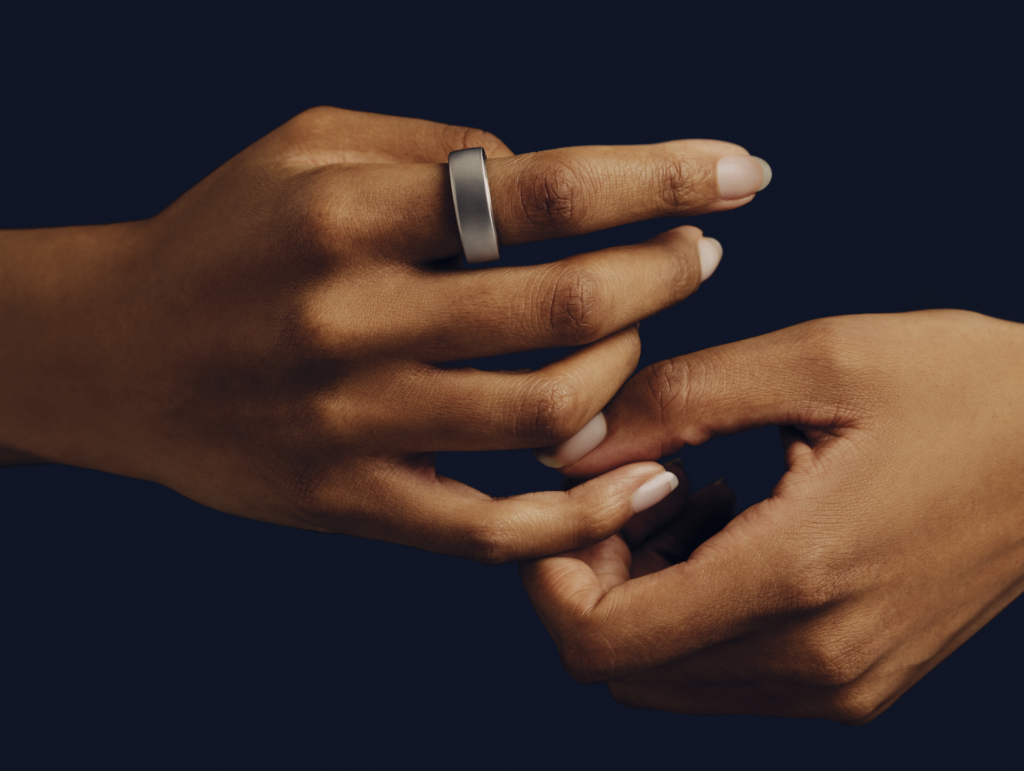
The expanding smart-ring market has created another front for patent enforcement. Oura, for example, has built a sizable patent portfolio and has pursued a growing number of competitors over technology tied to the structure and functionality of smart rings. In November 2025, Oura sued Reebok, alleging that the Reebok Smart Ring infringes eight utility patents covering, among other things, the ring’s internal structure, electronics, sensors, battery configuration, and manufacturing methods. The case followed an International Trade Commission proceeding in which Oura successfully asserted one of its patents against rival smart-ring makers. Oura and Samsung have also engaged in patent litigation involving smart-ring technology.
These fights put Weeks’ point into practice: A patent covering technology embedded in a wearable may extend across generations of products rather than a single collection or season.
The Role of Data
Data is another important aspect to consider in the wearable tech industry. Peter Wakiyama, a Troutman Pepper partner whose practice focuses on copyright and technology, asserted that an emerging legal front in the wearable tech world – and one way it differs from IP issues in the “traditional fashion” world – is data collection.
“I would say one key difference is the value of the data at play,” Wakiyama said. “The data that these tech devices are collecting is intellectual property. And the manufacturers and designers of what you might call ‘traditional fashion’ aren’t able to gather and harvest data with those traditional products in the same way that a smart watch could, for example.”
The volume and range of information involved have expanded as wearables have moved deeper into health and wellness. Devices can collect information about heart rate, sleep, blood oxygen, skin temperature, movement, and other physiological signals, while software and AI systems can help translate that information into recommendations and other outputs. That creates commercial opportunities extending beyond the sale of the wearable itself. The information generated through these products can potentially be used for product development, analytics, training AI, partnerships, and, subject to applicable privacy and other legal restrictions, licensing arrangements.
The data itself is not necessarily subject to intellectual property protection. But creative compilations and particular forms of organizing and presenting information may qualify for copyright protection.
“If the data is organized in a creative compilation then copyright would apply,” Wakiyama said. “Say data from my Fitbit watch, if I organize this by day, type of workout, what I was wearing at the time, what I eat for breakfast this morning – any of that. There are many different ways to structure and arrange the data and this is all information you’re not normally going to be able to fight over in traditional patent or trademark cases.”
Copyright registrations already exist for certain visual works associated with Fitbit, for example. “It’s smart for companies to take advantage of these copyrights” when it comes to tech, Wakiyama said, calling them “low hanging fruit” given the relatively modest cost of registration. The result is a broader protection strategy that can encompass patents, copyrights, trade secrets, contracts, and licensing arrangements, depending on the technology and information at issue.
Where We Go From Here
As the wearable technology space becomes more crowded and new innovations continue to emerge, securing “extremely broad protections” for new devices is becoming more challenging. This underscores the shrinking space in the market “to fence off exclusionary rights,” according to Weeks. “There’s a lot of innovation in the field that is saying, ‘I can make relatively cheap sensors that can be worn by the user,’” Weeks said. “Suddenly, I can provide an EKG or a cardiogram, and that’s a valuable prospect.”
Weeks’ observation about the shrinking space “to fence off exclusionary rights” has become particularly relevant as the wearable and fitness-tech markets have matured. The Nike-Lululemon dispute illustrates the issue from the validity side: The broader the claimed territory, the greater the possibility that earlier technology already occupies some of it.
At the same time, wearable products are moving beyond conventional fitness tracking. Smart rings and watches are incorporating a growing range of health-monitoring capabilities, while smart glasses and other devices are combining everyday accessories with increasingly sophisticated computing systems.
For fashion and consumer brands, the development changes what may need to be protected. A ring can simultaneously be jewelry and a collection of patented sensors, electronics, and manufacturing processes. Glasses can function as both an accessory and a computing platform. A watch can combine a recognizable product design with software and health-monitoring technology that may be valuable across multiple generations of the device.
The proliferation of new features and applications is increasing the value of the intellectual property underlying those products. At the same time, the information they generate creates another potential commercial layer. “There’s going to be an interest in that data,” Weeks said. “To make that data available, you’re going to license it.”
As a result, companies operating at the intersection of consumer products and technology are protecting several layers of a product at once: the device consumers see and wear, the technology operating inside it, and the systems that collect, organize, and make use of the information it produces.
Updated
August 27, 2026
This article was initially published on Aug. 5, 2024 and has been updated to reflect new litigation.
Share