

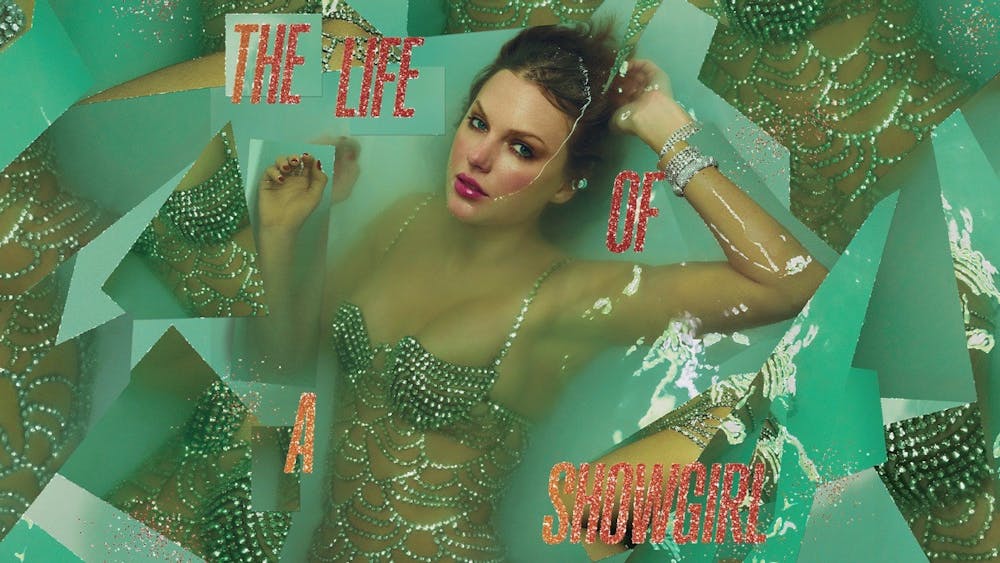
A newly filed lawsuit is putting a spotlight on the increasingly expansive role that names play in the modern entertainment-meets-retail landscape, particularly as titles tied to creative works double as product-facing brands. According to a complaint filed in California federal court by former Las Vegas showgirl Maren Flagg, Taylor Swift and a handful of affiliated entities – including UMG Recordings and merch giant Bravado International – are on the hook for trademark infringement, false designation of origin, and unfair competition over their use of the phrase “The Life of a Showgirl.”
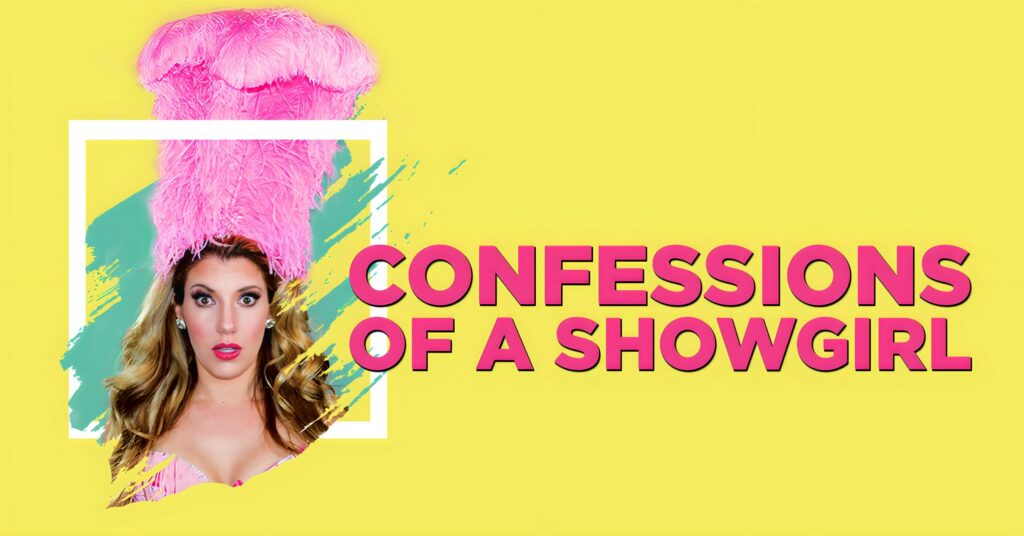
In the March 30 complaint, Flagg alleges that she spent more than a decade building her brand, “Confessions of a Showgirl,” a name she began using in 2014 in connection with a newspaper column that later expanded into a live show, touring production, and broader media offering. At the same time, Flagg points to a federal trademark registration for the mark for use on entertainment services, which was issued by the U.S. Patent and Trademark Office (“USPTO”) in 2015, and has since achieved incontestable status.
She maintains that the mark has come to identify a single source in the media marketplace: her brand.
When a Title Becomes a Brand
The dispute arose in 2025, when Taylor Swift “adopted the designation THE LIFE OF A SHOWGIRL and began using it in commerce,” per Flagg, first in connection with her October 2025 album and critically, as part of a broader commercial push around the album. Flagg maintains that Swift and her affiliated entities (the “defendants”) did not limit their use of the THE LIFE OF A SHOWGIRL moniker to expressive content, and “affixed [it] to consumer goods,” “stamped [it] onto labels, tags, and packaging,” and “deployed [it] as a source identifier across retail channels.”
In other words, Flagg contends that THE LIFE OF A SHOWGIRL phrase is being used not merely as an album title, but as a consumer-facing brand. As part of a dedicated retail exercise, including a “THE LIFE OF A SHOWGIRL SHOP,” Flagg alleges that the defendants are offering up “a range of [branded] products, including drinkware, candles, personal care accessories, and home goods.” She claims that they are using the title “not as artistic expression,” but as a “source-identifying label for those goods.”
Looking to get out ahead of potential Rogers arguments from Swift’s legal team, Flagg emphasizes the distinction between expressive use and trademark use. While the title of a creative work generally benefits from First Amendment protections, the complaint asserts that such protection “does not immunize the defendants’ separate decision to adopt a confusingly similar designation as a trademark, affix it to goods, and deploy it as a source identifier in commerce.”
Flagg further points to the USPTO’s handling of Swift’s application for THE LIFE OF A SHOWGIRL to bolster her claims. She alleges that the USPTO refused to grant Swift a registration for the mark, finding that it is “confusingly similar” to Flagg’s CONFESSIONS OF A SHOWGIRL mark, citing shared wording (“OF A SHOWGIRL”), similar “appearance and sound,” and a comparable “overall commercial impression,” as well as closely related entertainment services. The USPTO concluded that consumers would be likely to assume a connection between the two.
Despite that refusal, Flagg says that Swift “continued using [the allegedly infringing mark] anyway,” expanding its use “across a coordinated commercial program” that reaches “millions of consumers.”
A Case for Reverse Confusion
Framed as a case of reverse confusion, Flagg maintains that Swift’s “overwhelming commercial presence” threatens to “drown out” her mark, leading consumers to believe that her CONFESSIONS OF A SHOWGIRL brand is “affiliated with, sponsored by, or derived from” Swift – a hallmark of reverse confusion. She alleges that such confusion has already begun to materialize, including in online search results and consumer references that purportedly conflate the two designations.
With the foregoing in mind, Flagg is seeking preliminary and permanent injunctive relief to halt use of THE LIFE OF A SHOWGIRL “as a trademark or other source-identifying designation in connection with goods or services in a manner likely to cause confusion,” as well as an monetary damages.
In a motion on April 7, Maren Flagg asks the court to enjoin defendants from using “THE LIFE OF A SHOWGIRL” as a trademark, pointing to alleged evidence that “eight of ten Google autocomplete results” for her mark direct users to Swift and that YouTube search results return Swift’s content before her own. She further asserts that Swift and co. have deployed the phrase beyond an album title across a wider commercial program, including a dedicated retail storefront and product-specific uses like “The Life of a Showgirl Tumbler” and “The Life of a Showgirl Candle,” as evidence that the designation functions as a source identifier in commerce.
THE BIGGER PICTURE: The allegations at play extend beyond a dispute over two similar marks, instead pointing to the mechanics behind the current state of celebrity merchandising. Flagg alleges that Swift operates a “coordinated enterprise” in which rights management, distribution, and merchandising entities have collaborated to create a robust Swift-centric retail arm, resulting in the rapid expansion of albums into a multi-category commercial program spanning product design, manufacturing, and direct-to-consumer sales.
In that sense, the case reflects a broader shift in how creative works are brought to market. A title is no longer confined to its role as a piece of expression; it can serve as the anchor for an integrated retail strategy, moving quickly from album name to product line.
This is not the first dispute of its kind. Lady Gaga landed on the receiving end of a trademark suit filed by Lost International in 2025 over her Mayhem album, tour, and merchandise, with the California-based surf and streetwear brand alleging that her use of the “Mayhem” mark on apparel is likely to cause confusion and suggests a false affiliation.
Against that backdrop, this lawsuit – and others like it – underscores an increasingly common tension in the industry: the dual role of creative works as both expression and commercial assets. As artists increasingly operate as fully integrated brands, spanning merchandise, collaborations, and direct-to-consumer retail, courts are likely to face questions over where expressive use ends and trademark use begins.
The case is Flagg v. Swift et al., 2:26-cv-03354 (C.D. Cal.).
Updated
April 7, 2026
This article was initially published on March 30 and has been updated to reflect Flagg’s April 7 motion for a preliminary injunction.
Share