


A new injunction secured by Rolex sheds light on an increasingly consequential question for luxury brands: When does a genuine product cease to be genuine? In a judgment entered on June 8 in the U.S. District Court for the Central District of California, as first reported by TFL, Rolex Watch U.S.A. and a group of defendants operating under the Swiss Wrist name agreed to a permanent injunction that prohibits the sale of Rolex-branded watches featuring non-genuine dials, bezels, cases, movements, straps, and bands, while also encompassing watches incorporating authentic Rolex parts that have been modified with diamonds and other embellishments.
In the underlying lawsuit, which was filed in May 2025, Rolex accused Sdot Watches LLC (d/b/a Swiss Wrist) of trademark counterfeiting, infringement, false advertising, and unfair competition stemming from the sale of counterfeit and deceptively altered Rolex-branded timepieces and components on its own websites, as well as third-party marketplaces, including Walmart and 1stDibs.
Where Rolex Draws the Line
Ahead of a decision on the merits, the parties’ settlement and accompanying consent judgment offer a glimpse into the boundaries Rolex is seeking to draw between lawful resale and trademark infringement. Among other things, the injunction bars Swiss Wrist from advertising or selling Rolex-branded watches with non-genuine components, including replacement dials, cases, movements, bezels, and bracelets. It also prohibits the defendants from selling watches featuring “materially altered genuine parts” or “non-genuine parts.”
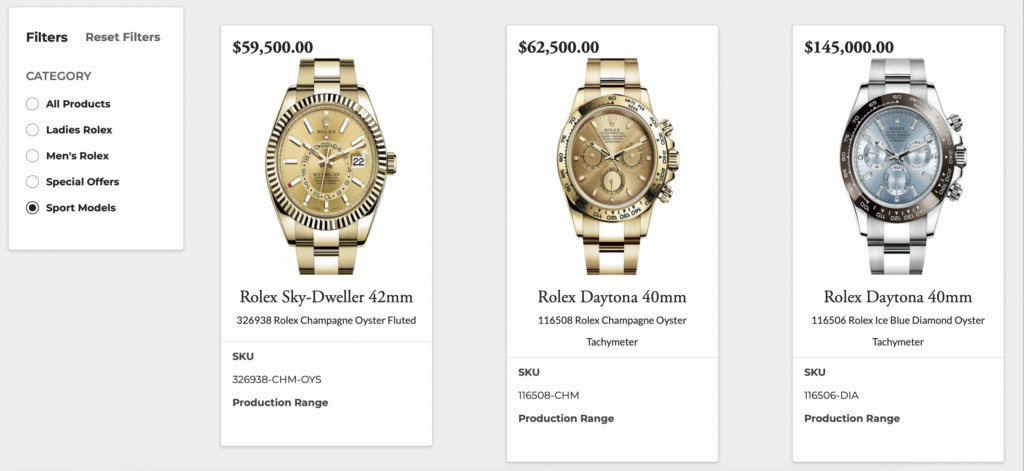
By expressly identifying dials and bezels altered with diamonds and other stones as among the types of modifications covered by the injunction, the order specifically speaks to a category of products that has become increasingly common in the luxury watch aftermarket, where authentic timepieces are customized with aftermarket diamonds, replacement parts, and other modifications.
Viewed more broadly, the order reflects an evolution in luxury brand enforcement. The central question is no longer just whether a product is authentic or counterfeit. Instead, the focus is increasingly on whether a product that began life as authentic remains “genuine” once it has been altered.
The injunction is particularly revealing in that respect because it does more than identify the conduct Rolex contends is infringing. It also offers insight into the characteristics Rolex appears to view as essential to a product’s continued “genuine” status. As reflected in the order, Rolex’s position appears to be that a watch’s “genuine” status depends not only on its origin, but also on the continued integrity of its constituent parts and the absence of material alterations involving non-genuine components or embellishments.
The Trademark Limits of Resale
The first sale doctrine generally protects the resale of genuine goods, but materially altered products occupy a more contested space, with courts recognizing that certain modifications may give rise to infringement claims despite the products’ authentic origins. Viewed through that lens, disputes of this kind are not simply about source identification. They also implicate a trademark owner’s ability to control the quality and composition of the products sold under its marks.
The issue is not merely who made the watch originally, but whether subsequent alterations have changed the product in ways that trademark law recognizes as incompatible with continued use of the Rolex mark. That question has become increasingly important as resale and customization markets mature and courts are asked to determine whether modifications fundamentally change the product consumers believe they are purchasing.
Rolex’s latest injunction appears aimed at reinforcing the proposition that certain modifications can move otherwise authentic products outside the bounds of the first sale doctrine.
THE BIGGER PICTURE: The implications extend well beyond watches. As luxury brands confront growing demand for repair, refurbishment, restoration, upcycling, and personalization, courts are increasingly being asked to determine when intervention preserves authenticity and when it creates an altogether different product. Whether the products at issue are handbags fitted with replacement parts, vintage goods transformed into new creations, or customized timepieces built around authentic components, the same underlying question continues to surface: At what point does an authentic product become materially different enough to implicate trademark law?
Rolex’s injunction offers a particularly clear articulation of one answer to that question. In the process, it highlights an enduring effort by luxury brands to define authenticity not only by origin, but by the continued integrity of the product itself.
The case is Rolex Watch U.S.A., Inc. v. SDOT Watches LLC, 2:25-cv-03990 (C.D. Cal.).
Share