

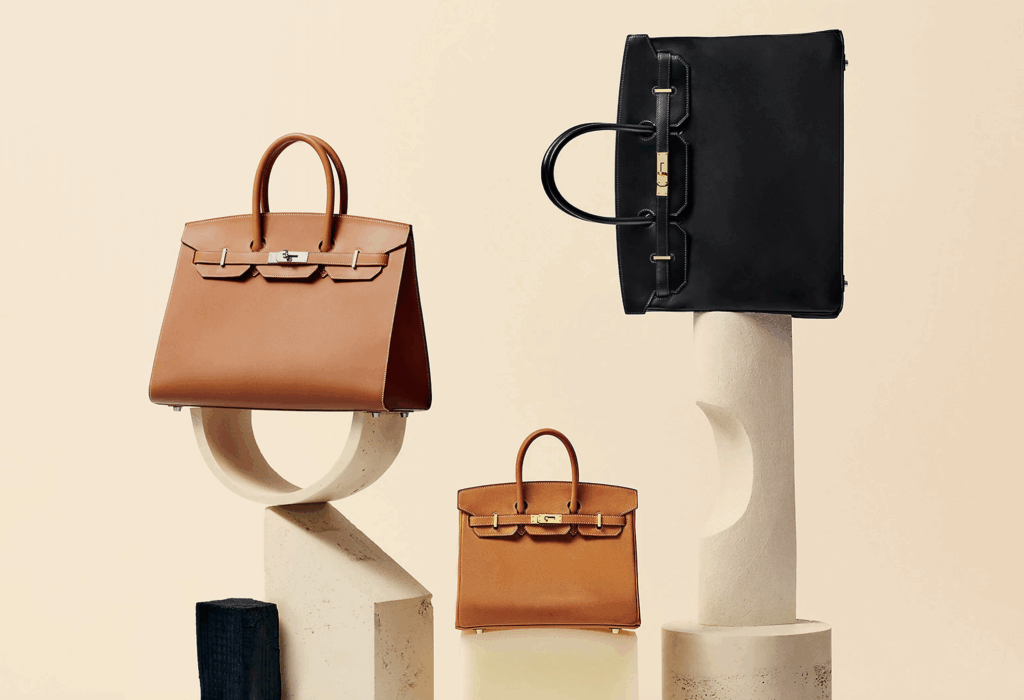
Hermès and its coveted Birkin bags remain untouchable – both culturally and in court. This week, a California federal court put an end to the closely watched case against the brand, dismissing – this time with prejudice – claims by three consumer plaintiffs that access to Birkin and Kelly bags is conditioned on the purchase of other Hermès products. The order sends a clear signal to luxury brands: consumer frustration over exclusivity strategies may fuel litigation, but antitrust law demands more than dissatisfaction.
The dismissal order, handed down by Judge James Donato of the Northern District of California on September 17, offers critical takeaways for luxury companies navigating the fine line between scarcity and competition …
Judicial Skepticism of the “Birkin as Antitrust Tie”
The plaintiffs’ central theory was that Hermès effectively “tied” its Birkin and Kelly bags to “ancillary” products so that only customers who spend thousands of dollars on scarves, jewelry, ready-to-wear, etc. are given access to the brand’s hardest-to-get handbags.
“The plaintiffs framed this as a classic tying arrangement prohibited by Section 1 of the Sherman Act, arguing that Hermès forced consumers to purchase other goods in order to get a chance to buy Birkin and Kelly bags. The court, however, was unconvinced, emphasizing that not every instance of conditional selling amounts to an antitrust violation and that exclusivity in luxury, on its own, does not equal unlawful tying.
Judge Donato stressed that conditioning access to a desirable product – even in a way that feels exclusionary – does not necessarily translate into an antitrust violation. Violations arise when there is a negative impact on competition, such as by shutting out rivals or reducing consumer choice, not disappointment from individual buyers.
Exclusivity and preferential treatment for high-spending customers remain legally viable strategies if they do not hinder competition.
Per Se Illegality Argument Rejected
The plaintiffs tried to avoid difficult factual showings – including that Hermès has enough power in the Birkin market to coerce customers into buying “ancillary” items or that rival brands were prevented from competing in these “ancillary” product markets – by arguing that all tying should be treated as per se unlawful. But the court disagreed, stating that modern antitrust law, for instance, recognizes that some tying can be pro-competitive, enhancing efficiency or consumer choice.
Although earlier case law cast tying in a skeptical light, Judge Donato emphasized that modern courts reserve per se condemnation for only the rarest scenarios – and luxury handbag sales are not among them.
Market Definition Problems
The weakest link in the plaintiffs’ case was market definition. They argued that Hermès dominated the “Elitist Luxury Handbag Market,” leaning on decade-old investor presentations and academic commentary to substantiate the claim. Judge Donato dismissed, highlighting two key points …
> First, courts require markets to be defined by substitutability – what consumers consider reasonably interchangeable – not by a plaintiff’s characterization. In plain terms, you cannot just declare that the Birkin is in its own market. You have to show that buyers would never consider anything else a substitute, and that is where the plaintiffs fell short.
Just because a Birkin occupies an undeniably unique place in the luxury hierarchy does not mean it forms its own market for competition purposes.
> Second, having a large share of sales is not the same as having market power. True market power exists when a company can raise prices or limit competition without losing customers to rivals. For luxury brands, this distinction is crucial: popularity, exclusivity, and long waitlists may signal cultural influence, but they do not automatically amount to monopoly power under the law.
Failure to Show Harm to Competition
Finally, even if Birkin and Kelly bags were tying products, the plaintiffs failed to show harm in the tied market.The problem, according to Hermès and the court, was that they defined this market as an unwieldy mix of categories: scarves, shoes, watches, jewelry, fragrances, even home décor. The court found no plausible allegations that Hermès’ practices restricted competition in such a broad and disparate set of markets.
The intricacy here lies in antitrust’s focus on competitive harm, not consumer inconvenience. The plaintiffs essentially argued that consumers were pressured to buy things they did not want, but that is not enough. Antitrust injury requires evidence that rivals in those categories were foreclosed or disadvantaged. The court determined the plaintiffs’ amended complaints were “bereft of any facts” showing that competition in the alleged tied markets was negatively impacted by Hermès alleged tying.
>> The Takeaway: According to Judge Donato, businesses remain free to decide how they allocate their most coveted goods unless those practices distort competition at large. For luxury brands, this reinforces the fact that prioritizing loyal customers or curating access is legally acceptable if it does not suppress rival sellers or eliminate consumer choice.
Implications for Other Luxury Houses
The Hermès ruling is not just about Birkin or Kelly bags; it offers guidance for other exclusivity-driven sectors. Rolex, for example, has long operated with waiting lists and authorized-dealer allocations that frustrate customers but preserve brand scarcity. Chanel has imposed strict purchase limits in boutiques to prevent resale, and Ferrari famously restricts sales of certain models to pre-approved buyers.
The decision suggests that these strategies are unlikely to attract antitrust liability absent strong evidence of defined market power and competitive harm. Courts are signaling that luxury exclusivity is not the same as anticompetitive conduct. Brands that withhold products, reward loyalty, or cap sales may anger would-be buyers, but unless those policies can be shown to disadvantage competitors in a legally cognizable market, the practices are legally defensible.
At the same time, the ruling highlights where brands should tread carefully. If a company were to expand its exclusivity strategy in a way that plausibly foreclosed competition, such as by using dominance in one product line to block rivals in another, plaintiffs might gain more traction. For now, though, Hermès has given the industry a roadmap: exclusivity remains a powerful tool of luxury branding, and the law is reluctant to dismantle it.
Share