

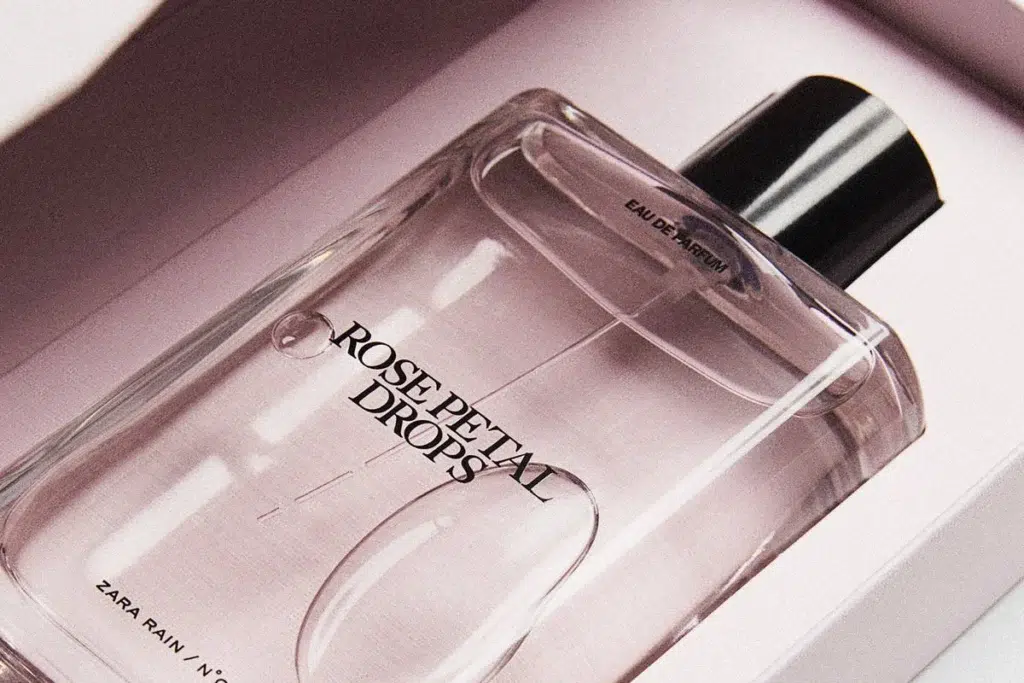
The trademark and contract battle between The Estée Lauder Companies, British perfumer Jo Malone, and Zara’s UK entity is intensifying, as Zara denies allegations that its fragrance collaboration with Malone infringes Estée Lauder’s rights in the “Jo Malone” name. In a defense filing submitted to the UK High Court, Zara’s UK subsidiary, ITX, argues that its references to Malone in connection with the Zara x Jo Loves fragrance collection are lawful and consistent with guidance previously provided by Estée Lauder itself.
The filing marks the latest development in a headline-making lawsuit that centers on the commercial use of a founder’s personal name after the sale of an eponymous beauty brand.
Prior Guidance on Name Use
At the heart of the case is Malone’s 1999 sale of the Jo Malone London brand to Estée Lauder. As part of that transaction, Malone agreed to restrictions on the use of the “Jo Malone” name in certain commercial contexts, including fragrance marketing. After leaving her namesake brand, Malone launched Jo Loves in 2011 and later partnered with Zara on a line of fragrances beginning in 2019.
Estée Lauder filed suit against Malone, Jo Loves, and Zara’s UK business in March, alleging breach of contract, trademark infringement, and passing off under English law. The cosmetics company took issue with language appearing on Zara fragrance packaging and online product listings, including references such as “Created by Jo Malone CBE, founder of Jo Loves.”
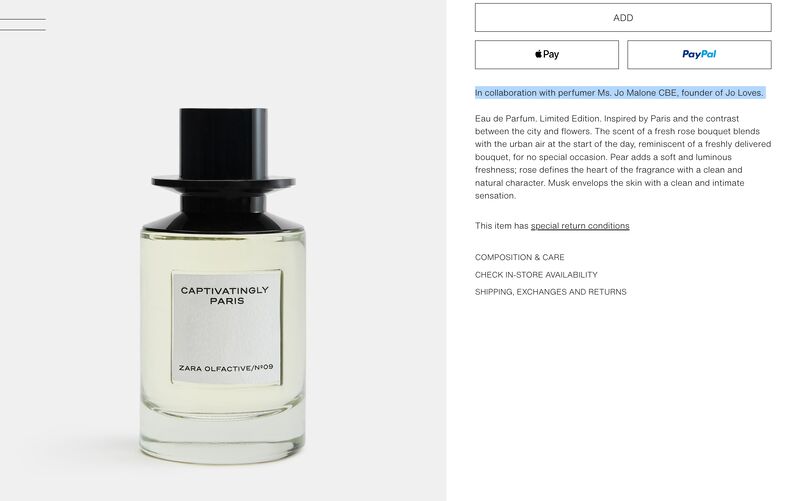
According to Zara’s newly filed defense, however, Estée Lauder had previously outlined parameters for permissible use of Jo Malone’s name. ITX claims that after Estée Lauder raised concerns in 2020 regarding a Zara social media post in China, the company’s lawyers subsequently confirmed that certain uses of Malone’s name fell within acceptable limits. Zara further alleges that Estée Lauder advised the retailer to distinguish Malone the individual from the Jo Malone fragrance brand by using formulations such as “Jo Malone CBE,” “Ms Jo Malone,” or “Ms Malone.”
Zara argues that its current product descriptions – which now refer to “perfumer Ms. Jo Malone CBE, founder of Jo Loves” – adhere to those principles and are intended to identify Malone as an individual collaborator rather than suggest any affiliation with Jo Malone London.
THE BIGGER PICTURE: The case raises broader questions about the extent to which founders who sell trademark rights tied to their names may later reference their own identities in business ventures. In its filing, Zara reportedly characterized the case as implicating how Malone “can fairly and legitimately refer to herself” following the sale of her original company. Malone recently addressed the case, stating in a video posted to Instagram that Zara approached her personally rather than the Jo Loves brand. She also emphasized that the collaboration was designed to avoid confusion with Jo Malone London.
The dispute also reflects a broader shift in how fashion and beauty brands approach founder-led branding. While founders’ names have long functioned as valuable commercial assets, cases like this underscore the complications that can arise when personal identity and trademark ownership diverge after a sale.
Share