


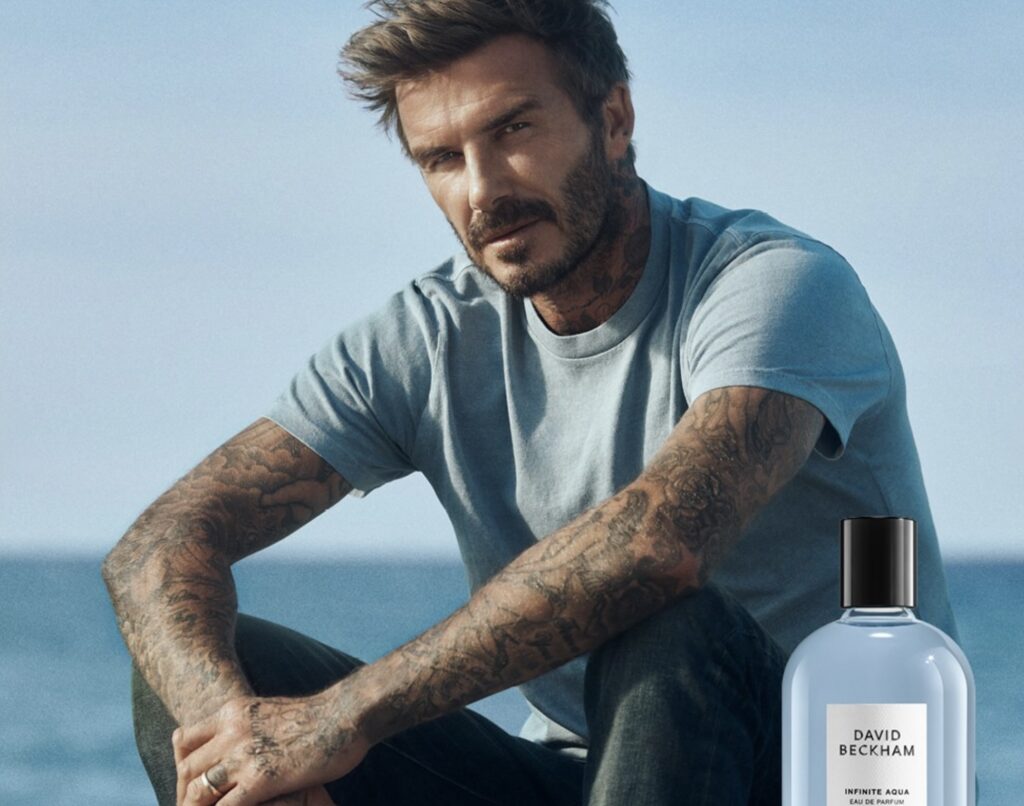
David Beckham’s fragrance business is at the center of a lawsuit seeking at least $41 million in damages over the extent to which a brand owner can control products sold under a licensing agreement. DB Ventures, which manages Beckham’s commercial rights, accuses longtime fragrance partner Coty of distributing millions of dollars of David Beckham products through “unauthorized” channels, including discount retailers and gas stations, in order to generate revenue at the expense of the Beckham brand.
Filed in New York Supreme Court in April 2026, DB Ventures’ lawsuit alleges that Coty sold an estimated $24.25 million in Beckham-branded fragrances through distribution channels that were either unapproved or selected without the required notice and consultation. Specifically, Beckham’s company accuses Coty of dumping fragrances at liquidation-level prices, pointing to products appearing on the shelves of British discount retailer Poundland and in a gas station bargain bin. In doing so, Coty allegedly prioritized its own commercial interests over its contractual obligation to protect the Beckham brand’s image.
Coty disputes the allegations and has moved to dismiss the complaint in its entirety, maintaining that its licensing agreement gives it broad discretion over distribution and that the lawsuit is an attempt to terminate the deal ahead of schedule.
Who Controls Distribution?
At the heart of the case is a provision in the parties’ 2016 licensing agreement, which permits Coty to distribute Beckham fragrances through department stores, chain stores, mass merchandisers, e-commerce outlets, and other channels, as reasonably determined by Coty. The same provision requires Coty to obtain DB Ventures’ prior approval for distribution through supermarkets and hypermarkets and affords DB Ventures notice and consultation rights concerning the selection of sub-distributors, commercial strategy, and distribution channels.
DB Ventures also points to a separate provision in the agreement, which requires Coty to maintain the brand’s “good image,” as a basis for challenging its distribution practices. The complaint includes additional allegations concerning unpaid royalties, shortfalls in advertising expenditures, and an unauthorized promotion involving Beckham’s image.
In its September 2026 filing in support of its motion to dismiss, Coty argues that these consultation rights do not give DB Ventures approval authority over other distribution decisions. It also disputes responsibility for products appearing at retailers that DB Ventures considers unauthorized, maintaining that it cannot control where its distributors ultimately sell them.
The Licensing Strategy
One of the critical elements of the case comes by way of Coty’s claim that Beckham’s lawsuit is little more than an attempt to get out of the parties’ licensing deal early. Coty’s license is set to expire in March 2028. The future of the fragrance business is no mystery: In January 2026, Interparfums announced an exclusive, 20-year license for Beckham fragrances that, according to its subsequent annual report, will take effect on “the earlier of April 1, 2028 or the termination of the existing license agreement” with Coty.
If the fight over the future of Beckham’s fragrance business feels familiar, it is because it echoes elements of the legal battle over Gucci Beauty that followed Kering’s announcement of its €4 billion beauty deal with L’Oréal. At the heart of that dispute was what Kering could promise to a future business partner while Coty still held the exclusive rights to Gucci Beauty. Kering ultimately agreed in July to pay Coty approximately $400 million to relinquish those rights a year ahead of schedule.
While Kering effectively bought its way out of the licensing agreement with Coty, DB Ventures appears to be seeking to establish that it has contractual grounds for an early exit. Against that background, the provisions of the parties’ licensing agreement governing distribution and brand image take on added commercial significance. In addition to protecting the value of the Beckham brand over the life of the license, those provisions – if breached in a manner that gives rise to a right to terminate – could enable DB Ventures to end the licensing relationship early without having to buy out Coty’s remaining rights.
The case is DB Ventures Limited v. Coty Germany GmbH, 652416/2026 (N.Y. Sup. Ct.).
Share