

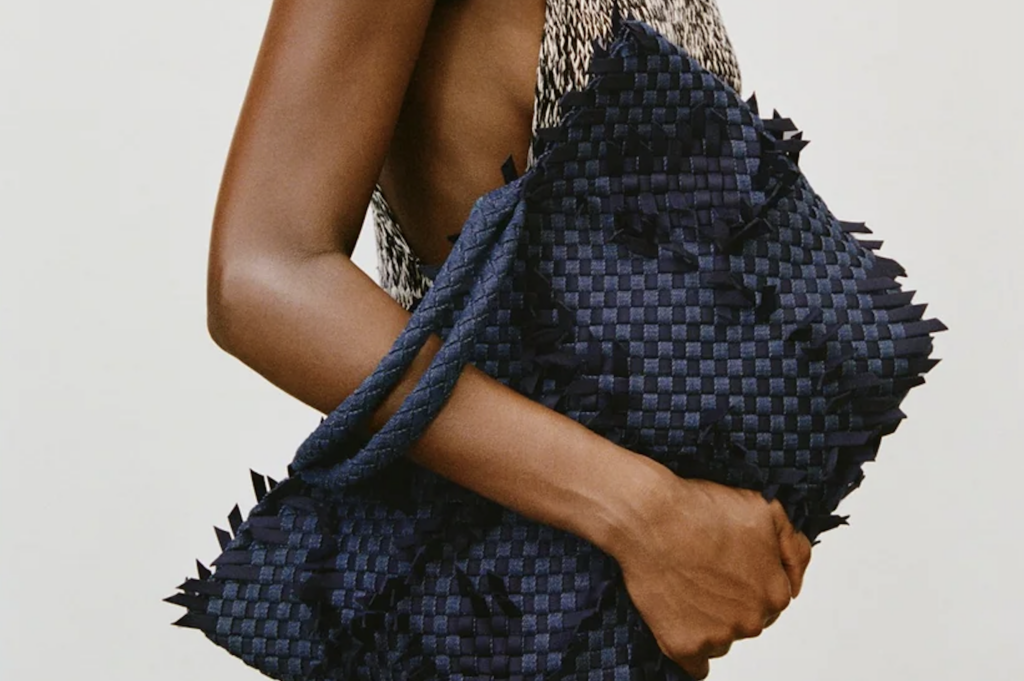
Naghedi is still angling to register its signature woven handbag design as a trademark – and it claims that the proliferation of lookalike products supports its position that the design functions as an indicator of source. In a new filing, as exclusively reported by TFL, the accessories brand pushes back against the U.S. Patent and Trademark Office’s refusal to register its woven pattern, arguing that the agency has misinterpreted evidence of competing products.
While the USPTO has cited similar handbags as evidence that Naghedi’s woven design – which consists of uniformly sized neoprene strips folded and interlaced into a repeating diagonal weave – is a commonly-used decorative feature, the company maintains that these products reflect imitation of a design consumers have come to associate with its brand. With that in mind, the dispute turns, in part, on whether competitors are copying the weave for its aesthetic appeal or its association with Naghedi.
The Case for Copying
Naghedi’s back and forth with the USPTO began in February 2023, when it applied to register its signature woven pattern as a trademark for use on handbags. Since then, the agency has repeatedly refused to register the mark, finding the design to be ornamental and the company’s evidence insufficient to establish acquired distinctiveness under Section 2(f) of the Trademark Act.
In its November 12, 2026 response to the USPTO’s third Office Action, Naghedi challenges the examining attorney’s reliance on competing woven handbags as evidence that its design is commonplace in the market – and fails to function as a trademark. The company argues that third parties only began offering lookalike handbags at least five years after it introduced its weave in 2015, making those products evidence of subsequent imitation rather than widespread use of an existing design.
At the same time, Naghedi points to media coverage and consumer comments describing competing handbags as “Naghedi dupes” or Naghedi-inspired designs as evidence that its weave has acquired distinctiveness and that competitors are seeking to capitalize on that recognition. Naghedi’s claim that lookalike handbags demonstrate consumer recognition of its weave goes to the heart of the USPTO’s refusal. The examining attorney has maintained that competitors may copy a handbag design for its aesthetic appealrather than to benefit from consumers associating the design with a particular brand. Naghedi counters that references to competing products as “Naghedi dupes” suggest that the alleged imitation is intended to capitalize on the brand recognition associated with its weave.
Citing trademark precedent recognizing intentional copying as potential evidence of acquired distinctiveness, Naghedi argues that the proliferation of copycat products – considered alongside its commercial performance, including more than $14 million in U.S. sales and approximately $3 million in advertising expenditures in 2025 – demonstrates that consumers recognize its weave as a trademark.
Still yet, Naghedi invokes registered Louis Vuitton and Burberry patterns to argue that the USPTO has previously recognized all-over designs as trademarks and that its woven design can similarly function as a trademark in its own right – with or without the NAGHEDI name.
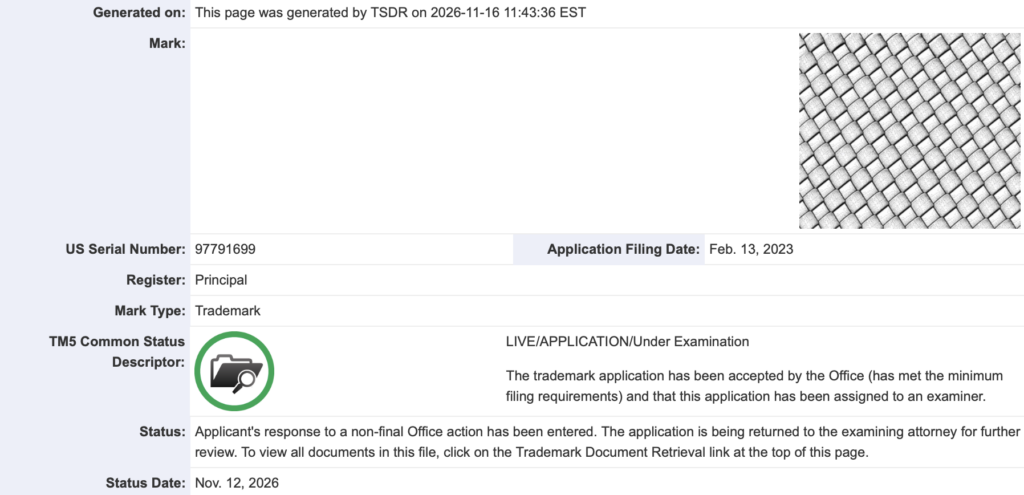
And to address a separate objection from the USPTO concerning discrepancies between its drawing and specimens, Naghedi submitted a revised drawing and amended description specifying that the weave covers the entire surface of the handbag’s body.
THE STRATEGY: Naghedi’s latest filing highlights the potential value of lookalike products as evidence in trademark prosecution, particularly in an era of widespread dupes. But the timing of imitation and the existence of copycat products do not, by themselves, establish acquired distinctiveness. The more consequential question is whether competitors are copying a design because consumers associate it with a particular brand or because the design itself is commercially appealing.
For brands, that makes documenting imitation important, but the nature of the evidence matters. Competitors’ advertising, consumer references to “dupes,” and media coverage linking lookalikes to an established brand may help establish market recognition. The challenge is connecting that recognition to the specific design claimed as a trademark, rather than to the brand or its products generally. Consistent promotion of the design as a source identifier and properly designed consumer surveys can help bridge that gap.
Share