



Today’s read: 5 minutes
May 8, 2026: Access, platform liability, post-trial relief, and dupe-driven competition were all top of mind this week, as disputes across luxury resale, marketplaces, and fashion IP turned on a similar issue: not just what companies sell, but how they build businesses around it.
A new launch by Vivrelle is putting competition in the ultra-luxury secondary market into focus. The company unveiled “Privée,” an invite-only membership tier offering access to roughly 500 Hermès bags and concierge-style services for nearly $10K per year. At the same time, Vivrelle filed trademark applications for “Privée” and “Vivrelle Privée” in connection with handbag, jewelry, and watch rental and styling services.
The move pushes Vivrelle beyond simple rental services and more directly into the territory occupied by Hermès-focused concierge players like Privé Porter. That overlap reflects how the lines between resale, rental, and concierge sourcing are beginning to blur. What were once more distinct business models are converging around the same underlying product: access.
As Hermès’ most famous bags continue to rank among the most coveted items in the personal luxury goods market, both Hermès and a growing network of downstream companies are building significant businesses around the demand and recognition attached to them. Companies operating outside Hermès’ direct retail channels are increasingly racing to monetize that brand-specific scarcity through membership, short-term access, and sourcing services.
A related question is surfacing in Dean & DeLuca’s new lawsuit against Village Super Market and Fire Brands, in which it alleges that the defendants are using the DEAN & DELUCA name on grocery products and seeking corresponding trademark registrations. The dispute (and others involving Twitter, Nike, Ferrari, etc.) raises a broader issue around legacy retail names: when a brand’s market presence shrinks, but consumer recognition remains, how vulnerable does that make the brand to third parties looking to commercialize that recognition for themselves.
>> The takeaway: Both disputes reflect how brand recognition is increasingly being commercialized beyond brands’ own direct channels. Whether through Hermès-focused access models or the revival of legacy retail names, the value increasingly lies in the consumer recognition attached to a brand – and who gets to monetize it.
A federal court has narrowed Brandy Melville’s case against Shein, dismissing trademark and unfair competition claims while allowing contributory and vicarious copyright infringement theories to move forward.
The surviving claims focus less on individual allegedly infringing products and more on how Shein’s platform operates. Brandy Melville alleges that Shein used – or allowed third parties to use – its product imagery to market lookalike goods in a way that suggested consumers would receive the products shown. The court found those allegations potentially relevant to questions of knowledge, control, material contribution, and financial benefit, shifting attention toward how the platform displays, controls, and profits from listings.
>> In practice: The theory is notable because it mirrors a broader shift in platform liability cases (the FB, YouTube case comes to mind) beyond just whether infringing products appear on a platform and toward whether the structure of the platform helps enable, amplify, or profit from them.
Adidas has likely reached the end of its trademark fight against Thom Browne after the Second Circuit refused to reopen the case despite previously undisclosed internal emails obtained through separate U.K. litigation. adidas argued that the emails showed Thom Browne employees raising concerns internally that certain stripe designs could appear “adidas-like,” particularly in sports contexts. The court was not persuaded.
The court’s ruling reinforces how difficult it is to disturb a final judgment under Rule 60(b), particularly where: the evidence does not directly bear on the issues presented to the jury; the trial record already included stronger evidence that failed to carry the day; or the discovery failures at issue amount to negligence rather than intentional misconduct.
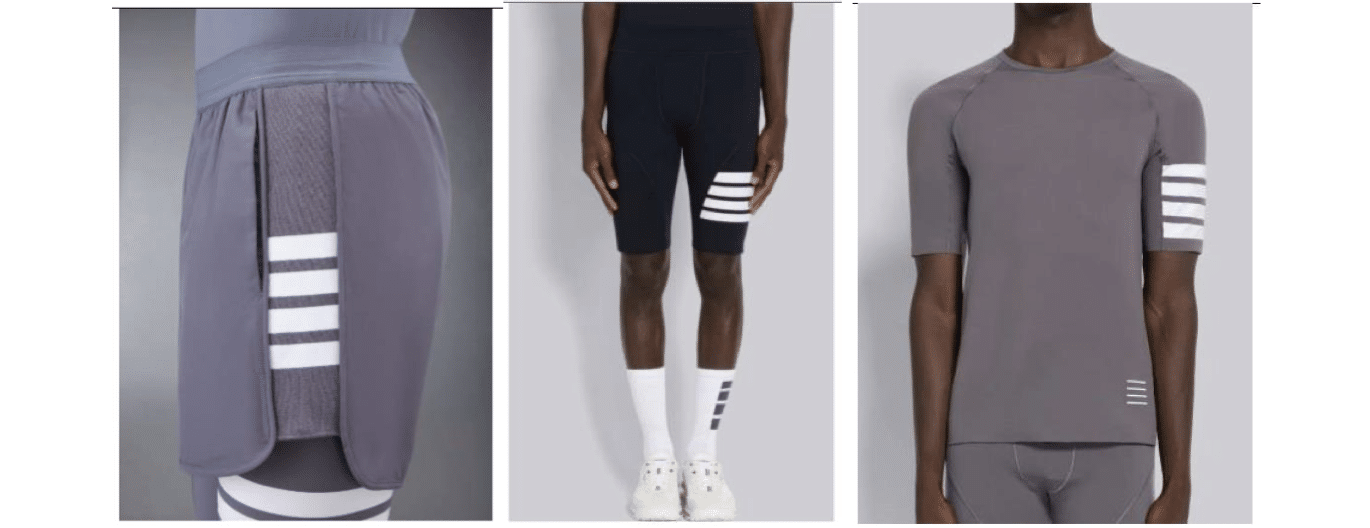
The court drew a firm distinction between internal brand perception and the likelihood-of-confusion analysis, emphasizing that trademark confusion is assessed from the standpoint of consumers, not company employees.
>> In practice: Post-trial relief is not an opportunity to relitigate a case with marginally stronger evidence. Courts are unlikely to reopen a final judgment where the new material is peripheral to the products at issue or weaker than evidence already rejected at trial.
As Deckers’ case against Quince prepares to head to trial, the dispute has narrowed to a single design patent covering UGG’s Classic Ultra Mini boot, with Quince arguing that the features at issue are functional or rooted in longstanding footwear conventions.
The case highlights the broader challenges brands face in fighting dupes, particularly where products rely on familiar shapes, common design elements, or aesthetics that have become widely adopted across the market.
Many companies have turned to trade dress and copyright claims to protect the overall “look and feel” of products, especially where dupes avoid co-opting others’ branding. In Coach’s case against Quince, for example, the brand points to the combination of hardware placement, stitching, and silhouette on certain handbags. And in its copyright dispute with Pandora, jewelry brand FoundRae argued this week that protection stems not from individual symbols alone, but from the way they are selected, arranged, and presented together.
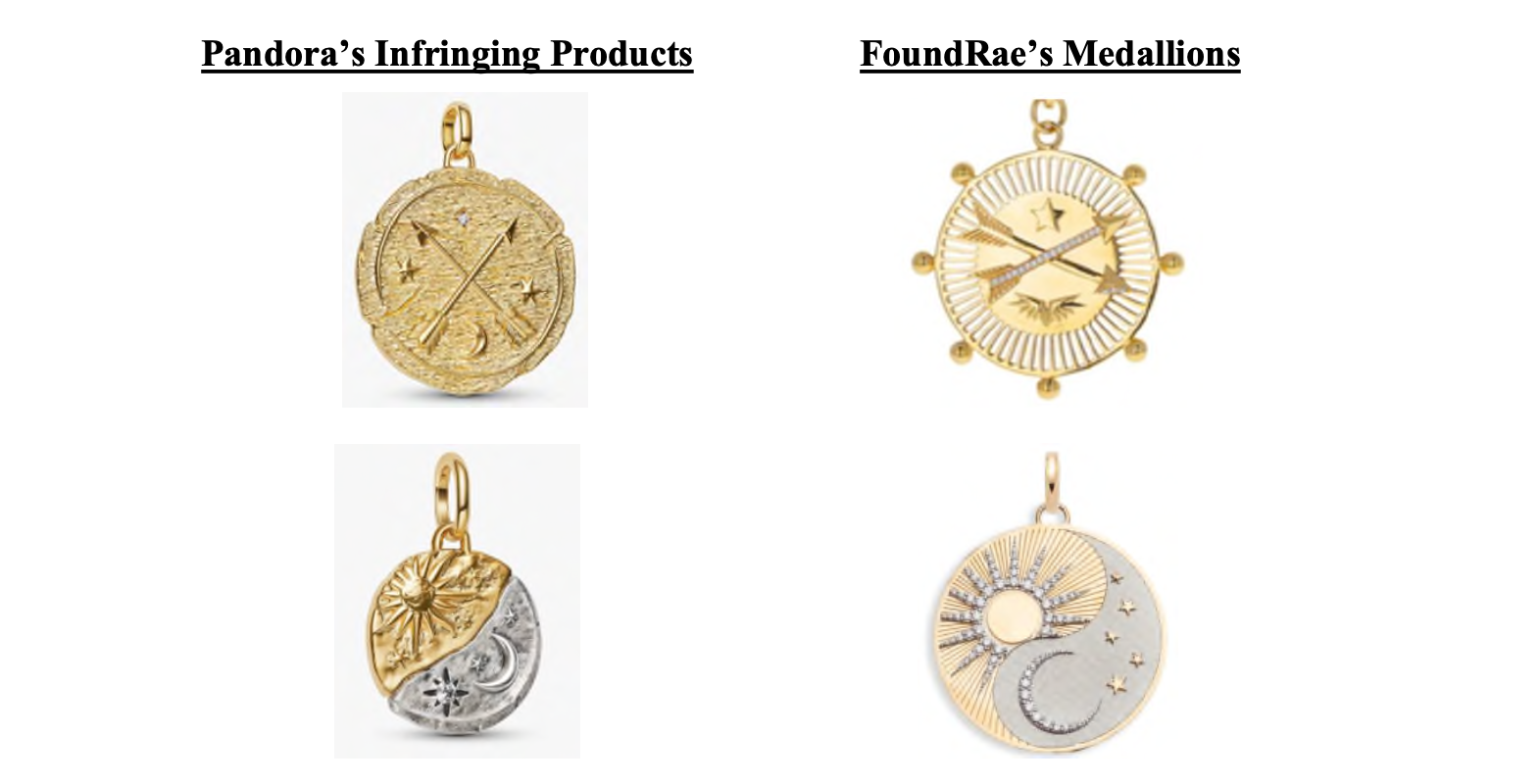
But courts have increasingly pushed back where the claimed elements are common, functional, or trend-driven, as seen in recent setbacks for both Deckers and Sol de Janeiro.
>> The takeaway: The disputes reflect a growing challenge in anti-dupe litigation: brands are increasingly trying to protect combinations of design, symbolism, and aesthetic presentation rather than overt branding or entirely original forms. But whether those elements function as protectable expression – or remain too common or functional to claim exclusively – is becoming one of the central questions shaping dupe-related litigation.
In luxury resale, companies are increasingly parlaying the scarcity of coveted items into a service. In the Shein case, liability theories are turning on how marketplace platforms operate and profit from third-party activity. In adidas v. Thom Browne, the court reinforced the limits of revisiting cases after trial. And in the disputes involving Deckers, Quince, and FoundRae, the issue is how far brands can go in protecting aesthetics, symbolism, and broader “look and feel” in crowded markets shaped by iteration and mass trend adoption.
What ties these developments together is a growing emphasis on operational mechanics: how products are sourced, presented, monetized, enforced, and differentiated in practice.
That shift matters because many of the competitive advantages at issue – access, platform scale, product familiarity, consumer recognition, and aesthetic identity – do not always fit neatly into traditional IP or competition frameworks. As a result, courts are increasingly being tasks with evaluating not just the products themselves, but the systems companies build around them.