

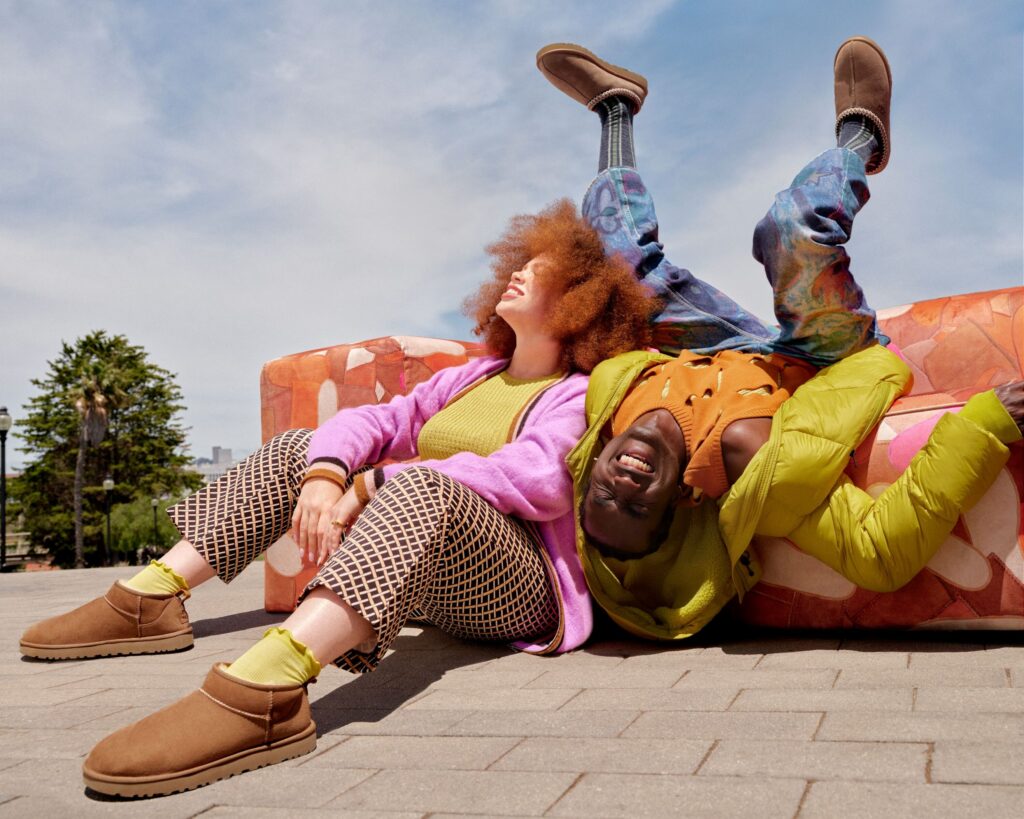
A dispute over shearling boots is shaping up to become one of the fashion industry’s most direct courtroom reckonings with the rise of dupe culture. In a recent hearing, a federal court in California denied UGG-maker Deckers’ bid to bar Quince from referencing “dupes” and “dupe culture” at trial. The ruling means jurors are likely to hear evidence framing Quince’s products within the broader market for lookalike fashion goods – an issue that now sits at the heart of the case.
During the May 27 hearing, Judge Araceli Martinez-Olguin of the U.S. District Court for the Northern District of California appeared skeptical of Deckers‘ effort to keep references to “dupes” away from the jury, noting that the company itself had included the concept in its proposed juror questionnaire. Among other things, Deckers proposed asking prospective jurors whether they held opinions about companies that “design, market, or sell ‘dupe’ products.”
The ruling comes as the parties prepare for a June trial in a case that has narrowed considerably since Deckers sued Quince’s parent company, Last Brand, in 2023. With the trade dress claims no longer in play, the dispute now centers on a single design patent covering the UGG Classic Ultra Mini boot – and whether Quince can use evidence of widespread “dupe” products to help persuade a jury that the asserted design is neither distinctive nor deserving of broad exclusivity.
“Dupe Culture” Takes Center Stage
The ruling means that one of the most consequential questions in modern fashion IP disputes will likely be put before the jury: when a market becomes flooded with lookalike products (or “dupes“), does that prove a design is distinctive – or that it has become commonplace? Quince’s defense rests largely on the argument that the asserted design exists within a crowded field of similar products. In pretrial filings, it contends that the patent is invalid because the claimed features are dictated by function rather than ornamentation, and that its boots are sufficiently distinct from UGG’s design to avoid infringement.
Underlying both arguments is a broader claim: that the features Deckers seeks to protect reflect common footwear conventions rather than a distinctive ornamental design. By emphasizing the prevalence of similar products, including lookalike or “dupe” goods, Quince is effectively arguing that Deckers is attempting to secure exclusivity over design elements that are already widespread in the market.
As TFL PRO+ subscribers read in Friday’s newsletter, the UGG-Quince dispute is not the only fight currently turning on what widespread copying actually proves. In a pending trademark dispute over Naghedi’s woven neoprene handbags, the USPTO rejected the company’s argument that the proliferation of “dupes” demonstrated consumer recognition of its weave pattern as a source identifier, concluding instead that copycats may simply reflect demand for a commercially successful aesthetic.
The same issue sits at the center of the UGG-Quince dispute: Deckers is effectively arguing that the popularity of lookalike products reflects the commercial significance of the UGG design, while Quince points to the same marketplace saturation as evidence that the design reflects common footwear conventions rather than protectable ornamentation.
THE BOTTOM LINE: The upcoming trial may offer an early indication of how receptive juries are to those competing narratives – and whether the proliferation of lookalike products is evidence of distinctiveness or evidence that a design has become too commonplace to command broad exclusivity.
The case is Deckers Outdoor Corp. v. Last Brand, Inc., 3:23-cv-04850 (N.D. Cal.).
Share