

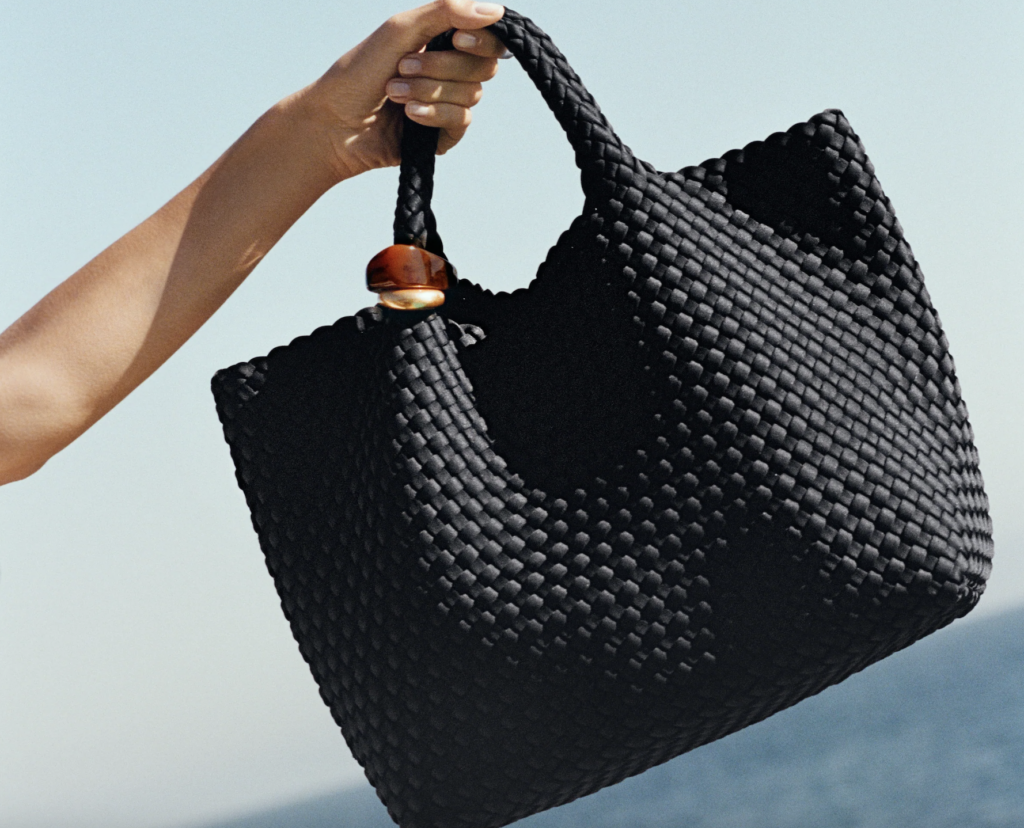
Naghedi’s effort to nab a trademark registration for its woven neoprene handbag design is facing another hurdle, with the U.S. Patent and Trademark Office maintaining that the brand’s signature weave pattern is too ornamental – and too widely used in the market – to function as a trademark. In a non-final Office Action, the USPTO refused registration of the repeating woven neoprene pattern used on Naghedi bags, finding that consumers are likely to perceive the design as decorative rather than source-identifying.
The latest round of pushback from the USPTO provides a look at the difficult path fashion brands face when seeking trademark protection for product designs amid a crowded market for “dupes” and trend-driven aesthetics.
The Matter in Brief: Naghedi filed a trademark application in 2023 seeking registration for its woven neoprene design, which it describes as interlaced neoprene strips forming a repeating diagonal pattern across the surface of its bags. The USPTO refused registration in a series of Office Actions, finding that the applied-for mark is merely ornamental and does not function as a trademark.
Naghedi has argued in response that the design acquired distinctiveness through years of use, media coverage, celebrity placements, and consumer recognition tied to the brand’s bags.
> The USPTO’s Latest Pushback: According to the May 12 Office Action, consumers are accustomed to seeing woven neoprene patterns used as decorative features on handbags, meaning that the design’s “primary significance” in a crowded market of similar goods is ornamental rather than source-identifying.
The examining attorney also invoked the so-called “wallpaper effect,” citing trademark precedent holding that repeating patterns covering the entirety of a product are often perceived as decoration instead of branding.
> Why the “Dupes” Argument Fell Short: In furtherance of its acquired distinctiveness claim, Naghedi argued that its design has come to identify the brand in the minds of consumers due to extensive commercial success, media attention, and the proliferation of copycat products in the market. In particular, the brand claimed that third parties have intentionally created “dupes” of its woven neoprene design in an effort to capitalize on consumer recognition tied to the Naghedi brand.
But the USPTO rejected that argument, stating that “the intentional copying may be based on desirable product features, such as the style of bag and material composition, rather than [an aim] to confuse consumers as to the source of the product.” The examining attorney further stated that the evidence of Naghedi “dupes” in the market demonstrated consumer demand for the “overall weave design” and “similar-looking bag[s],” rather than recognition of the woven neoprene pattern as a source identifier.
Because the refusal is not final, Naghedi still has an opportunity to respond with additional evidence and arguments in support of registration.
THE BIGGER PICTURE: The dispute underscores the broader challenge fashion brands face when attempting to protect product designs under the umbrella trademark law. While a potentially powerful tool, in order to benefit from trademark protections, brands must be able to show that consumers perceive a design as originating from a single commercial source – a particularly daunting task for repeating patterns and trend-driven product aesthetics that have become widespread in the market.
Share