


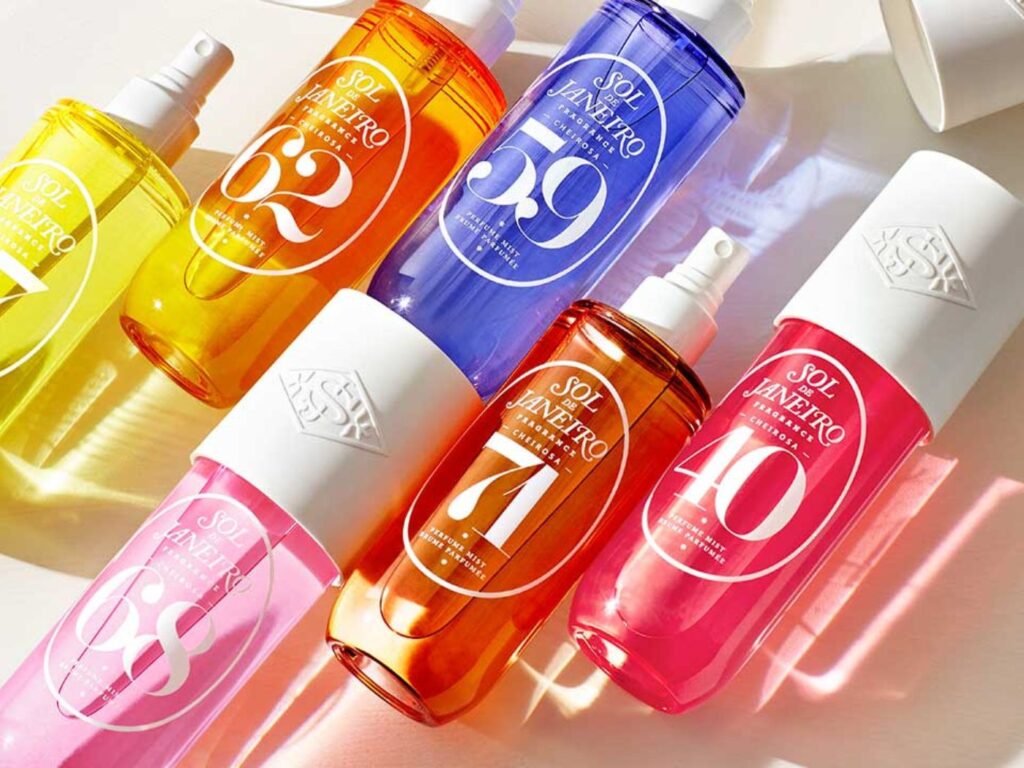
Sol de Janeiro’s colorful fragrance bottles have become some of the most recognizable packaging in beauty. But how much of that appearance can the brand legally claim as its own? That question is at the center of its trade dress dispute with MCoBeauty, with Sol de Janeiro now arguing that some of the design choices that distinguish its bottles also make them more expensive and difficult to manufacture – supporting its claim of non-functionality.
The Case for Non-Functionality
In a second amended complaint filed on October 20, as first reported by TFL, Sol de Janeiro addresses a deficiency identified by Judge Edgardo Ramos of the Southern District of New York, who dismissed the company’s trade dress infringement claim without prejudice in September. Judge Ramos found that Sol de Janeiro had sufficiently articulated its claimed trade dress – encompassing nine packaging features, including the bottles’ elongated silhouettes, opaque white caps, geometric labels, prominent fragrance numbers, and varying translucent colors. While the court found that Sol de Janeiro adequately pleaded secondary meaning and likely consumer confusion, it concluded that the company had not sufficiently alleged that its packaging was non-functional.
The newly amended complaint details the design choices behind Sol de Janeiro’s Cheirosa fragrance mists in an effort to overcome the court’s functionality-based dismissal. Sol de Janeiro alleges that its packaging requires customized manufacturing components, increases production costs, and introduces practical inconveniences. Its rounded bottle bases, for example, allegedly make the products more prone to tipping during manufacturing.
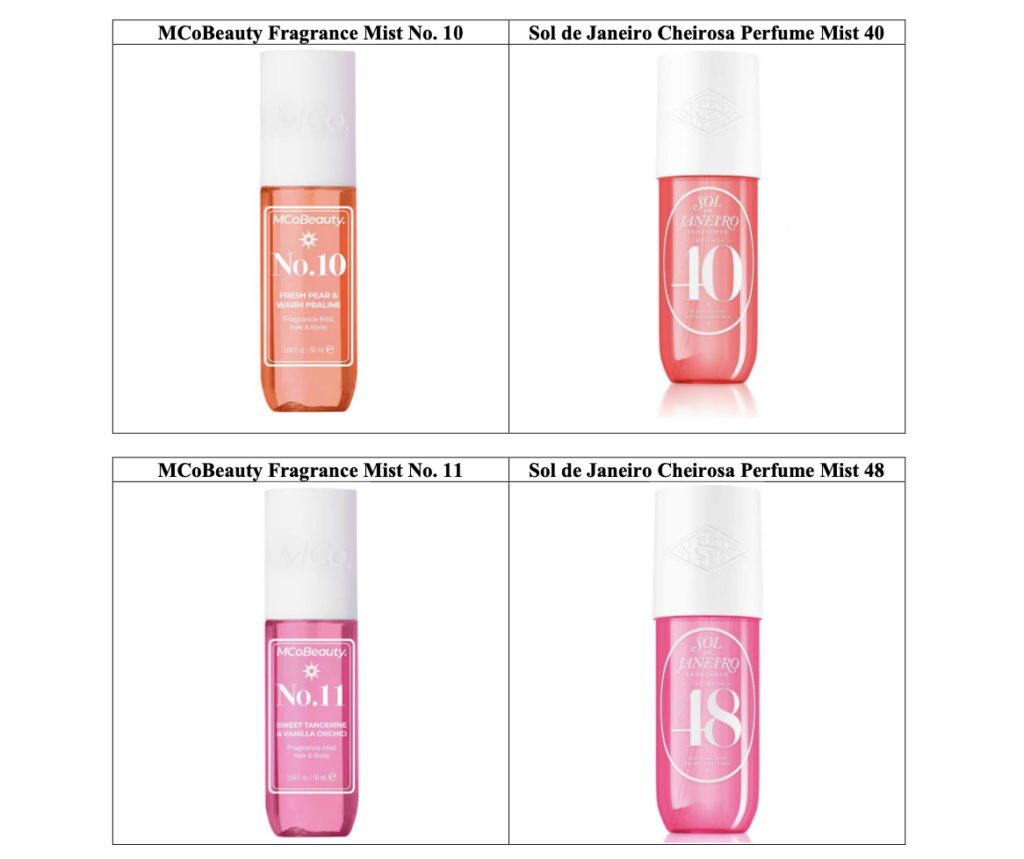
By emphasizing these costs and complications, Sol de Janeiro seeks to establish that the Cheirosa bottles’ distinctive appearance reflects branding choices rather than functional necessity, supporting its claim that the overall design is entitled to trade dress protection.
The amended complaint also potentially broadens the scope of Sol de Janeiro’s claimed trade dress, replacing a specified combination of nine packaging elements with a combination of “some or all” of those features. The shift raises questions about the precision of its claimed rights under Second Circuit precedent, particularly since Judge Ramos had found the earlier formulation sufficiently specific.
The Value – and Catch – of Aesthetics
One of the more interesting aspects of Sol de Janeiro’s non-functionality argument is the question it raises about aesthetic functionality at a time when beauty packaging is increasingly part of a product’s appeal. In its amended complaint, Sol de Janeiro alleges that consumers line up its fragrance bottles on shelves because they create visually appealing displays. While intended to support Sol de Janeiro’s claim that its packaging reflects branding choices rather than functional necessity, the allegation also invites consideration of whether the features at issue have competitive value independent of their association with the brand.
As packaging becomes something consumers seek out not merely for the products it contains or the brands it identifies, but for its own decorative value, the distinction between source-identifying features and independently desirable aesthetics becomes more consequential. Under the doctrine of aesthetic functionality, the question is whether granting exclusive rights over those features would put competitors at a significant disadvantage unrelated to Sol de Janeiro’s reputation.
THE STRATEGY: For brands looking to support trade dress protection claims, allegations that particular design choices increase manufacturing costs or create practical disadvantages may support non-functionality, but the claimed combination of features must be assessed as a whole. As such, counsel should ensure that evidence of non-functionality addresses the specific combination of features for which protection is sought, rather than relying solely on the characteristics of individual elements.
Equally important is how the claimed trade dress is defined. A broader formulation may allow a brand to assert rights across different packaging variations, but it can also raise questions about whether the claimed combination of features has been identified with sufficient precision.
The case is Sol De Janeiro, Inc. v. MCoBeauty Pty Ltd, 1:24-cv-08862 (SDNY).
Share