


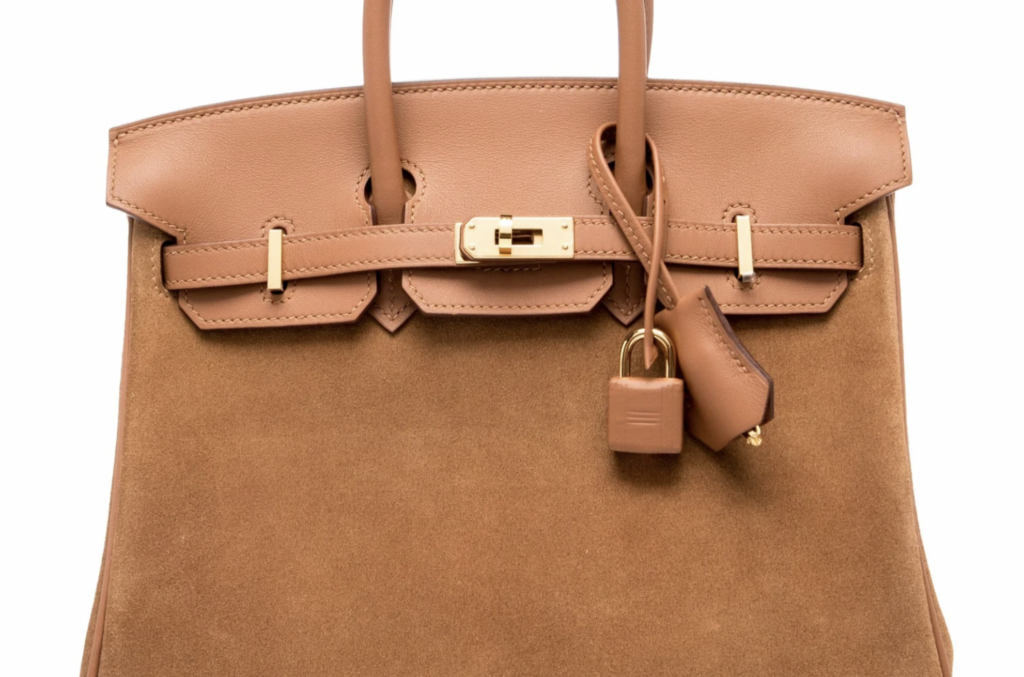
Once shorthand for timeless or particularly high-quality offerings, the term “investment bag” has taken on a far more literal meaning in the luxury market. When it comes to certain handbags, the term has come to signal something more: the expectation that a luxury purchase will retain – or even increase – its value over time. That narrative has been fueled by resale platforms, auction houses, market reports, and social media content that routinely discusses handbags in the language of returns, premiums, and alternative assets. Hermès’ Birkin and Kelly bags, in particular, have become the poster children for the proposition that a luxury purchase can double as an investment.
But the more interesting question may no longer be whether handbags actually outperform traditional investments. It is why the idea that they can has become so valuable to the luxury industry.
The Rise of the “Investment Bag”
The notion that handbags could serve as outperforming assets entered the mainstream in 2016, when luxury resale platform Baghunter released a report comparing the performance of Birkin bags from 1980 through 2015 with that of the S&P 500 and gold. Baghunter concluded that Birkin values rose at an average annual rate of 14.2 percent, while stocks and commodities experienced considerably more volatility.
Two years later, Jefferies analysts pointed to the strength of the secondary market for top-tier Hermès bags, citing a Himalaya Birkin purchased in 2010 for €29,600 and sold in 2016 for €157,500, a gain of more than 400 percent. Meanwhile, auction houses and resale platforms were building the infrastructure necessary to make handbag values increasingly visible. Authentication services, historical sales data, resale indices, and global marketplaces made it easier to track what particular bags could command on the secondary market.
The pandemic-era luxury boom supercharged the trend. Scarce bags routinely traded at significant premiums to retail, providing seemingly objective evidence that certain luxury purchases would not only hold their value, but could generate substantial returns.
Unpacking the Value of the Narrative
For luxury brands, the significance of the “investment bag” narrative extends well beyond the resale market and into the economics of selling new products. If consumers believe a handbag is likely to retain or appreciate in value, its upfront price becomes easier to justify. A five-figure – or even six-figure – purchase is no longer framed solely as discretionary spending. It can instead be rationalized as the acquisition of an asset that may preserve a meaningful portion of its value and potentially generate a return.
That perception can reduce price sensitivity and encourage consumers to spend more than they otherwise would. It can also give brands greater latitude to raise prices. When a bag purchased for $10,000 is routinely reselling for substantially more, an increase in its retail price may look less like an aggressive markup and more like the brand bringing its price into line with the value the market has already assigned to the product.
The investment narrative also effectively allows luxury brands to externalize part of the justification for their pricing. Instead of brands alone telling consumers that a handbag is worth $15,000 or more, auction results, resale platforms, and market reports appear to validate that proposition independently. The secondary market becomes third-party evidence of desirability, scarcity, and value.
The result can form a powerful feedback loop. Consumers buy because they expect strong resale value. Demand helps sustain elevated resale prices. Those resale prices reinforce the perception that the bags are smart purchases, which can drive further primary-market demand and make subsequent retail price increases easier to absorb. Resale markets, in other words, do not merely reflect brand strength. They can help reinforce it.
This dynamic may also favor the biggest luxury brands. As Bernstein analyst Luca Solca has previously observed, greater transparency in the secondhand market gives consumers immediate evidence of which brands retain value and which do not, potentially pushing buyers toward perceived “surefire” names. In that sense, resale value becomes another mechanism through which market leaders consolidate their advantage.
The Potential Paradox
The complication for brands is that the market providing this valuable validation is not entirely within their control – and recent pricing data demonstrates why. According to Bernstein Research’s Secondhand Pricing Tracker, average auction resale premiums for Hermès Birkin and Kelly bags have fallen considerably from their pandemic-era highs. At their peak in 2022, average resale prices stood at approximately 2.2 times retail. By November 2025, that figure had fallen to roughly 1.4 times retail.
The correction is even more pronounced for some individual models. The Birkin Togo 30, for example, carried an average resale premium of 1.9 times retail in 2018 and 1.7 times retail in 2022. By late 2025, it was reselling at roughly retail price, according to Bernstein.
That does not necessarily mean that Birkins have ceased to hold value. Hermès continues to outperform much of the luxury handbag market, and particularly rare bags can command extraordinary prices. The RealReal reported in 2025 that Kelly bags sold on its platform fetched an average of 50 percent above MSRP. But the broader correction illustrates the limits of treating resale performance as evidence of investment-grade stability. Handbags trade in comparatively illiquid markets, transaction costs can materially reduce realized returns, and performance varies significantly based on brand, model, size, material, color, condition, and timing.
More importantly for luxury brands, secondary-market values respond to forces beyond their immediate control. Economic conditions, changing consumer tastes, the amount of inventory entering the resale market, and shifts in demand can all affect the very prices that help validate primary-market pricing – and that is where the potential paradox comes into play.
The “investment bag” narrative can encourage consumers to spend more, make aggressive price increases easier to justify, and provide brands with independent evidence that their products possess enduring value. Yet, the more important resale performance becomes to the primary-market value proposition, the more brands potentially depend on signals generated by a secondary market whose pricing they cannot fully dictate.
THE BOTTOM LINE: Whether a Birkin can outperform the stock market may ultimately be the wrong question. More significant is how thoroughly the expectation of value retention has become embedded in the economics of luxury. A handbag is increasingly expected to function simultaneously as a fashion accessory, a status symbol, and an asset whose future resale value helps justify its price today.
For luxury brands, that belief can be enormously valuable. The paradox is that some of the strongest evidence supporting it comes from a market they do not control.
Share