



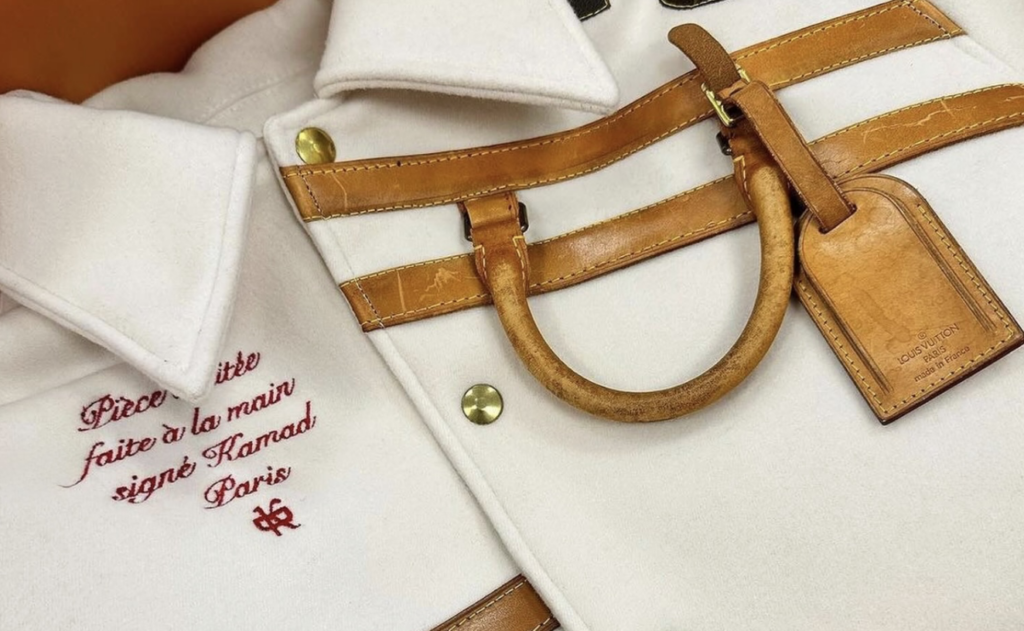
Louis Vuitton has prevailed in an upcycling case against Kamad Reworked over its practice of cutting up authentic Louis Vuitton products and incorporating the materials into new clothing, jewelry, and accessories bearing Louis Vuitton trademarks, including its word mark, toile monogram, and Damier pattern. The ruling comes just months after Chanel prevailed against the same company over jewelry made using Chanel-branded buttons, buckles, and other components.
In a September 17 decision, the Paris Judicial Court found that Kamad infringed Louis Vuitton’s rights in those and other trademarks and awarded the company €920,000 in damages: €750,000 for infringement of its reputed marks, €10,000 for infringement of a separate French figurative mark, and €160,000 for unfair competition and parasitism. The court also imposed injunctive relief and ordered the destruction of identified infringing products.
Resale, Reconstruction & Sustainability
Kamad argued that Louis Vuitton’s trademark rights – and its ability to control the further commercialization of the trademark-bearing goods – were exhausted because the Kamad Reworked goods were made from authentic products that Louis Vuitton had already placed on the market. The court disagreed, finding that while Louis Vuitton consented to the sale of its products, Kamad created and sold new, unauthorized goods.
> Critically, the ruling goes a step beyond the same court’s May decision in Chanel’s case against Kamad. In the case, Kamad failed to establish that the Chanel-branded components came from goods sold by Chanel or with its consent, although the court held that exhaustion would not apply even if the components came from goods Chanel had authorized for sale.
The decision also follows a February ruling from Korea’s Supreme Court in a separate Louis Vuitton case, which drew its own line between modification and commercialization: altering authentic goods for an owner’s personal use does not constitute trademark “use,” while producing and selling modified goods as commercial offerings may amount to infringement.
Raising a common rationale for upcycling, Kamad also argued that its activities were environmentally friendly, as they give existing luxury materials a new life. The court recognized that environmental protection may justify restrictions on property rights in some circumstances but found no EU or French provision that makes upcycling a justification for restricting IP rights.
Kamad’s sourcing records also showed that the Louis Vuitton goods could have been resold intact. The court found that the products retained value on the secondary market and had not been damaged to the point that they were no longer attractive for resale. By dismantling them for use in new products, the court reasoned, Kamad removed usable goods from the secondhand market and stimulated demand for new ones.
The court also rejected Kamad’s artistic-freedom argument, finding that even assuming its creations were original, artistic freedom could not justify circumventing trademark law for commercial manufacture and sale.
THE STRATEGY: For brands, one of the more useful aspects of the ruling is that the infringement case did not turn on counterfeit materials, as has been the case in an array of “upcycling” disputes. The court accepted that the underlying goods had been sold with Louis Vuitton’s consent and instead focused on what Kamad did with them: dismantling the goods and using trademark-bearing elements to create new products.
Kamad’s sourcing evidence is also worth noting. The company relied on sustainability to justify its business model, but its own records showed that the underlying Louis Vuitton goods had viable resale value. That gives counsel on both sides a factual issue to examine in future cases: the condition and resale potential of a branded product before it is upcycled. That reasoning may put upcyclers working with damaged goods or materials that have little resale value in a different position. In those cases, the argument that the original products could remain in circulation may carry less weight, even if the underlying trademark issues remain.
The case is Louis Vuitton Malletier v. Kamad Reworked, Tribunal judiciaire de Paris, 3e ch., 1re sect., RG No. 24/07925.
Share