


Hunza G is facing off against fellow swimwear-maker Love & Bikinis for allegedly using its “THE ORIGINAL CRINKLE” trademark in connection with the sale of crinkle-textured swimwear. The case is, at its core, a trademark matter, but before the court reaches issues of consumer confusion or trademark scope, it will first address a threshold question: whether Love & Bikinis has sufficient New York-directed contacts to support personal jurisdiction.
The Background in Brief: Hunza G – the cult swimwear label known for its signature crinkled, one-size-fits-most swimwear – filed suit in October 2025, accusing Texas-based Love & Bikinis of trading on its long-standing association with textured swimwear. Hunza G’s case centers on the phrase “The Original Crinkle,” which it claims to have used since at least 2018 in connection with its proprietary fabric and silhouettes, and which it alleges Love & Bikinis has improperly adopted across product marketing and trademark filings.
The Limits of Online Presence
In a motion to dismiss filed in the Southern District of New York on February 3, Love & Bikinis challenges the jurisdictional theory underpinning Hunza G’s complaint, arguing that the New York “connections” alleged by Hunza G amount to little more than nationwide brand exposure. According to the Texas-based defendant, Hunza G’s reliance on nationwide e-commerce, national retail distribution, social media location tags, and third-party press coverage does not establish that Love & Bikinis purposefully availed itself of New York.
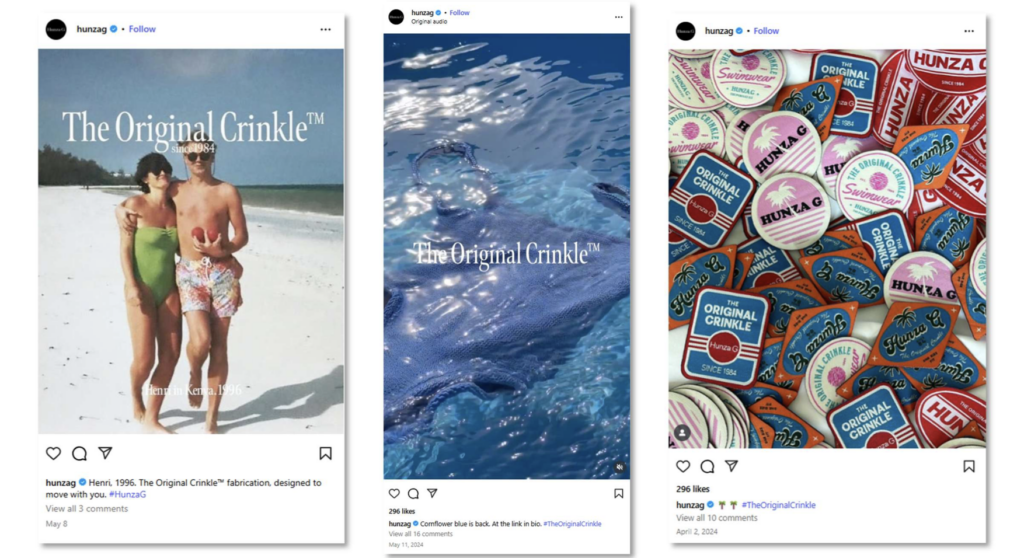
Love & Bikinis’ filing characterizes Hunza G’s jurisdictional allegations as selective and overstated, noting that while the complaint highlights a handful of social media posts tagged “New York” and references coverage in New York Magazine, those examples were “plainly cherry-picked” from broader national conduct. As the motion puts it, Love & Bikinis “uses many other location tags on its social media, including in Texas, California, Florida, and the United States,” and has been featured by other national outlets as well – facts it argues undermine any claim that its conduct was directed at New York in particular.
That distinction matters, per Love & Bikinis’ filing, because New York’s long-arm statute requires conduct purposefully directed at the forum, not merely national exposure.
Citing Second Circuit precedent, Love & Bikinis further argues that social media posts referencing New York do not constitute the transaction of business in the state and that jurisdictional analysis “examines the defendant’s conduct, not that of plaintiffs or third parties,” meaning that third-party press coverage cannot be imputed to a defendant as forum-directed activity. In short, the filing maintains, press coverage is not conduct, and geographic tags are not targeting.
Retail Availability Is Not Forum Direction
Hunza G also points to the availability of Love & Bikinis’ products through national retailers with New York locations as a means of establishing jurisdiction. But the Love & Bikinis pushes back here, as well, arguing that downstream retail distribution does not establish purposeful availment either – particularly where the alleged infringement is not tied to products sold in New York.
“All that [Hunza G] alleges,” the motion states, is that Love & Bikinis sold products to national retailers “who eventually distributed [its] products throughout the country, including possibly to New York.” Courts have found that this is “insufficient” to establish jurisdiction, per Love & Bikinis. And critically, it emphasizes that Hunza G does not allege that any product bearing the disputed mark was sold in New York at all.
THE BOTTOM LINE: Love & Bikinis’ motion presses a simple but increasingly consequential point: national visibility is not the same as conduct directed at a specific state. Pointing to existing Southern District of New York decisions, Love & Bikinis argues that when a defendant’s interactions with New York consumers are “not distinguishable from [its] interaction with those located in any other jurisdiction,” courts have held that the allegations “lack the traditional indicia of purposeful availment.”
Love & Bikinis insists that this case fits squarely within that framework, leaving Hunza G to rely on the ambient facts of modern brand presence – online sales, social media activity, retail distribution, and press coverage – without tying those facts to infringing conduct that occurred in, or was directed at, New York specifically. Whether that showing is sufficient to keep the case in New York will determine whether the court ever reaches the merits of Hunza G’s trademark claims at all.
The case is Hunza G Limited v. Love and Bikinis, Inc., 1:25-cv-08487 (S.D.N.Y.)
Share