


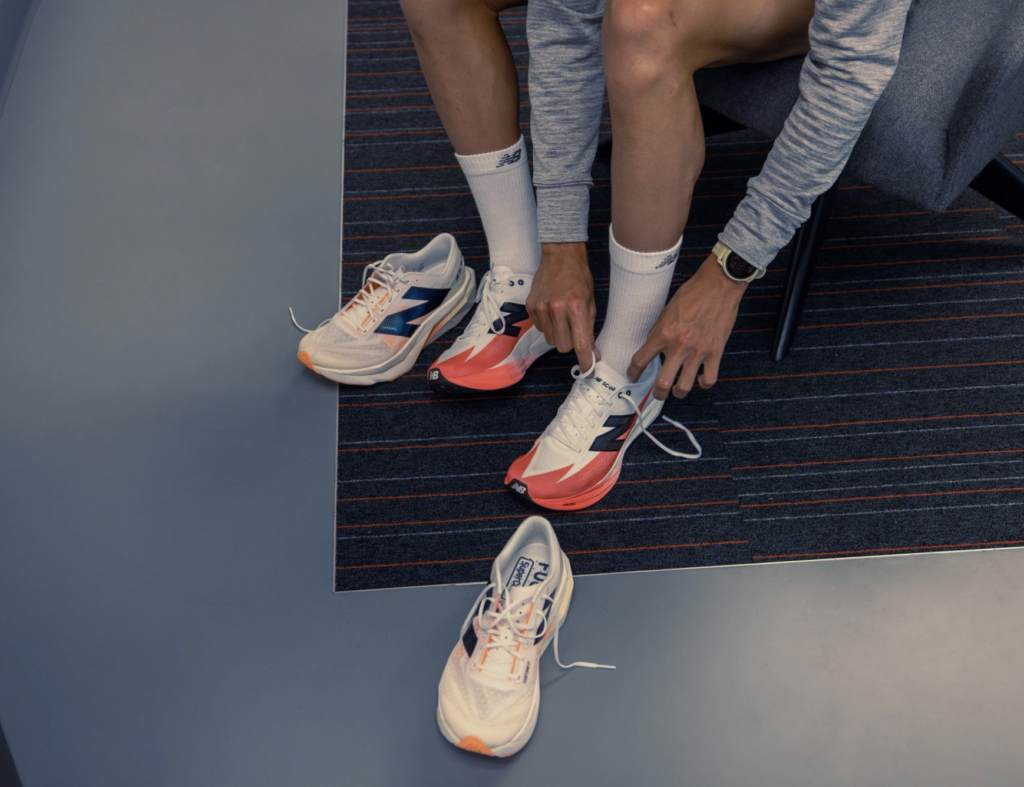
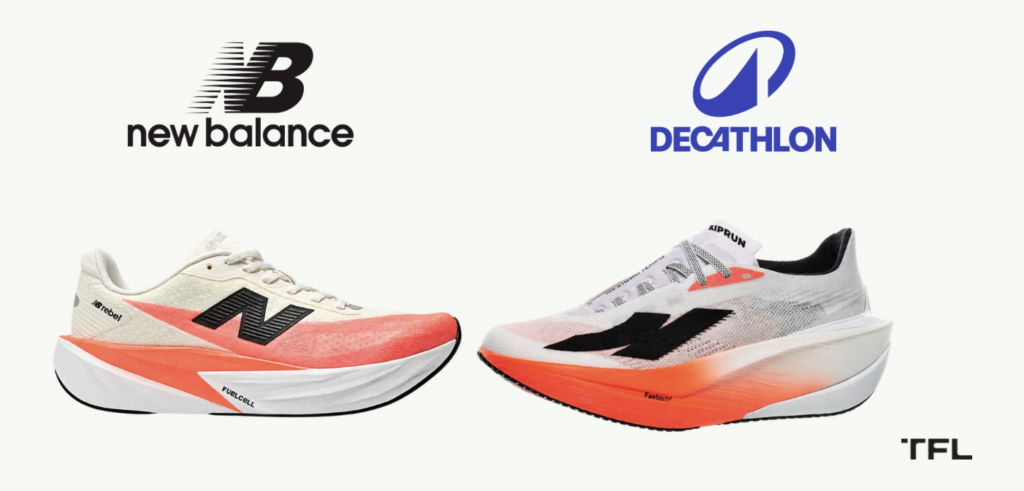
New Balance is taking aim at Decathlon over a logo that appears on the retailer’s KIPRUN running shoes, arguing in a newly-filed lawsuit that the design infringes its “N” trademarks. In a complaint filed in the U.S. District Court for the District of Massachusetts on September 15, New Balance alleges that Decathlon is using a design on a number of KIPRUN models that is confusingly similar to the “N” marks it has used on footwear for decades.
While Decathlon has maintained that its design is a stylized “K,” according to New Balance, the plaintiff argues that the sportswear company also uses a mirror image of the design, which looks like an “N.” New Balance sets out claims of trademark infringement, false designation of origin, federal and state dilution, and common law claims.
Beyond the Initial Point of Sale
A central part of New Balance’s case rests on a post-sale confusion theory, a trademark doctrine that can extend liability beyond confusion experienced by the person buying the product. New Balance maintains that the risk of confusion after the initial sale is heightened in the market for high-performance running shoes, where consumers routinely see products on sponsored athletes, at sporting events, and in related photographs, coverage, and marketing. As a result, the company argues, consumers may encounter the KIPRUN design in those settings and mistake the shoes for New Balance products or believe there is some affiliation between the companies.
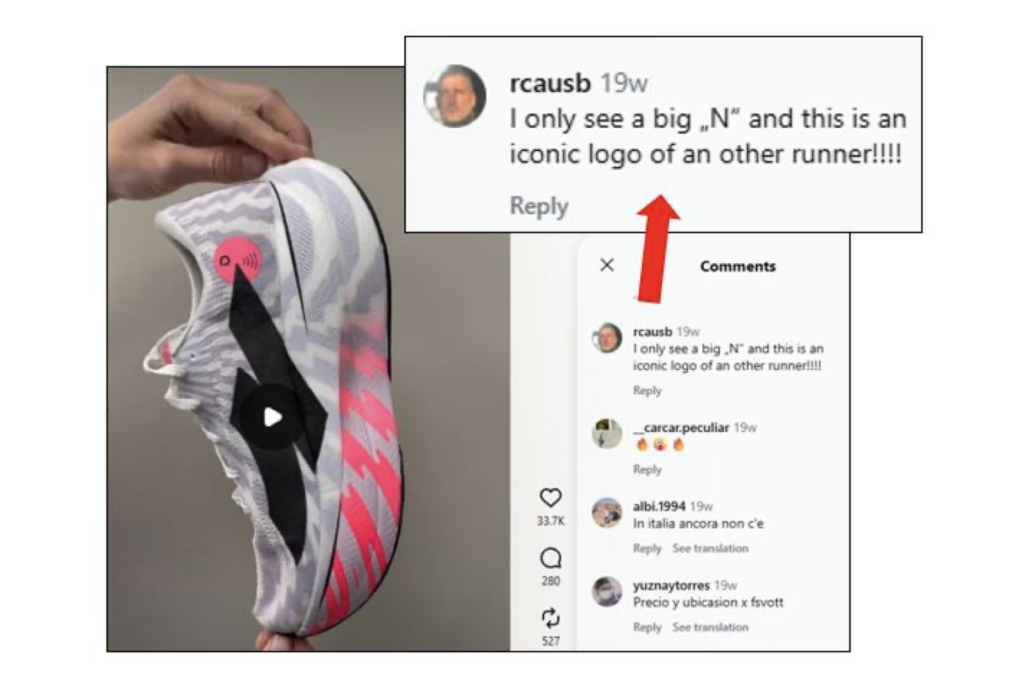
New Balance also points to online commentary as evidence that consumers have associated the KIPRUN design with its “N” marks.
Separately, New Balance alleges that Decathlon knew of its trademark rights before the lawsuit. The companies’ global affiliates have had a commercial relationship through which Decathlon affiliates distribute New Balance products in a number of markets, and New Balance says it expressly notified Decathlon of the alleged infringement around January 2026. It claims that Decathlon nevertheless continued to release and market shoes bearing the challenged design. New Balance characterizes Decathlon’s alleged infringement and dilution as willful or, at minimum, in reckless disregard of its rights.
With the foregoing in mind, New Balance is seeking an injunction, a recall of the accused products and full refunds, destruction of infringing goods and related advertising materials, an accounting of Decathlon’s profits, damages, and attorneys’ fees.
THE BIGGER PICTURE: Post-sale confusion has long drawn criticism from trademark scholars, including over whether liability should extend to situations in which a purchaser understands a product’s source but third parties who encounter it later may not. Despite that pushback, the doctrine routinely surfaces in trademark cases, from luxury counterfeiting disputes involving consumers who knowingly buy fakes to cases over unauthorized or unlicensed merchandise.
Recent cases illustrate the range of contexts in which the theory arisets. Chanel, for example, has alleged post-sale confusion in litigation over allegedly counterfeit goods that buyers may know are not authentic, arguing that others who later encounter the products may believe they are genuine. And in its case against Vintage Brand, which is set to go before the Third Circuit for oral argument on Thursday, Penn State has invoked post-sale confusion among its theories of infringement, arguing that consumers who encounter unauthorized merchandise after its purchase may mistakenly perceive it as licensed or affiliated with the university.
The New Balance case brings the doctrine into the realm of performance footwear, asking how far source confusion can travel beyond the transaction itself, particularly when a shoe is encountered on a runner rather than on a retail shelf.
The case is New Balance Athletics, Inc. v. Decathlon America LLC et al., 1:26-cv-14235 (D. Mass.).
Share