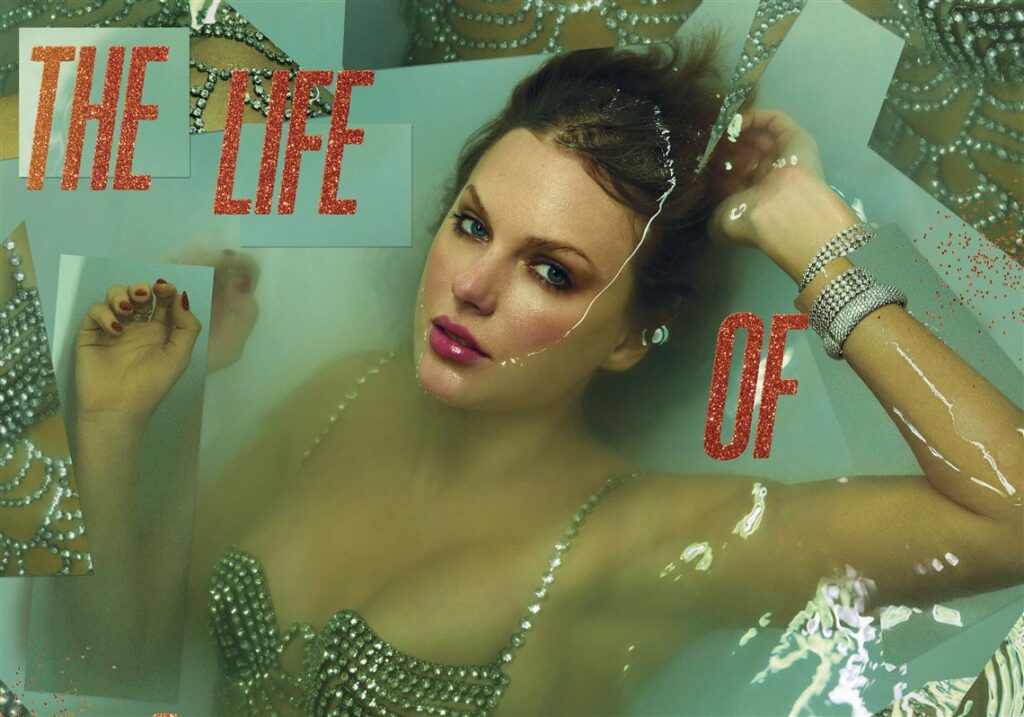
In August, Taylor Swift announced some early details about her next album, The Life of a Showgirl. True to form, the announcement was both a cultural moment and a meticulously choreographed exercise in brand building and control. Just ahead of Swift dropping the name of her impending album on the New Heights podcast, her legal team filed U.S. trademark applications for TLOAS, THE LIFE OF A SHOWGIRL, and a TS logo for use on an extensive array of goods and services – from recorded music to apparel and accessories.
The filings were timestamped at approximately 6:20 pm on August 11 – but the records did not appear in the USPTO’s online database until just after 12 am on August 12. That six-hour gap was no accident. The “quiet filing” strategy – which saw Taylor Swift’s counsel submit trademark applications just ahead of the album announcement, but time them so that the applications remain absent from the public record until after the reveal – ensured that Swift could unveil the title on her own terms. Specifically, Swift’s team eliminated the risk that that fans, competitors, or opportunistic trademark squatters would discern the news ahead of time.
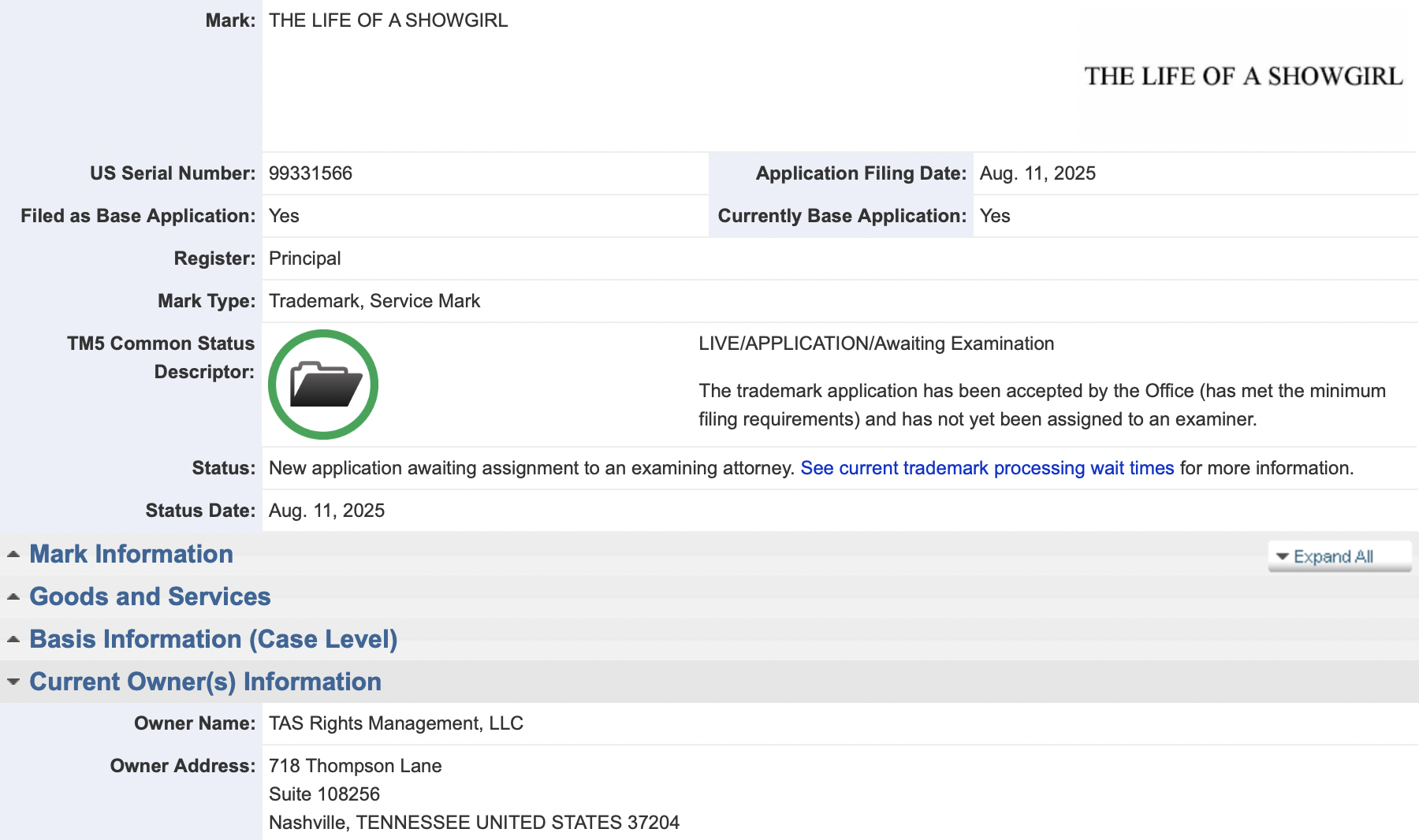
And she is doing it in a way that allows her to control the narrative. In the case of the Showgirl, Swift’s filings make for a textbook “quiet filing” strategy – submitting trademark applications just before a major announcement, but timing them so that the applications remain absent from the public record until after the reveal. By doing so, Swift’s team eliminated the risk that another party could file first for the same or a confusingly similar mark (a common maneuver among trademark squatters and unauthorized merchandisers), while retaining total control over the rollout.
The rollout exemplifies the calculated precision of an artist who has structured her career to function as an intellectual property operation, a framework she adopted long before many of her peers were well versed in its strategic power.
From Teen Songwriter to Trademark Powerhouse
Swift’s ascent from a teenage songwriter to the larger-than-life figure at the center of the global “Taylor Swift” brand was anchored in an early understanding – and utilization – of intellectual property’s commercial force. By 14, she had secured her first publishing deal; by 16, she had released her debut album; and at 17, she moved to federally register her name as a trademark as part of a larger and deliberate construction of a personal brand portfolio.
Today, her portfolio ranks among the most expansive in the entertainment sector: more than 350 filings and registrations covering album titles, tour names, fan club identifiers, and even the names of her cats, along with short lyrical phrases, such as “This Sick Beat,” which are routinely repurposed across a broad range of merchandise. While short phrases typically fall outside the scope of copyright protection, they may be registered as trademarks when used to indicate the source of goods or services.
That is significant, as it clearly demonstrates what Swift is looking to do here; she is not simply protecting her music but is seeking ownership over the entire linguistic and visual ecosystem of her brand.
The through line here is unambiguous: In Swift’s model, trademark protection (and the corresponding registrations) is not the byproduct of cultural dominance; it is part of the machine that drives it.
Brand Control in a Shifting Music Economy
The music industry’s post-streaming status quo places outsized value on live performance, brand partnerships, and merchandise – all of which rely on the ability of artists and their teams to control relevant branding across an increasingly robust number of categories and jurisdictions. By taking early action on the registration front, Swift is angling to ensure that fan spending flows through authorized channels and that her creative output remains within her own commercial architecture.
As R. Polk Wagner, an IP professor at the University of Pennsylvania Law School, said on the Knowledge at Wharton podcast several years ago, “It is now … very common to think of yourself as your own personal corporation and brand. That, then, is going to lead these individuals and companies to probably be even more aggressive in the future about asserting intellectual property rights, and more aggressive about channeling their music or their goods in particular areas or distribution mechanisms.”
Swift is perhaps the most fully realized example of this shift – an artist whose name, imagery, and language are thoroughly embedded in the culture and are systematically registered and enforced, and whose career more closely resembles the management of a diversified brand portfolio than that of any traditional recording artist.
> TLDR: Taylor Swift did not wait to become a household name before securing her brand. She likely became a household name, in part, because she did. In today’s entertainment economy, intellectual property is not simply a defensive tool. It is the business model.
Updated
October 3, 2025
This article was initially published on August 13 and has been updated to reflect the release of Swift’s The Life of a Showgirl album.
Share