



Quince has prevailed, for now, in a proposed consumer class action challenging its use of crossed-out “traditional retail” pricing and advertised savings compared to higher-priced competitors. In a newly issued order, a federal judge in California dismissed claims that Quince’s pricing representations mislead shoppers into believing they are receiving discounts from previously charged prices for identical products or purchasing merchandise of comparable or superior quality to higher-priced alternatives. The court found that the plaintiffs failed to plausibly allege deception under either theory.
As first reported by TFL, the ruling – issued on October 21 by Judge Edward Chen of the Northern District of California – comes as Quince has faced separate litigation over its comparisons to established fashion and lifestyle brands. The dismissal is with leave to amend.
The Case Against Quince
The lawsuit, brought by 16 consumers under the consumer protection laws of nine states and Washington, D.C., centers on how Quince communicates the value of its products. On its website, the company displays selling prices alongside higher, crossed-out figures labeled “traditional retail,” accompanied by statements telling shoppers how much they save.
For example, Quince advertises its Mongolian Cashmere Crewneck Sweater for $50 alongside a crossed-out $148 reference price and the statement “You save 66%.” According to the complaint, the higher figure is based on the price of a comparable sweater sold by J.Crew, while $50 is Quince’s regular selling price rather than a temporary markdown.
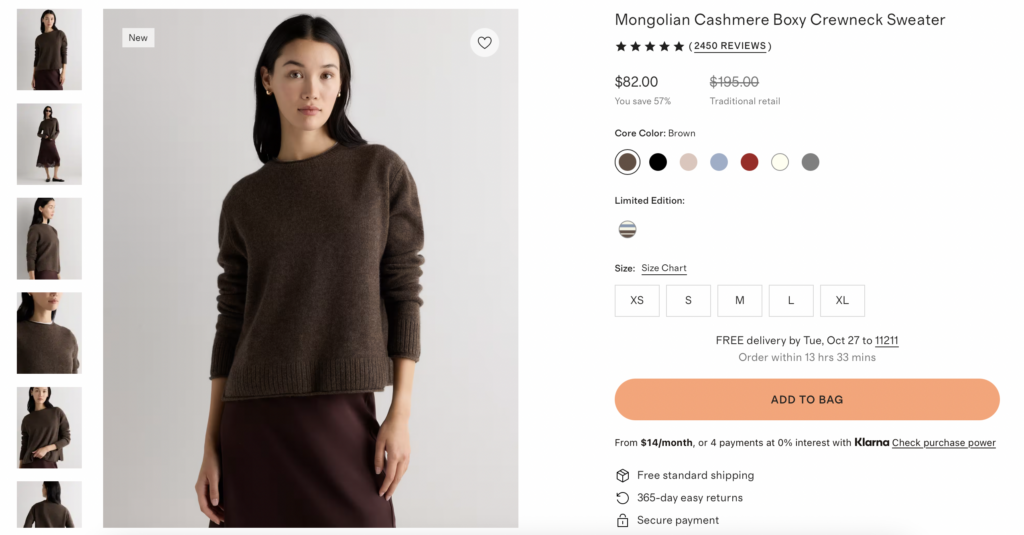
The plaintiffs alleged that this presentation leads consumers to believe that identical products were previously sold at the higher reference prices, either by Quince or another retailer. They also challenged Quince’s “Beyond Compare” tables, which compare its products to higher-priced alternatives from brands including J.Crew, Everlane, and Naked Cashmere. According to the plaintiffs, Quince selectively chooses expensive competitors and favorable product attributes to create a misleading impression of comparative value.
Why the Court Sided With Quince
Judge Chen rejected both theories. On the reference-pricing claims, the court found that “traditional retail” would not lead a reasonable consumer to believe that the crossed-out figure represented a price previously charged for the identical product. The court distinguished Quince’s representations from those challenged in other false advertising cases, where reference prices and savings claims plausibly suggested discounts from previously charged prices.
The judge also considered Quince’s “Beyond Compare” tables, finding that they clarify that the reference prices reflect comparable products sold by other retailers, rather than previously charged prices for identical merchandise. Although the tables appear below the Add to Cart button, the court found them sufficiently accessible to be considered information a reasonable consumer would see.
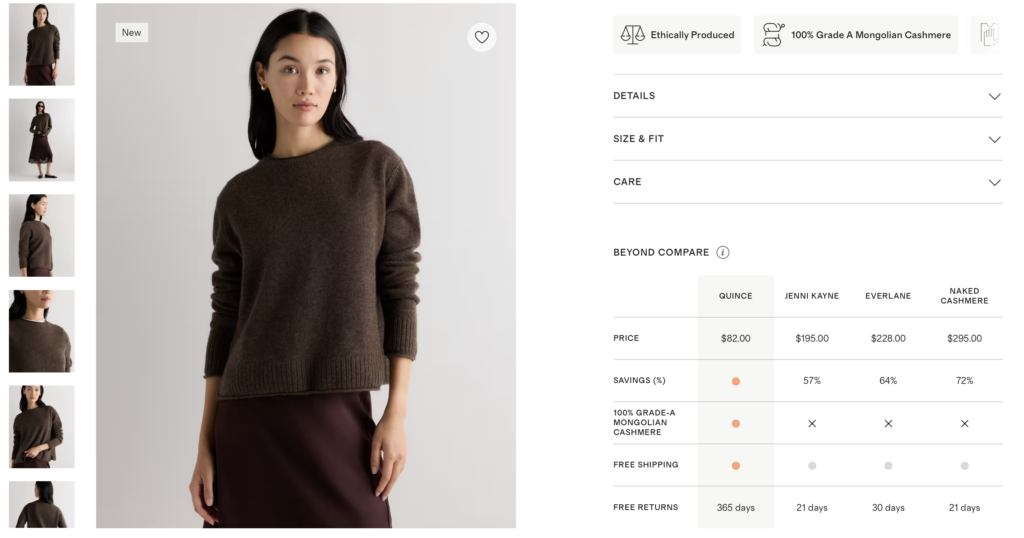
Alternatively, the court reasoned that even if the tables were treated like information on the back of a product label, the phrase Alternatively, even if the tables were treated like information on the back of a product label, the court reasoned that “traditional retail” was sufficiently ambiguous to warrant consulting additional information.
As for the competitor comparisons, the court found that the plaintiffs had not alleged that Quince’s products were inferior in quality to the merchandise against which they were compared. Citing Federal Trade Commission pricing guidance, Judge Chen noted that comparisons with competing merchandise can serve a legitimate purpose when it is clear to consumers that the comparison involves other products of essentially similar quality.
The plaintiffs had not alleged that Quince’s products lacked comparable quality and, the court observed, appeared to disclaim reliance on that theory. Accordingly, the court found that they had failed to plausibly allege that Quince’s competitor comparisons were deceptive.
THE NEXT STEPS: The plaintiffs have 30 days to amend their complaint. Judge Chen also identified potential obstacles to pursuing a nationwide class under California law, given differences among states’ consumer protection statutes, but did not resolve that question. The ruling leaves the plaintiffs to determine whether they can adequately plead a revised claim, while addressing how competitor price comparisons and information elsewhere on an e-commerce product page may factor into the reasonable-consumer analysis.
The case is In re Last Brand, Inc. d/b/a Quince Pricing Litig., 3:25-cv-09780 (N.D. Cal.)
Share