

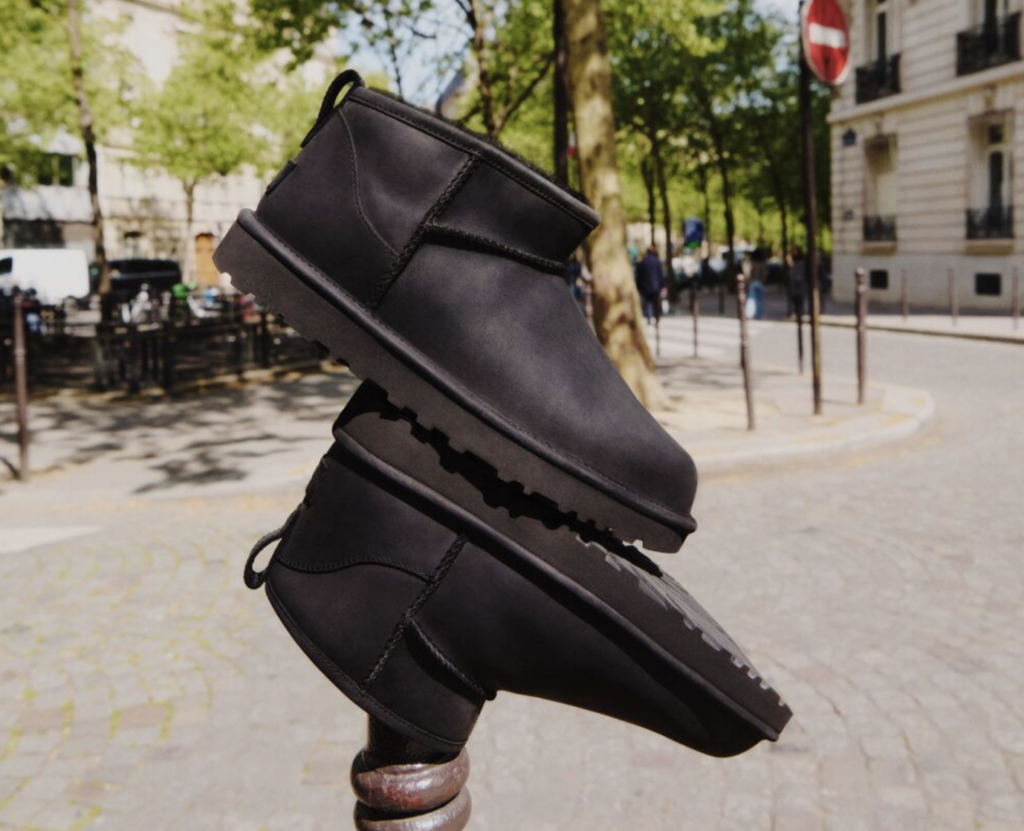
After nearly three years of litigation, Quince has prevailed in one of the most closely watched legal battles of the dupe era. In a verdict handed down on June 15 following a four-day trial in the U.S. District Court for the Northern District of California, a jury found that Quince’s Australian Shearling Mini Boot infringed U.S. Design Patent No. D927,161, the patent covering the design of UGG’s Classic Ultra Mini boot. But the jury simultaneously determined that the asserted patent was invalid, handing Quince a decisive victory and leaving Deckers without relief on its remaining claim.
The outcome marks the latest – and perhaps most consequential – chapter in a case that has evolved into a test of the legal tools available to brands seeking to crack down on lookalike products in the dupe economy.
From Trade Dress to Patent
When Deckers first filed its lawsuit against Quince in 2023, it alleged that the direct-to-consumer retailer had intentionally marketed lookalike versions of UGG footwear in order to capitalize on the reputation and goodwill associated with its products. The company asserted an array of claims, including trade dress infringement, design patent infringement, unfair competition, and related state-law causes of action.
By the time the case reached trial, however, it had narrowed considerably. In October 2025, Judge Araceli Martínez-Olguín dealt Deckers a significant setback by holding that the asserted Classic Ultra Mini and Tasman trade dresses were generic and therefore ineligible for trade dress protection. According to the court, the designs were too common within the footwear industry to identify a single source.
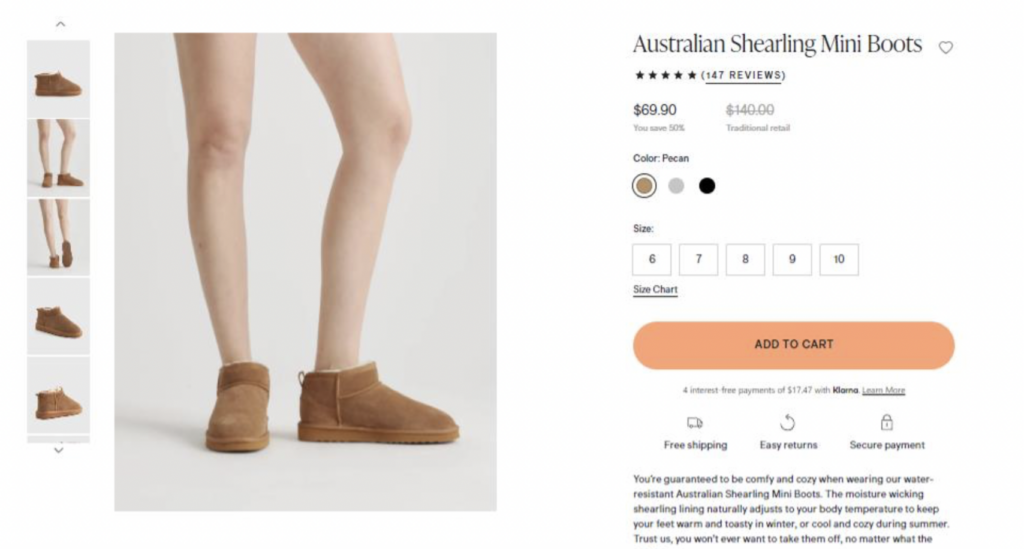
At the same time, the court declined to invalidate Deckers’ design patent at summary judgment, preserving the patent claim and setting the stage for trial. That left jurors with a much more focused set of questions: Did Quince’s boot infringe the design patent? And was the patent itself valid?
By finding infringement, jurors agreed that Quince’s accused boot appeared substantially similar to the patented UGG design. Yet by invalidating the patent, they also concluded that the claimed design was not entitled to patent protection.
Copying or Competition?
The split verdict reflects the tension at the center of the case. The more difficult question was whether those similarities reflected a protectable design or the common features of a category crowded with competing products. That theme surfaced repeatedly throughout the trial. In opening statements, Deckers’ counsel, Brent Blakely, told jurors that the case was “not about money” but about protecting intellectual property rights secured through the patent system. According to Blakely, Quince “could have designed any boot it wanted” but instead chose one that looked “substantially the same” as Deckers’ patented design.
Quince countered that Deckers was attempting to use a design patent to secure “a monopoly over an entire category of boots.” Later in the proceedings, Quince CEO Siddhartha Gupta testified that he rejected “the idea that one single company should monopolize a shearling boot.” While Deckers sought to portray Quince as a deliberate copier of a patented design, Quince framed itself as competing within a category defined by widely shared design conventions.
Following the verdict, Quince’s counsel, Xinlin Li Morrow of Morrow Ni LLP, said the outcome “vindicated Quince’s mission and consumer rights.” Quince’s Head of Legal Joel Dion similarly cast the dispute as one involving broader principles of competition, stating that the case was “never about an ankle boot” but about whether one company could claim ownership over a common design and use litigation to push competitors from the market.
What the Verdict Means for Brands
The verdict arrives at a moment when brands across the fashion industry are increasingly turning to intellectual property rights to address the rise of dupes. Yet, the Deckers-Quince litigation illustrates the limitations of those strategies. Trade dress claims may falter when courts view product configurations as generic or commonplace. Design patents may offer a more targeted avenue for protection, but only if the underlying designs can withstand validity challenges. And even evidence that consumers recognize a product as a “dupe” may not necessarily translate into enforceable rights.
For brands, the lesson may be that no single form of intellectual property provides complete protection against lookalikes. Instead, companies may need to rely on layered portfolios while recognizing that the line between unlawful copying and lawful competition remains difficult to draw. Instead, brand owners may need to rely on layered portfolios comprised of multiple rights while recognizing that the line between unlawful copying and lawful competition remains difficult to draw.
For companies built around the “luxury for less” proposition, meanwhile, the verdict offers reassurance that even a finding of substantial similarity will not carry the day if the asserted right is invalid.
THE BOTTOM LINE: The Deckers-Quince dispute illustrates the increasingly narrow path available to brands seeking to challenge dupes through intellectual property law. Establishing that products look alike is not enough; the rights being asserted must also survive attacks on their validity and scope.
The case is Deckers Outdoor Corp. v. Last Brand, Inc., 3:23-cv-04850 (N.D. Cal.).
Share