


Preparations for the World Cup this summer are already well underway. Cities across North America are ramping up infrastructure, broadcasters are locking in coverage plans, and sponsors are sharpening their global campaigns in anticipation of one of the most commercially significant sporting events in the world. Less visible, but just as deliberate, another form of preparation is another form of preparation is quietly taking shape: brand enforcement.
For sportswear giants and official kit suppliers, the World Cup is not just a marketing opportunity but one of the highest-risk moments in the product lifecycle. Demand for jerseys, training gear, and fan apparel spikes sharply, and with it comes a predictable surge in counterfeiting activity. And the result is a renewed focus on enforcement that starts months before the first match is even played in June.
Enforcement as Early-Stage Planning
What is notable about this World Cup preparation cycle is how enforcement efforts are starting to play out. Rather than reacting to infringing activity once it becomes visible to consumers this summer, brands appear to be treating enforcement as part of their upfront World Cup planning. That means identifying infringing networks well ahead of peak demand, mapping how they operate, and moving against them before tournament-driven traffic floods the market. The goal is straightforward: reduce noise, confusion, and competition before fans start searching en masse for official gear.
This shift reflects a broader understanding that once the tournament begins, it is likely too late to meaningfully contain infringement. By then, counterfeiters have already captured attention, search rankings, and consumer dollars.
That strategy is being clearly reflected in recent enforcement actions brought by adidas, for example, which filed two anti-counterfeiting lawsuits on December 31. Naming the operators of dozens of websites in two complaints lodged in the Southern District of Florida, adidas alleges that the operators behind sites like worldsoccerwin.com and footballjerseypro.com are selling counterfeit jerseys and apparel through extensive networks of e-commerce sites rather than through isolated storefronts.
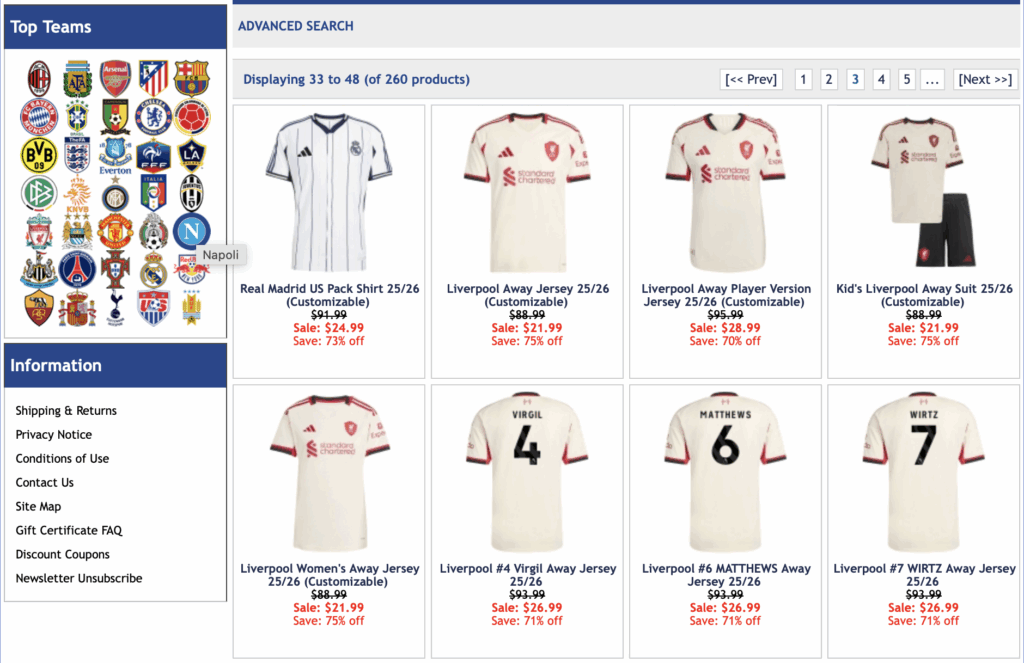
While adidas makes little mention of the World Cup in its complaints, the timing of the cases and the domain names and goods at issue are telling. These soccer-centric cases are being filed ahead of peak World Cup demand, underscoring that enforcement is being treated as a proactive measure rather than a response to consumer harm after the fact.
Sales, Strategy and Control
The drivers behind lawsuits like those filed by adidas are best understood not through isolated instances of infringing sales, but through how major brands seek to assert control over the digital marketplace during a World Cup cycle. These actions are less concerned with recouping lost revenue than with shaping the online environment consumers encounter at the sport’s most visible and commercially concentrated moment. The objective is not merely to respond to infringement as it appears in the marketplace, but to proactively govern brand presentation, distribution, and legitimacy in the lead-up to and throughout the tournament.
Counterfeit sites routinely compete for search visibility using brand names, imagery, team references, and tournament-related keywords, and during a World Cup cycle, that competition has amplified consequences. Search results, paid advertising, and social placements become the primary gateways for fans to encounter official products, and infringing operators deliberately position themselves within those channels to capture demand intended for authorized sellers.
At the same time, sportswear brands are executing large-scale, coordinated marketing campaigns tied to teams, players, and tournament narratives across jurisdictions and platforms. When counterfeit sites intercept that traffic, the resulting harm extends beyond diverted sales. It undermines campaign effectiveness, inflates customer acquisition costs by forcing brands to compete against unauthorized actors for branded traffic, and disrupts the integrity of the consumer journey at a critical commercial juncture.
The result is a fractured marketplace at precisely the moment brands are trying to project consistency, authenticity, and control. Consumers searching for official merchandise are instead confronted with look-alike storefronts, inconsistent pricing, and uncertain provenance, eroding trust and diminishing the value of trademark rights during one of their most visible periods of use.
This makes early enforcement a strategic imperative. By targeting infringing networks before World Cup-related search traffic peaks, brands increase the likelihood that consumers seeking official products are directed to authorized channels. In a tournament cycle defined by compressed timelines and heightened demand, controlling those channels early is central to effective trademark enforcement.
THE BOTTOM LINE: As the World Cup draws closer, enforcement activity will intensify, but the most important work might already be underway. The adidas lawsuits show that at least some of the effort shaping the World Cup marketplace happens months before fans ever click “buy.”
Share