


Behind Fear of God’s continued expansion is an evolving legal strategy that sheds light on how fashion brands are confronting the complexities of the modern market for counterfeits. In what appears to be an increasingly aggressive campaign against alleged counterfeiters, the Los Angeles-based luxury streetwear brand has filed more than two dozen federal trademark-related lawsuits so far this year targeting defendants ranging from online sellers to businesses accused of dealing in unauthorized merchandise bearing its trademarks.
In its latest suit, filed October 12 in California federal court, Fear of God accuses Royalink Trading Inc. and two individuals of trafficking in apparel bearing counterfeit FEAR OF GOD and ESSENTIALS trademarks. According to Fear of God, the complaint follows a May 14 search of a downtown Los Angeles store and warehouse by sheriff’s detectives, which resulted in the seizure of a “large quantity” of counterfeit Fear of God hoodies, t-shirts and caps.
A Changing Enforcement Playbook
The Royalink case is part of a broader enforcement campaign that coincides with efforts by founder Jerry Lorenzo, who reportedly eliminated the CEO position in April and assumed greater operational control, to expand Fear of God’s luxury and retail businesses while sustaining Essentials, reportedly its largest sales driver. Beyond the potential impact of counterfeits on sales of authentic Essentials products, there is a broader trademark concern. The collection’s otherwise minimalist apparel often prominently displays FEAR OF GOD or ESSENTIALS word marks, making those marks central to the products’ appeal and the company’s pricing power, while also making the products obvious targets for counterfeiters.
To protect those valuable trademarks and combat the circulation of counterfeit goods, Fear of God has turned to federal litigation. Between 2021 and 2025, the company filed at least 29 federal lawsuits in the U.S., averaging roughly six per year. All were brought in the Northern District of Illinois as Schedule A actions, grouping online sellers into single proceedings and often seeking emergency injunctions and asset freezes against defendants identified in sealed exhibits.
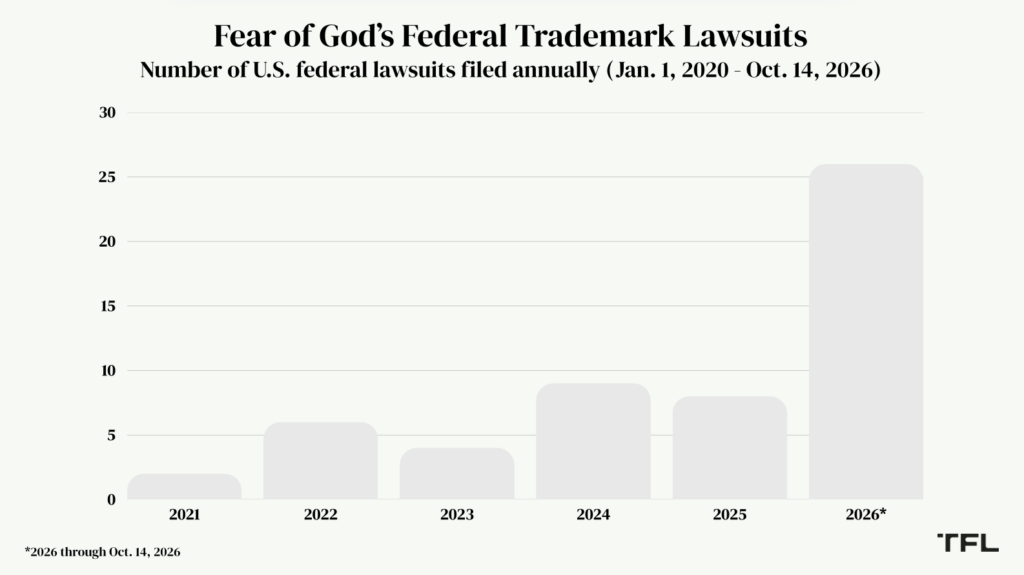
That litigation activity has accelerated sharply in 2026. Between January 1 and October 12, Fear of God filed 26 federal trademark lawsuits, expanding its litigation activity beyond Illinois into California and New York. While the company continues to pursue Schedule A actions, its California and New York lawsuits name specific businesses or individuals, reflecting a move beyond mass-defendant litigation to cases targeting alleged counterfeiting through physical retail and distribution channels.
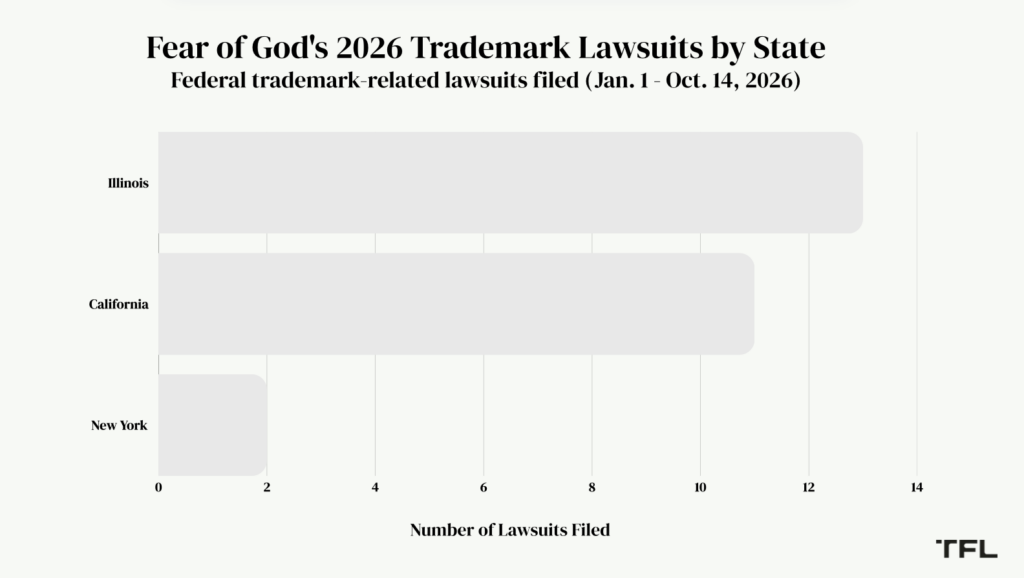
In May 2026, for example, Fear of God sued Grasager LLC, Grasager Shop Inc. and Angel Sebastian Paniagua after a March 26 sheriff’s search of a property in Pico Rivera, California. The company alleges in its complaint that law enforcement arrested Paniagua and with assistance from the brand’s investigators, seized 262 counterfeit Fear of God items. Like the Royalink suit, the case sheds light on how Fear of God is pursuing civil trademark litigation alongside criminal law enforcement investigations, extending its enforcement efforts beyond online storefronts to physical locations.
Beyond the Online Storefront
Fear of God’s expansion beyond Schedule A litigation comes amid broader judicial scrutiny of the practice, and in particular, plaintiffs’ efforts to join defendants without establishing sufficient connections between their alleged infringing activities. Like other brands that rely on Schedule A litigation, Fear of God has faced judicial pushback, with federal judges in Illinois finding defendants improperly joined, denying requests for temporary restraining orders and dismissing a case over concerns about forum shopping.
Taken together, Fear of God’s 2026 filings point to a more multifaceted anti-counterfeiting strategy. Schedule A lawsuits allow brands to pursue large numbers of online sellers, but they address only part of a market in which counterfeit goods can move through warehouses, distributors and physical storefronts before reaching consumers. By pairing mass-defendant litigation with targeted lawsuits against identifiable businesses, including cases arising from law enforcement investigations, Fear of God is extending its enforcement efforts beyond online listings to the physical channels through which counterfeit goods circulate.
For brands like Fear of God, whose trademarks are central to the appeal of their products, the approach reflects a broader reality of anti-counterfeiting enforcement: protecting those marks requires looking beyond online storefronts to the physical locations and distribution networks through which counterfeit goods enter and circulate in the market.
Share