



Hermès’ latest courtroom win saw the Birkin bag-maker prevail against a seller of Hermès-branded decorative objects, with a French court drawing a relatively clear line between artistic expression and trademark infringement in the process. The ruling suggests that once a luxury brand’s marks are being used not just in an expressive work, but as part of the commercial presentation, promotion, and sale of that work, an “art” defense may become much harder to sustain.
In a June 3 judgment, the Judicial Court of Paris held that Le Bidon Français infringed three Hermès trademarks by reproducing identical Hermès signs on decorative objects that it marketed and sold online. In doing so, the court rejected Le Bidon Français’ effort to frame the products at issue – cans, trays, skateboard decks, fire extinguishers, furniture, and oversized figurines bearing Hermès branding – as works of artistic expression or parody that juxtaposed luxury branding with antithetical objects in a satirical way.
The court did not reject the premise that trademark use can, in principle, be protected by freedom of expression. Instead, it appears to have assumed for purposes of its analysis that the objects could fall within the scope of artistic expression, before concluding that Le Bidon Français was using Hermès’ signs to promote the products it marketed. Against that background, the court held that the relevant public could perceive a commercial link between Hermès and Le Bidon Français.
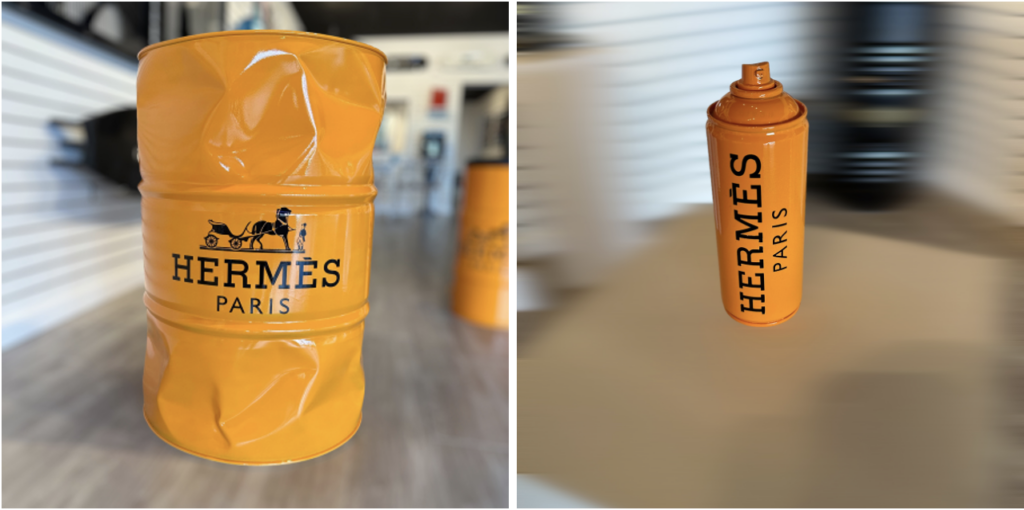
As a result, the court held that Le Bidon Français’ use took unfair advantage of the distinctive character and reputation of the Hermès marks and created confusion as to the relationship between Hermès and the goods presented as satirical works.
The court was ultimately unpersuaded. It found that Le Bidon Français was doing more than incorporating Hermès signs into an expressive work: It used identical Hermès marks to market and sell physical products and promoted those products through listings and social-media posts that referred to Hermès items and included hashtags like “#hermes.”
From Artistic Expression to Commercial Use
What appears to have mattered most to the court was not the framing of the objects as satirical works, but the fact that Hermès’ signs were being used in the commercial promotion and sale of those products, including in social-media messaging directed at consumers of decorative goods. The issue was not simply that Hermès branding appeared on decorative objects, which ranged in price from €60 to €449; it was that the marks were being deployed in a way that, in the court’s view, could suggest a commercial link with Hermès and allow Le Bidon Français to capitalize on the distinctive character of the marks.
At a minimum, the ruling suggests that an artistic-expression defense becomes much harder to sustain when a trademark is being used not just within an expressive work, but as part of the commercial presentation and sale of the work itself.
The decision is also useful for what it says about French unfair competition and parasitism claims. The court found unfair competition on the basis of Le Bidon Français’ “servile and systematic” use of signs identical to Hermès’ marks on the products and in online promotion, holding that the conduct created a risk of confusion for consumers of decorative and art objects. At the same time, it rejected Hermès’ parasitism claim, finding that Hermès had not adduced sufficient evidence of the “individualized economic value” allegedly appropriated by the defendant.
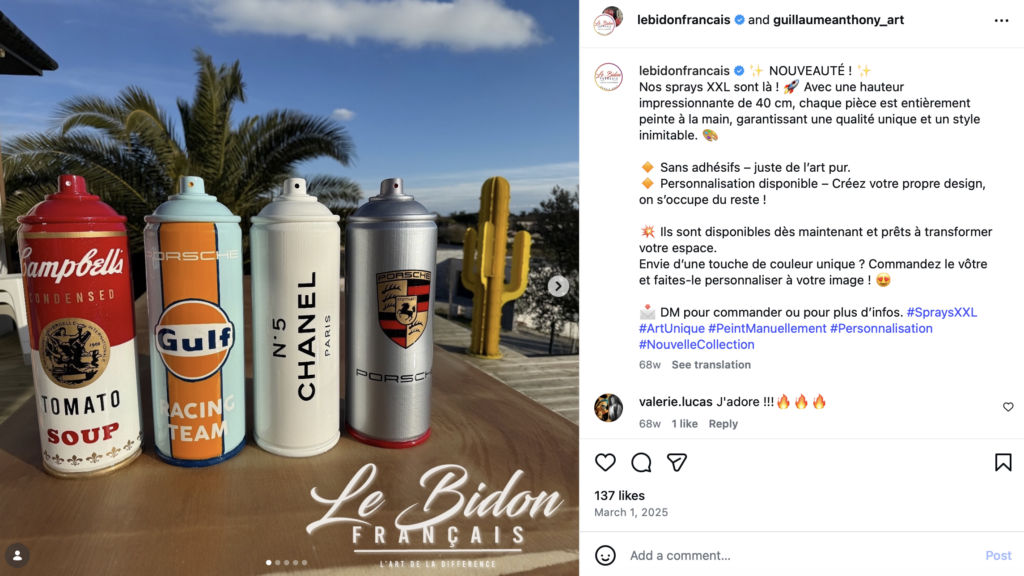
That split is notable because the court was willing to find that Le Bidon Français – which has targeted the likes of Ferrari, Lamborghini, Aston Martin, Chanel, Louis Vuitton, and Dior, among others, with similar decorative products – had taken unfair advantage of the distinctive character and reputation of Hermès’ marks for purposes of trademark infringement, while still declining to translate that finding into a successful parasitism claim. In other words, the court did not simply treat the alleged leveraging of Hermès’ reputation as enough, on its own, to support trademark infringement, unfair competition, and parasitism alike.
THE BOTTOM LINE: For luxury brands confronting branded “art” objects, upcycled goods, and other products that blur the line between expression and commerce, the ruling offers a useful precedent: the farther a defendant moves from commentary and toward the commercial merchandising of a trademark-bearing product, the harder it may be to keep an artistic-expression defense intact.
The bigger-picture question is what this means for the broader ecosystem around such products, including galleries, dealers, and other intermediaries that help market and sell them. If the commercial presentation of trademark-bearing “art” objects is central to the infringement analysis, the decision raises a natural follow-on question about where liability might begin – and end – for the third parties helping bring those works to market.
Share