



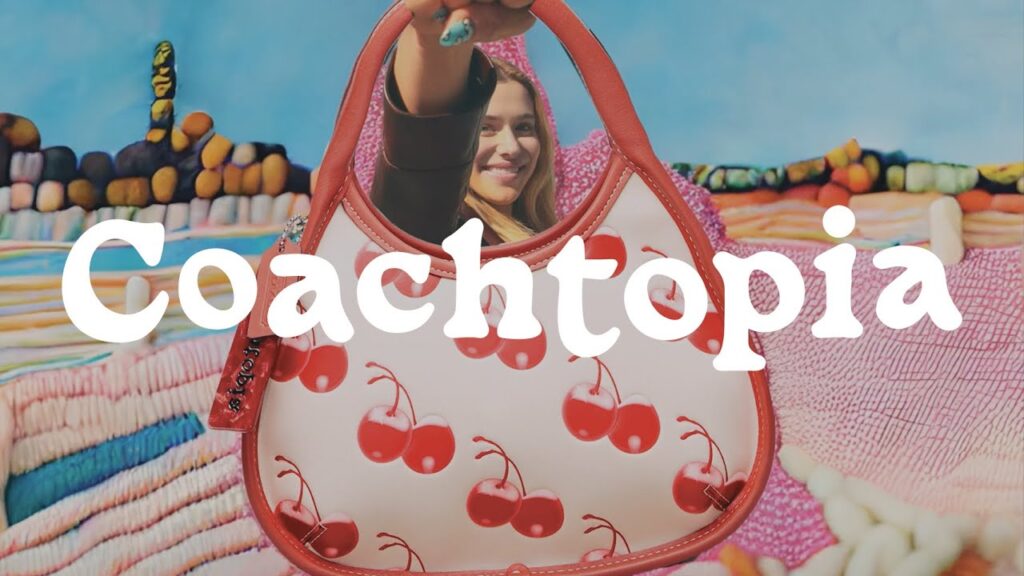
In fashion’s ongoing experiment with circularity, few major players have moved as quickly or as visibly as Coach with Coachtopia. Launched in April 2023 as a sub-brand of the stalwart American leather-goods label, Coachtopia – launched and led by Joon Silverstein, Coach’s head of marketing and sustainability – flips the traditional model on its head: Designing products from waste, embedding digital passports that track their life stories, and offering take-back on all Coachtopia products alongside robust repair services.
This is a significant shift in the overarching retail strategy playbook. For decades, the majority of fashion companies have treated sustainability as a capsule separate from the bulk of their offerings. Coachtopia positions circular wares as central to the brand’s DNA. A patchwork Ergo bag made from discarded leather scraps, for example, is not just an in-demand accessory – it is proof of circular design; and that is the crux of Coachtopia’s impact. The brand is not trading style for sustainability or vice versa; it is achieving both and doing so in a way that speaks to a valuable cohort of consumers.
The Resale Boom: A Market Ripe for Disruption
The broader context is clear: Resale and circular fashion are booming. Globally, the secondhand fashion market is projected to reach $210 billion by the end of 2025 and soar to $581 billion by 2035, growing at roughly 10.7 percent CAGR. A narrower view shows the apparel resale market alone was valued at $95.8 billion in 2024, forecast to nearly triple by 2032, with a 15.1 percent CAGR. In the U.S., the secondhand sector grew at a double-digit clip in 2024, continuing to outpace the broader retail clothing market.
Against this backdrop, Coachtopia’s integrative model – start with waste, design for repair, and actively participate in resale – is not just timely; it is market-savvy. Rather than watching resale as a passive pipeline, Coach operates trade-in and branded resale under (Re)Loved and enables instant resale via digital IDs, anchoring recommerce more tightly to its brand.
Tapestry’s Resurgence & Coachtopia as a Catalyst
The rise of Coachtopia comes amid a greater resurgence for Coach. Its parent company, Tapestry, posted full-year fiscal 2025 revenue of about $7 billion, an increase of roughly 5 percent year-over-year, fueled by low double-digit growth from Coach. (Tapestry’s fiscal year runs through June.) In the three months ending in June, Tapestry reported $1.7 billion in revenue, up 8 percent from a year earlier, and revealed that Coach’s sales rose by 14 percent and drove much of the group’s $1.7 billion in momentum.
Coachtopia is increasingly part of Coach’s total performance story, and while Coach’s parent company Tapestry does not break out revenues for Coachtopia, there are indicators that the sub-brand may be driving growth. For instance, management highlighted that for FY 2025, Coach added around 1.2 million new customers in North America, roughly two-thirds of whom were Gen Z or millennials. Given that a large portion of Gen Z and Millennial consumers identify as eco-conscious shoppers that drive demand for brands that deliver both value and environmental promise, Coachtopia and (Re)Loved provide a plausible on-ramp into the Coach ecosystem.
At the same time, Tapestry’s recent investment strategy underscores how central Coachtopia may be to its long-term playbook. In mid-2025, the company increased its stake in Gen Phoenix, an eco-leather producer, to 9.9 percent and entered into a three-year supply agreement to use Gen Phoenix’s recycled leather across the portfolio – a move widely interpreted as doubling down on Coachtopia’s circular model.
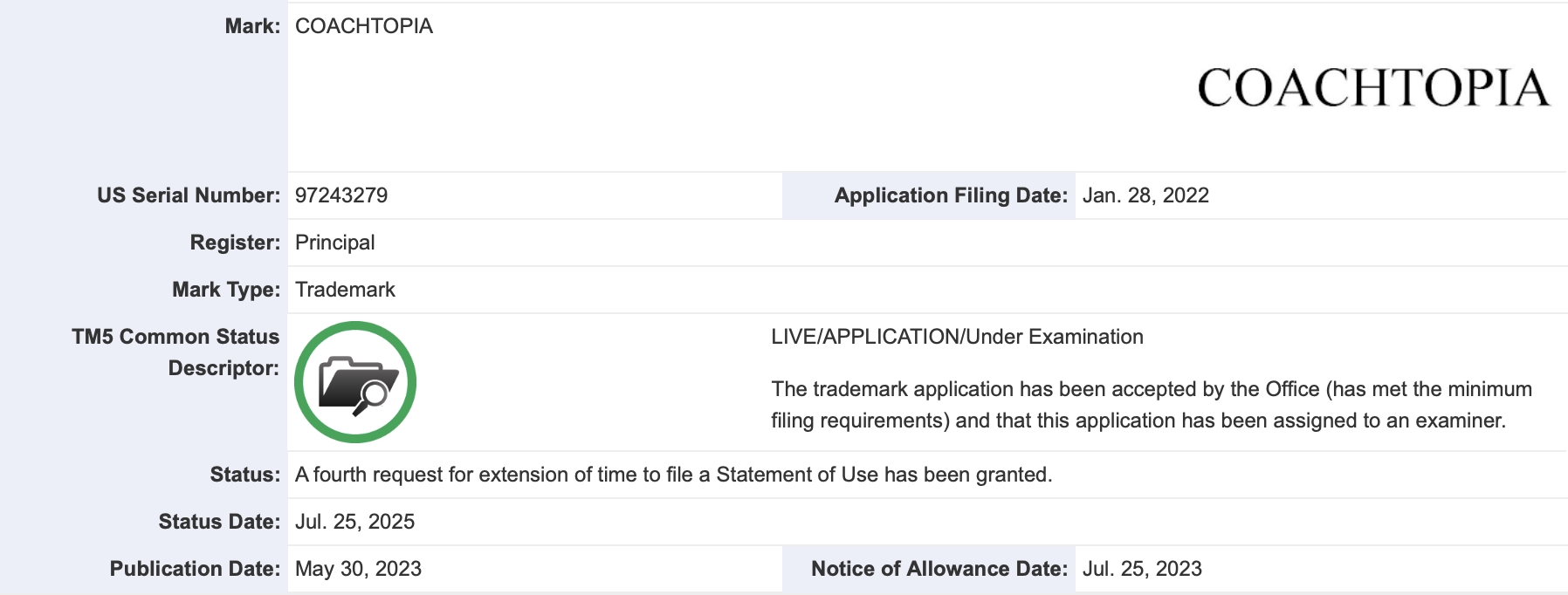
Still yet, if Coach’s trademark filings are any indication, Coachtopia is top of mind: the bulk of its pending trademark applications for registration cover the COACHTOPIA word mark for use across an array of goods/services, along with other circularity-centric marks, including HAVE TASTE LOVE WASTE, COACHTOPIA MADE CIRCULAR, THE ROAD TO CIRCULARITY, and COACH (RE)LOVED, among others.
Scott Roe, Tapestry’s Chief Operating Officer, put it plainly: while Coachtopia is not yet “commercially massive,” it is vital for understanding the values of younger consumers. “It is helping us understand what is important to this really critical demographic,” he said.
Strategy in Motion: Coachtopia’s Impact
By embedding financial incentives directly into the product lifecycle – from trade-in credits to designed-for-repair features and digital passports – the brand tightens the loop and strengthens customer loyalty. At the same time, scarcity drives desirability. Like streetwear, Coachtopia’s small-batch drops sell out quickly, proving that hype and resale value can be fueled not by wasteful overproduction but by deliberate, limited releases.
The strategy also improves Coach’s control and margin recapture on a portion of resale. Instead of ceding all of that revenue to peer-to-peer platforms, the company can dictate more of the narrative and some of the price points – echoing moves by heritage brands to curate vintage as a margin-accretive channel. And perhaps most importantly, Coachtopia aligns with Gen Z, a demographic that represents both immediate spending power and the future of luxury demand.
By co-creating with its young consumers and earning their trust, Coach is translating circularity into brand equity, helping to propel Tapestry’s broader momentum in an increasingly competitive luxury landscape.
THE BOTTOM LINE: Coachtopia shows that sustainability is no longer confined to capsule collections or token collaborations. It can be the core of a brand’s identity – and a source of heat, hype, and sales. Just as companies like Rolex and Ralph Lauren are reframing pre-owned products as a premium growth engine, Coach is using Coachtopia to prove that circularity is not a constraint but an advantage. For the wider luxury sector, the message is clear: resale and repair can be strategic assets.
Share