


A Paris court has handed Chanel a victory against Kamad Reworked, holding that the French upcycling company’s sale of jewelry incorporating Chanel-branded buttons, hardware, and other elements with its iconic interlocking “CC” logo and CHANEL word marks constitutes trademark infringement. In doing so, the court rejected Kamad Reworked’s contention that the products should be viewed as independent upcycled creations made from authentic Chanel goods and therefore insulated from trademark liability. Instead, the court found that the use of allegedly genuine Chanel components did not permit their incorporation into new jewelry designs without Chanel’s authorization.
The Legal Limits of Upcycling
In a May 21 decision, the court found that Kamad Reworked had failed to prove that the branded charms used in its jewelry originated from authentic Chanel products – a threshold requirement for its exhaustion defense. But even if the components did originate from genuine Chanel goods, the judges held that exhaustion would still not apply because the charms had been incorporated into “a completely different product.” As such, the resulting jewelry was “not likely … to have been placed on the market by or with the consent” of Chanel, according to the court.
> The ruling is worth viewing with some skepticism from a strict “upcycling” perspective. The court first found that Kamad Reworked had failed to prove that the Chanel-branded components at issue originated from authentic Chanel products. If the components were not genuine, the dispute is arguably less about upcycling and more about straightforward trademark infringement. Still, the court went on to address exhaustion on the assumption that the components were authentic, suggesting that the result may have been the same even if provenance had been established.
The court also appeared receptive to Chanel’s position that incorporating branded components into new products can diminish the exclusivity of its marks and harm the luxury image associated with goods manufactured outside of Chanel’s quality-control standards, citing the reputational harm that can result when branded elements are incorporated into products that have not been made – or authorized by – Chanel.
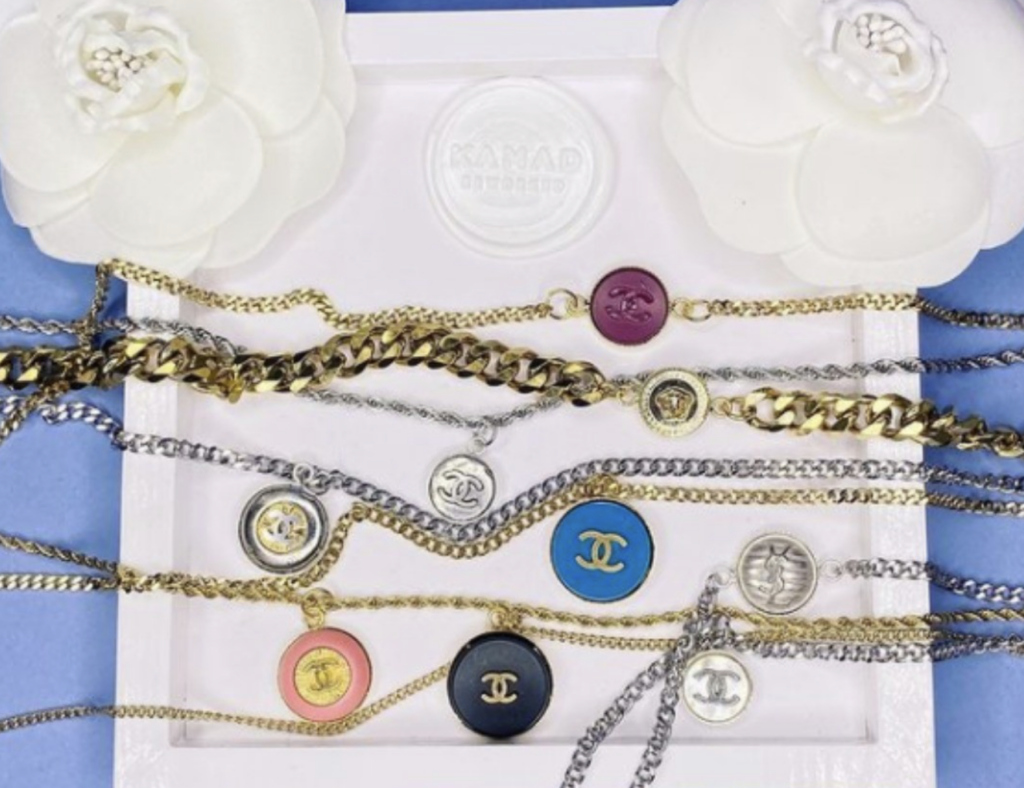
The judges were likewise unconvinced that consumers would perceive Kamad Reworked’s products as distinct from Chanel goods. They found that Chanel’s well-known interlocking “CC” monogram occupied a dominant position on the jewelry and that consumers would therefore “immediately attribute the product” to Chanel. They also rejected Kamad Reworked’s use of disclaimers alongside the products on its website stating that consumers were purchasing a Kamad creation rather than a Chanel product. Far from dispelling confusion, the court held that the language could aggravate it by suggesting “that part of the product … comes from [Chanel].”
Finally, the judges took issue with Kamad Reworked’s practice of providing purchasers of its upcycled products with a”certificate of authenticity.” Supplying such a certificate in connection with products that infringed Chanel’s trademarks constituted a misleading commercial practice, according to the court, as it was capable of creating the impression that the products themselves were authentic Chanel goods.
The court awarded Chanel a provisional €75,000 payment (Chanel sought €500,000) and ordered Kamad Reworked to disclose sales, inventory, and distribution information to assist in the calculation of any final damages award. It also imposed broad injunctive relief, including an order mandating the destruction of any remaining infringing products.
THE BIGGER PICTURE: The ruling aligns with a growing body of decisions from courts in the U.S., Europe, and elsewhere that have been receptive to luxury brands’ efforts to challenge unauthorized upcycling businesses. Across disputes involving Louis Vuitton monogram goods and Rolex watches, courts have increasingly distinguished between the resale of authentic products and the commercial creation of new products incorporating (potentially inauthentic) branded components.
What makes the Kamad Reworked decision notable is that the court treated the disputed jewelry not as modified Chanel goods, but as entirely new products. In doing so, it signaled that the authenticity of the underlying components alone may not be enough to shield an upcycled product from trademark liability where those components have been transformed into “a completely different product.”
Under that approach, the use of authentic components may offer little protection for upcyclers when it comes to the use of branded components in new products.
The decision also highlights a well-established feature of European trademark law, under which trademarks protect not only against consumer confusion, but also against harm to a mark’s reputation, investment value, and luxury image. Notably, the Paris court appeared receptive to Chanel’s argument that incorporating branded components into independently manufactured products can diminish the exclusivity of its marks and undermine its ability to control the quality and presentation of goods bearing them. In that respect, the ruling is as much about protecting the value and prestige associated with Chanel’s trademarks as it is about preventing confusion over source.
Share