


In addition to our “key” cases of H2 2025, many of which remain active in courts across the U.S., a wave of retail-centric lawsuits filed during the second half of the year is setting the stage for key battles in 2026. These include a constitutional and administrative challenge to New York’s algorithmic pricing disclosure law, mounting litigation over “dupes” and alleged false advertising – from Williams-Sonoma’s suit against Quince to Lululemon’s claims against Costco, as well as new trade dress disputes testing the protectability of minimalist product design, such as WHOOP’s litigation over its screen-less fitness band.
Meanwhile, legacy publishers are turning to antitrust law to confront emerging AI search practices, with the owner of WWD and Rolling Stone suing Google over its AI-generated summaries, while Richemont has launched targeted enforcement actions aimed at the growing “superfake” market for high-end counterfeit jewelry.
Here are some of the lawsuits filed during the second half of the year that we will be keeping an eye on in the year ahead …
Saks Global Enterprises LLC et al v. Shin
Saks Global Enterprises and the Neiman Marcus Group filed a high-profile lawsuit against a former executive who left her post for a key competitor. In a complaint filed in federal court in Dallas in late November, the retailers allege that Yumi Shin – Bergdorf Goodman’s former Chief Merchandising Officer and a longtime fixture in luxury retail – breached a non-compete agreement and misappropriated trade secrets by accepting a similar role at Nordstrom, a company expressly listed as a prohibited “Competitor” in her employment agreement, and allegedly taking confidential Bergdorf information with her.
According to the complaint, Shin engaged in “concerning and suspicious conduct” before her October resignation by allegedly downloading large volumes of confidential Saks and NMG trade secrets far beyond her role, including a seven-year sales and financial outlook for Bergdorf’s top 200 brands and detailed “open-book” financials on the companies’ leading brand partners.
>> The case lands at a pivotal moment for companies that rely on non-compete provisions, as regulators and courts are increasingly skeptical of contractual restraints that limit employee mobility, heighten antitrust scrutiny of labor markets, and force businesses to justify the enforceability of post-employment restrictions.
Lululemon USA Inc. v. Costco Wholesale Corp.
Lululemon made headlines this summer when it filed suit against Costco, accusing the retail giant of selling unauthorized apparel “dupes” that infringe on its trademarks, trade dress, and design patents. The complaint, which was filed in June in the U.S. District Court for the Central District of California, alleges that Costco has “chosen to copy rather than compete” by offering lookalike versions of Lululemon’s bestselling products, including its SCUBA® hoodies, DEFINE® jackets, and ABC pants.
Lululemon claims that Costco “has unlawfully traded upon [its] reputation, goodwill and sweat equity by selling unauthorized and unlicensed apparel employing knockoff, infringing versions of [its] well-known trade dress and design patents.”
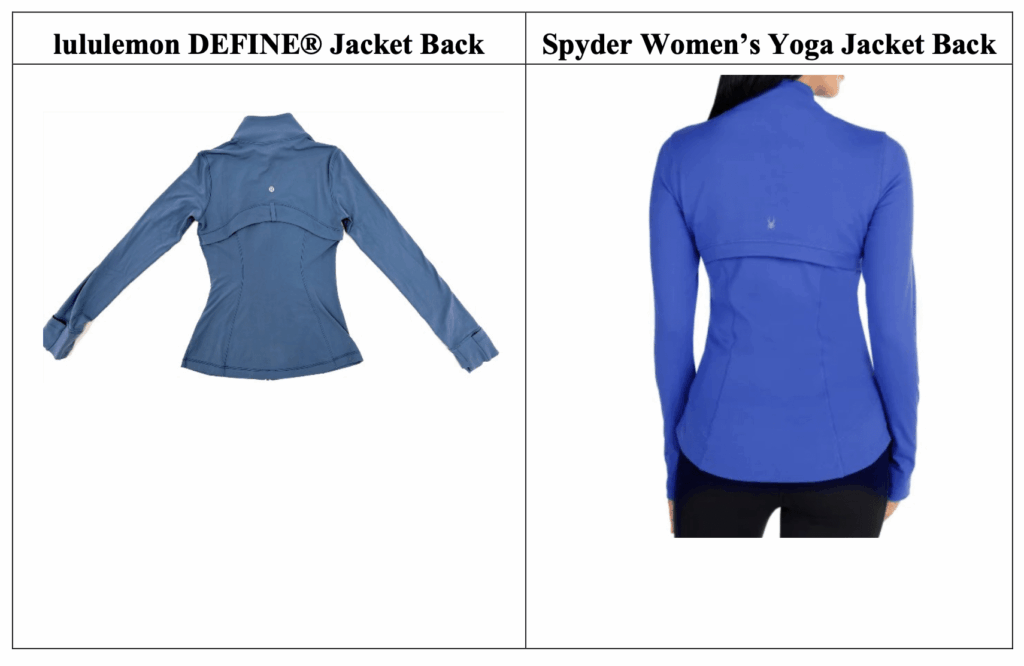
>> The case tests how far a mass retailer can push “dupe” culture before it crosses from aggressive competition into unlawful free-riding on brand equity. A win for Lululemon favor could raise the legal risk factor for private-label strategies that rely on visual ambiguity, while a loss would underscore how narrow and fragile trade dress and design protection remains in the apparel industry.
Williams-Sonoma, Inc. v. Last Brand, Inc.
Williams-Sonoma, Inc. filed a new lawsuit against Last Brand, Inc., the parent company of Quince, waging a clash over dupes-related marketing claims. The homewares and furnishings giant accuses the “luxury for less”-focused retailer of engaging in “a widespread false advertising campaign” that leverages WSI’s brand equity while misleading consumers about product quality and pricing.
According to WSI’s November complaint, Quince’s business model hinges not just on imitation, but on systemic deception: misleading product comparisons, inflated competitor pricing, and intentionally vague claims that improperly trade on the reputation and goodwill of established home and lifestyle brands.
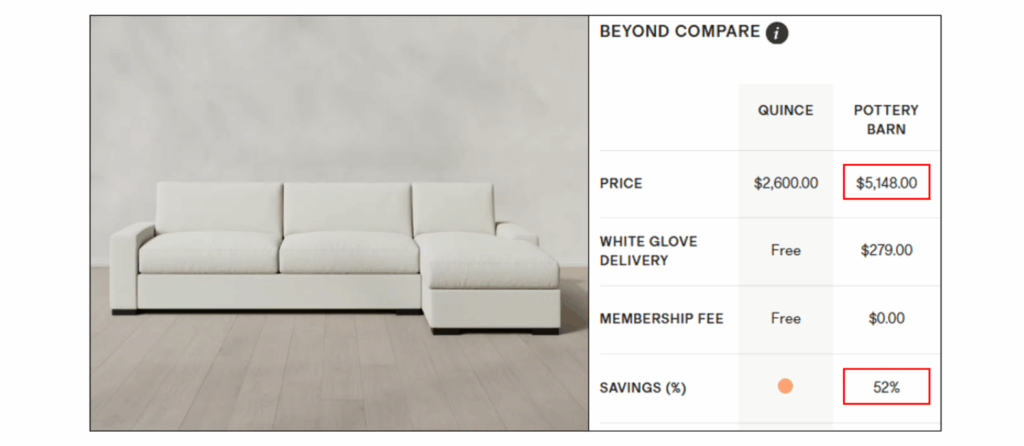
>> This case strikes at the heart of an increasingly prevalent phenomenon in consumer markets: the tension between established high-end brands and fast-moving “dupe” challengers who rely heavily on comparison marketing. What differentiates savvy comparison from actionable false advertising, however, is now set to be tested in court.
Richemont International SA et al. v. Malidani Jewelry Corp.
Richemont is taking on a New York-based jeweler for allegedly co-opting the designs of some of its most successful and recognizable jewelry collections. In a complaint filed on July 30 in the Southern District of New York, as first reported by TFL, the Swiss luxury group claims that Malidani Jewelry Corp. is offering high-priced jewelry so closely resembling Cartier and Van Cleef & Arpels pieces – and at such similar price points – that the products are not just infringing, they are directly competing with the originals.
Malidani is selling unauthorized versions of Cartier’s LOVE bracelet and Juste un Clou collection, as well as Van Cleef & Arpels’ trademark and design patent-protected Alhambra line, per Richemont.
>> Notably, this is not a run-of-the-mill counterfeiting complaint. Richemont appears to be targeting the upper tier of the counterfeit market – so-called “superfake” goods. These are high-quality replicas that, in many cases, are virtually identical to authentic pieces. Often produced in small workshops with access to premium materials, these superfake products have become a growing challenge for the luxury industry.
WHOOP, Inc. v. Shenzhen Lexqi Electronic Technology Co., Ltd.
A potentially high-stakes clash broke out this year between WHOOP and a Chinese manufacturer of wearable devices. In the lawsuit, Boston-based WHOOP accuses Shenzhen Lexqi Electronic Technology of making and selling knockoffs of its screenless fitness tracker. At the core of the trade dress and unfair competition case – the latest to pit a U.S. tech entity against a Chinese rival – is the question of whether WHOOP’s minimalist design has become distinctive enough to warrant legal protection as an indicator of source.
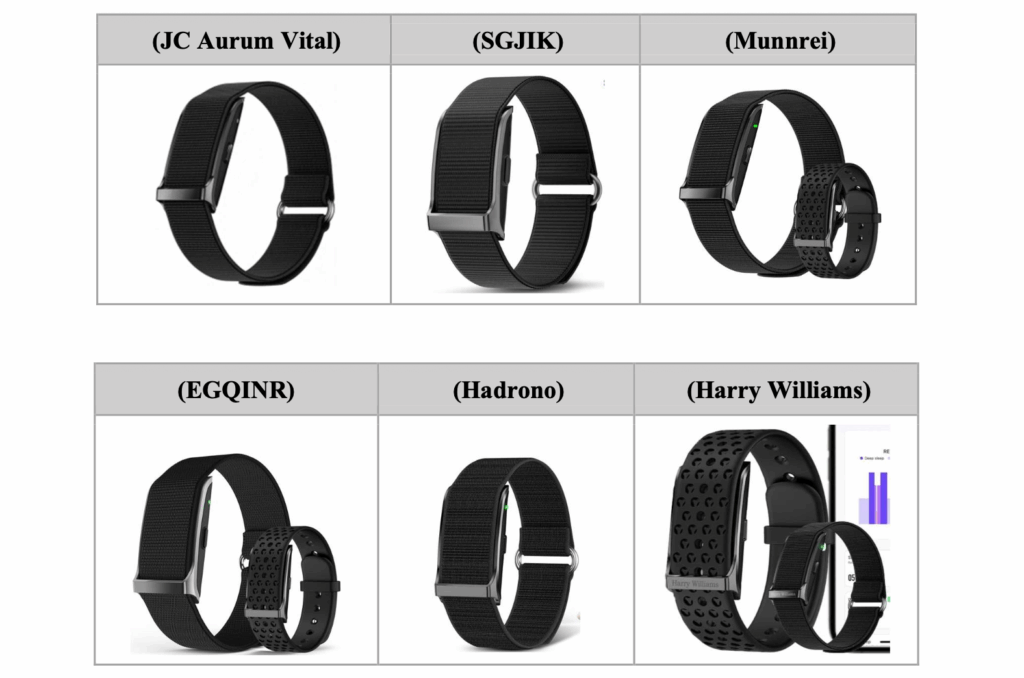
According to the September 22 complaint that it filed in federal court in Massachusetts, WHOOP claims that Shenzhen Lexqi (“Lexqi”) deliberately copied its design and is pushing the lookalike device into the U.S. market via Amazon storefronts with names like “SGJIK” and “EGQINR.”
>> Among other things, the dispute will test how far trade dress can stretch to protect wearable tech, with WHOOP required to show that its minimalist strap-and-clasp design is both non-functional and meaningfully distinctive in a space dominated by utilitarian overlaps.
This is a short excerpt from TFL’s Annual Review, which was published exclusively for TFL PRO+ subscribers and dives into everything from deals that further consolidated the fashion/luxury segments over the past year to the rise in ESG-centric legislation around the world.
Inquire today about how to sign up for a PRO+ subscription and gain access to all of our content.
Share